
No products added!
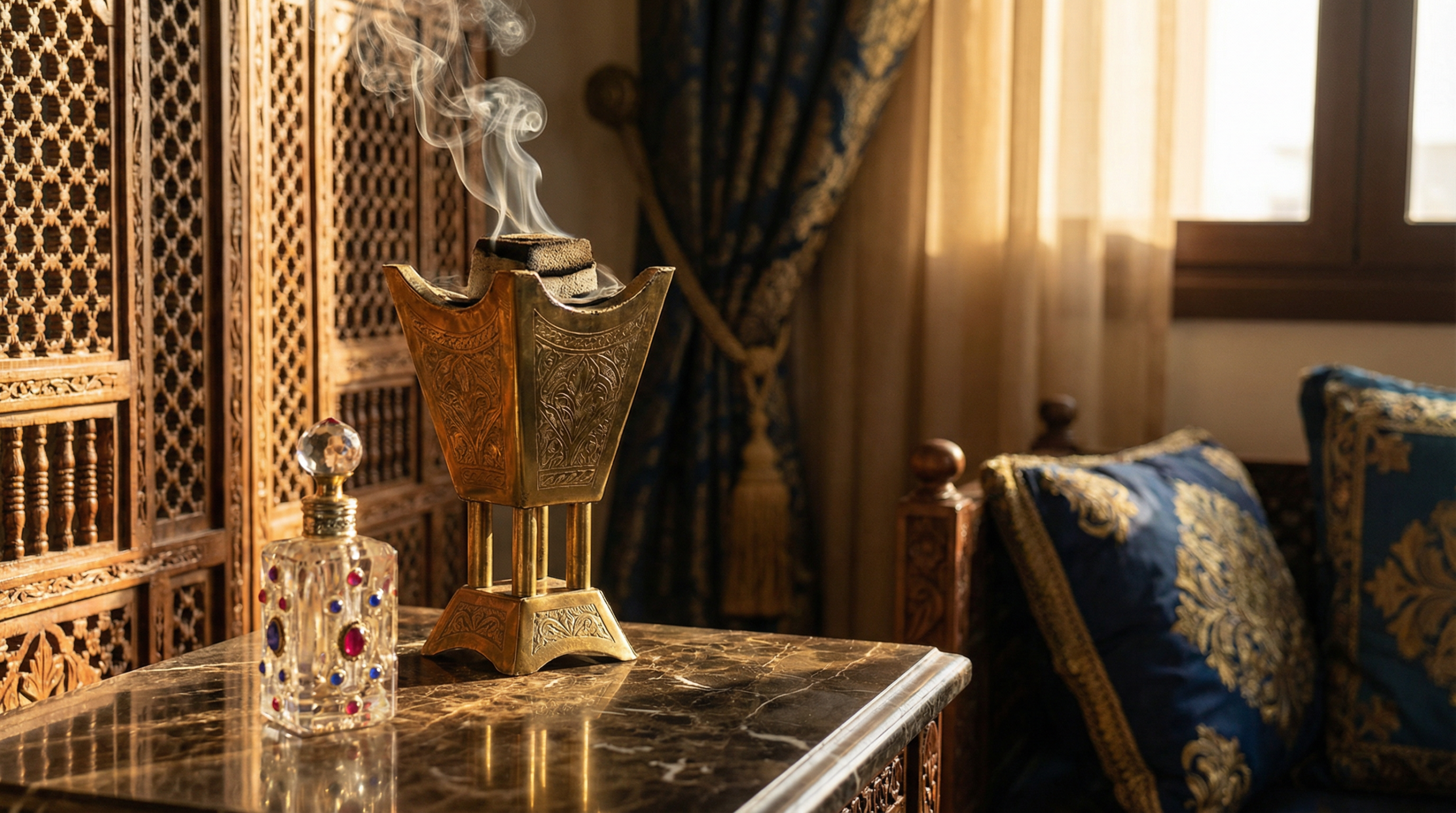

The moment you step into your grandmother’s majlis, you’re enveloped by a fragrance that transcends mere aroma. That distinctive, resinous warmth of bakhoor carries with it decades of family gatherings, whispered prayers, and the quiet dignity of women who understood the language of scent long before perfumery became a billion-dollar industry. In 2026, as we navigate an increasingly digital world, this ancient tradition matters more than ever.
The Enduring Whispers of Scent: Bakhoor as a Link to Ancestry
Bakhoor represents far more than fragrant wood chips smoldering on charcoal. It embodies an olfactory inheritance passed down through generations of Arab and Muslim families. When you recognize the specific blend your grandmother favored, you’re accessing a form of cultural memory that exists beyond words or photographs.
This connection runs deeper than nostalgia. Neuroscience research confirms that scent memories remain exceptionally vivid and emotionally charged, often outlasting visual or auditory recollections. The bakhoor your grandmother lit before guests arrived, or during Ramadan evenings, literally shaped your neural pathways and cultural identity.
In the Gulf region particularly, families develop signature bakhoor preferences that become as distinctive as a family crest. Some favor Cambodian oud with rose notes, others prefer frankincense-heavy blends from Oman. These preferences aren’t random; they reflect migration patterns, trade relationships, and family histories spanning centuries.
More Than Smoke: The Art and Heritage of Bakhoor Crafting
Traditional bakhoor crafting represents one of perfumery’s most sophisticated art forms. Master blenders combine aged oud wood, frankincense resin, amber, sandalwood, and carefully guarded secret ingredients, often using recipes perfected over multiple generations.
The process demands patience and expertise. Premium oud chips must be properly aged, sometimes for decades, to develop their complex aromatic profile. Natural resins require precise heating temperatures to release their fragrance without burning. These techniques, passed through apprenticeships and family lines, cannot be rushed or industrialized without losing essential qualities.
What makes traditional bakhoor exceptional is its evolution over time. Unlike synthetic fragrances that smell identical from bottle to bottle, natural bakhoor develops character as ingredients mature together. The blend your grandmother treasured in 1980 would smell subtly different if recreated today, even using identical ingredients, because natural materials continue changing.
2026 and Beyond: Bakhoor’s Renaissance in Modern Arab Lifestyles
This year marks a significant shift in how younger generations engage with bakhoor. Fashion-conscious women in Dubai and across the GCC are reimagining this tradition for contemporary luxury living. Rather than relegating bakhoor to formal occasions or religious observances, many are incorporating it into daily wellness routines.
The integration reflects broader trends toward mindful living and authentic cultural expression. As global fashion increasingly celebrates regional identities, Arab women are confidently showcasing heritage practices that previous generations might have considered too traditional for modern tastes.
Interior designers now incorporate custom bakhoor moments into luxury home concepts. Architects design dedicated fragrance rooms. High-end hospitality venues create signature bakhoor experiences that honor tradition while embracing innovation. This mainstream acceptance validates what grandmothers always knew: quality fragrance elevates every aspect of daily life.
The Wellness Dimension: Bakhoor for Mind, Body, and Soul
Scientific research increasingly validates traditional knowledge about bakhoor’s therapeutic properties. Frankincense contains boswellic acids that demonstrate anti-inflammatory effects. Oud produces compounds that may reduce anxiety and promote mental clarity. Sandalwood has been shown to lower cortisol levels.
Beyond biochemistry, the ritual of preparing and burning bakhoor offers mental health benefits. The deliberate process of selecting chips, preparing charcoal, and tending the burner creates mindful moments in otherwise hectic days. This meditative quality explains why bakhoor burning features prominently in stress-reduction practices across the Middle East.
The spiritual dimension remains equally important. For many Muslims, bakhoor connects prayer and daily life, creating sacred space within ordinary rooms. This spiritual grounding becomes particularly valuable in 2026’s fast-paced, often fragmented world.
Honouring Tradition, Embracing Innovation: The Future of Your Grandmother’s Bakhoor
The future of bakhoor lies in balancing preservation with evolution. Sustainability concerns are driving innovations in ingredient sourcing. Responsible oud cultivation projects aim to protect wild populations while maintaining quality. Ethical frankincense harvesting supports traditional Omani and Yemeni communities.
Technology enables new applications without compromising tradition. Electric burners offer convenience while maintaining authentic fragrance profiles. Portable formats make bakhoor accessible for travel or smaller living spaces. These adaptations make the tradition accessible to new generations without diluting its essence.