
No products added!
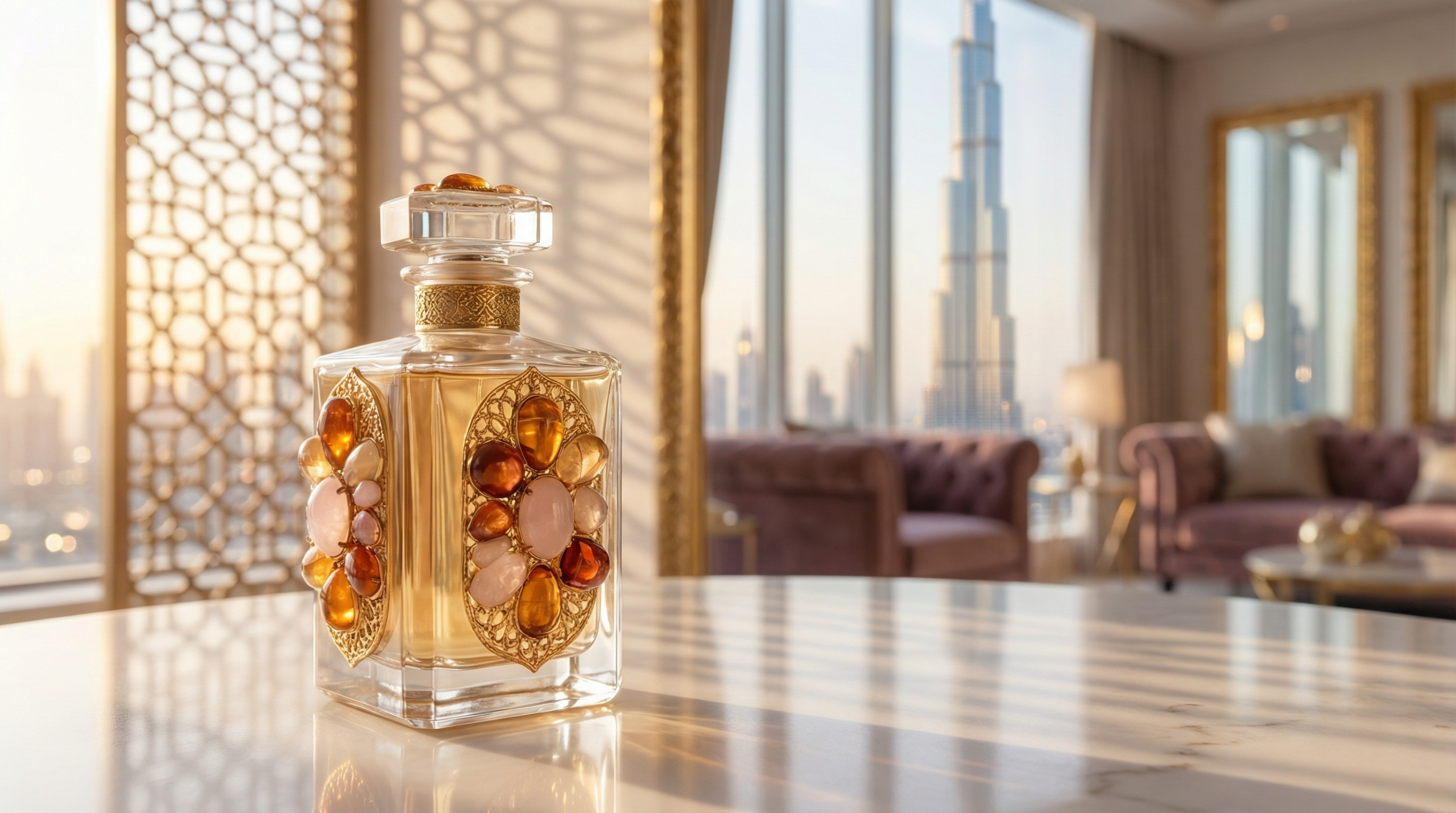

Navigating the Sensory Tapestry of Taste of Dubai 2026: Perfumes and Palates
The annual Taste of Dubai transforms the emirate into a gastronomic wonderland every March, where culinary masterpieces from around the world compete for attention. For fashion-conscious women attending this prestigious event, the challenge extends beyond selecting the perfect modest ensemble—it includes choosing a fragrance that holds its own against the intoxicating blend of spices, grilled meats, sweet desserts, and aromatic coffee that fills the air.
Dubai’s climate adds another layer of complexity. With temperatures climbing even in early spring and humidity levels affecting how perfumes develop on skin, selecting the right scent requires understanding both the science of fragrance longevity and the art of sensory harmony.
The Art of Lasting Impressions: Decoding Longevity in Luxury Arabic Perfumes
Perfume longevity depends on concentration levels and molecular composition. Eau de Parfum typically contains 15-20% fragrance oils and lasts 6-8 hours, while Eau de Toilette offers 5-15% concentration for 3-5 hours of wear. Concentrated perfume oils, favored in Arabic perfumery traditions, can contain up to 40% fragrance compounds and persist for 12-24 hours.
Dubai’s warm, humid environment accelerates fragrance evaporation, particularly affecting top notes. However, the heat also amplifies sillage—the scent trail you leave behind. This creates a delicate balance: you want a perfume strong enough to last through hours of festival exploration without overwhelming fellow food enthusiasts whose palates are primed for culinary appreciation.
Traditional Arabic perfumery addresses this challenge through rich base notes that anchor fragrances. Ingredients like oud, amber, and musk form the foundation of compositions designed to withstand heat while developing beautifully over time.
Gemstone Infusion: A Scented Aura Beyond Evaporation
Recent innovations in luxury Arabic perfumery incorporate gemstone essences—not as literal stone particles, but as energetic signatures believed to enhance both fragrance longevity and wearer confidence. Amber-infused compositions add warmth and depth, creating a honey-like sweetness that complements rather than competes with dessert aromas.
Rose quartz essences contribute soft, romantic undertones that pair well with floral and fruity notes, while maintaining elegance without becoming cloying. Black tourmaline-inspired scents offer grounding woody elements that stand confidently alongside savory food aromas without creating dissonance.
These gemstone influences work on multiple levels—the psychological boost of wearing something meaningful often makes wearers more conscious of their fragrance choices, leading to more thoughtful application and layering.
Harmonizing Scents: Choosing Perfumes to Complement Culinary Delights
At a food festival, fragrance selection becomes an exercise in complementary pairing. Fresh citrus notes—bergamot, neroli, petitgrain—cut through heavy food aromas without clashing, offering a palate-cleansing effect similar to sorbet between courses. These work particularly well during afternoon hours when lighter fare dominates.
Woody scents like sandalwood and cedarwood provide neutral sophistication that doesn’t interfere with food appreciation. They create a subtle presence without competing for olfactory attention, making them ideal for serious food enthusiasts who want to smell elegant without diminishing their tasting experience.
Avoid heavy gourmand fragrances (vanilla, caramel, chocolate notes) at food events, as they create confusing sensory overlap. Similarly, overly spicy perfumes containing cinnamon or cardamom can clash with actual culinary spices, creating an overwhelming rather than harmonious effect.
Cultural Nuances: The Etiquette of Fragrance in a Gastronomic Setting
In GCC culture, perfume is deeply personal and often generous in application. However, food festivals require adapted etiquette. The tradition of fragrance layering—using scented oils, body lotions, and perfumes together—should be scaled back in these settings to respect others’ sensory experiences.
Consider the close quarters of cooking demonstrations and tasting stations. What might feel like an appropriate sillage in open spaces becomes overwhelming when people gather around a single chef’s counter. The goal is presence without dominance—your scent should be discoverable when someone leans in for conversation, not announced before you arrive.
Many experienced perfume enthusiasts apply fragrance to pulse points covered by modest clothing—inner elbows, behind knees—allowing the scent to develop privately before projecting outward. This creates a more intimate fragrance experience appropriate for crowded venues.
Top Scent Profiles for a Memorable (and Balanced) Experience
For morning festival visits, opt for aquatic or green tea-based compositions that offer freshness without competing with breakfast and brunch offerings. These clean scents provide elegance while maintaining neutrality around pastries and egg dishes.
Afternoon sessions benefit from soft floral compositions—rose, jasmine, or orange blossom—that complement lighter fare and afternoon tea services. These traditionally feminine scents maintain sophistication without overwhelming developing palates.
Evening events call for deeper woody-amber combinations that match the richness of dinner menus. These substantial fragrances hold their own against grilled meats and complex spice blends while maintaining refinement.