
No products added!

The Enduring Allure: What Makes Gulf Fragrance Arts ‘Lost’ Yet Timeless?
The perfumery traditions of the Arabian Gulf represent centuries of olfactory wisdom, yet many of these practices have quietly faded from everyday life. What makes these arts simultaneously “lost” and timeless is their deep connection to ceremonial life, family heritage, and spiritual practice. Unlike mass-produced fragrances, traditional Gulf perfumery was never about trends—it was about identity, memory, and connection.
In 2026, a fascinating renaissance is unfolding. Fashion-conscious women across Dubai, Riyadh, and beyond are rediscovering that true luxury lies not in following global trends, but in reclaiming ancestral knowledge. These five “secrets” represent practices that elder generations understood intuitively, but which younger perfume enthusiasts are now approaching with fresh reverence and contemporary interpretation.
Secret One: The Art of Layering Bukhoor and Attar for a Signature Sillage
The traditional practice of layering bukhoor (incense) with attar (oil-based perfumes) creates a fragrance experience that evolves throughout the day in ways alcohol-based perfumes simply cannot replicate. This technique begins with fumigating garments and hair with bukhoor smoke, allowing the fabric to absorb rich woody and resinous notes.
Attar is then applied to pulse points, where body heat releases its concentrated essence. The interaction between the lingering bukhoor and the warmth-activated attar creates a uniquely personal sillage—the scent trail left behind. This layering isn’t random; it follows principles passed down through generations about which wood combinations harmonize with specific attar bases.
The beauty of this practice lies in its intimacy. No two women smell identical, even when using similar ingredients, because body chemistry, application timing, and fabric choice all influence the final composition.
Secret Two: Gemstone Infusion – Perfumery’s Ancient Wellness Ritual
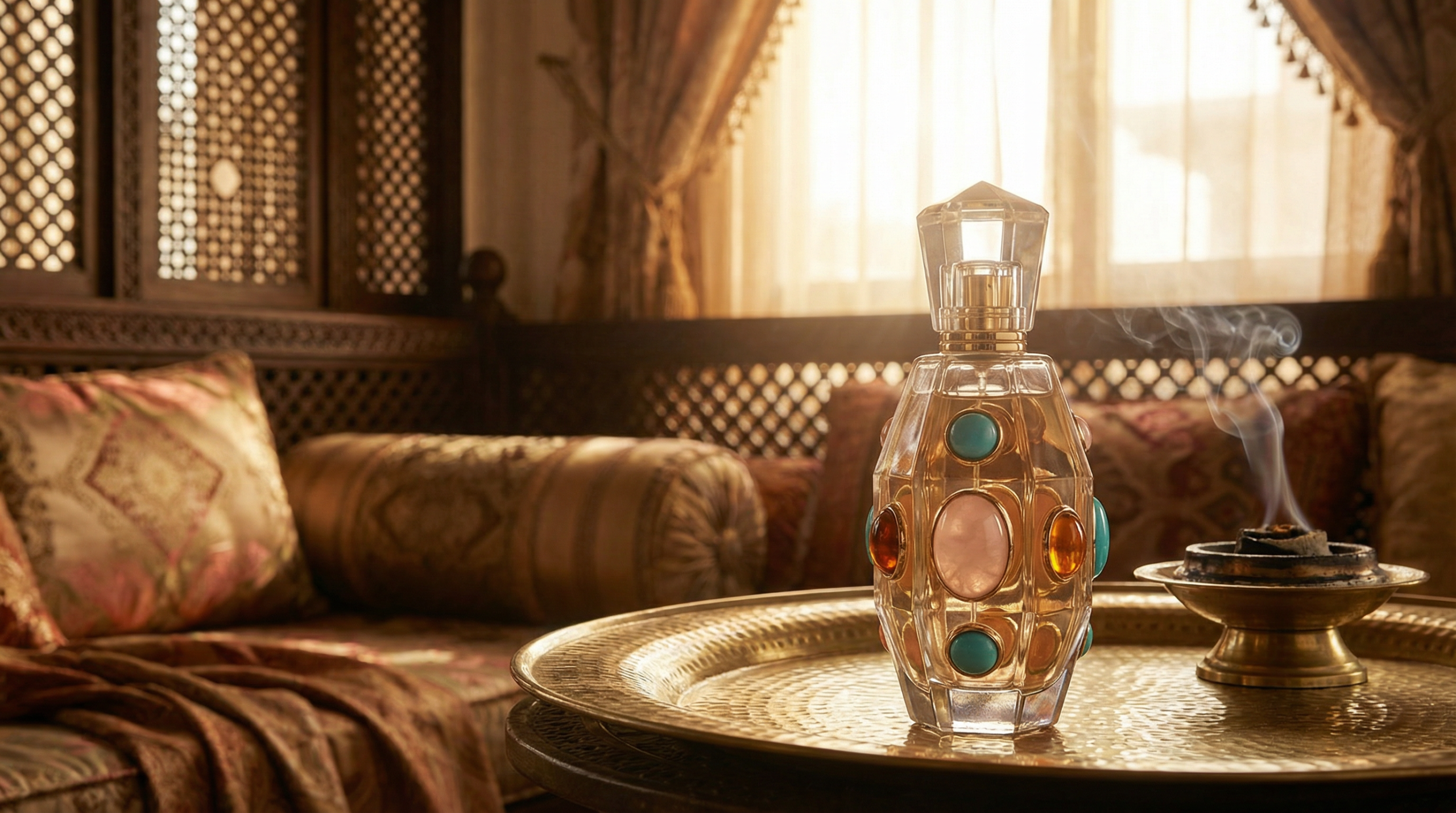
Long before wellness became a marketing buzzword, Gulf perfumers understood the energetic properties of gemstones. The practice of infusing attars with gemstones like rose quartz, amber, or turquoise wasn’t merely decorative—it represented a holistic approach to fragrance as spiritual wellness.
Traditional perfumers would place specific stones in attar vessels, sometimes for moon cycles, believing the gems transferred beneficial properties to the oils. Rose quartz was paired with floral attars for emotional balance, while darker stones accompanied heavier oud-based formulations for grounding.
While modern science may debate these effects, the ritual itself holds value. The intentionality of selecting both scent and stone, the patience required for proper infusion, and the mindful application transform perfume-wearing from routine to ceremony.
Secret Three: The Revival of Traditional Perfume Blending Ceremonies
In traditional Gulf households, perfume blending was a communal activity, often led by elder women who served as family perfumers. These gatherings combined practical skill-sharing with storytelling, as recipes were passed down orally alongside family histories and cultural wisdom.
The ceremony of blending—grinding resins, measuring rare oils, and testing combinations—created bonds between generations. In 2026, some families and cultural organizations are reviving these gatherings, recognizing that when these practices disappeared, something more than perfume knowledge was lost.
These modern interpretations maintain the educational core while adapting to contemporary schedules. The focus remains on understanding raw materials, respecting their origins, and creating personal rather than commercial fragrances.
Secret Four: Sustainable Sourcing & Rare Ingredients in 2026
The most prized traditional ingredients—wild agarwood, natural ambergris, genuine deer musk—have become increasingly rare. This scarcity has pushed 2026’s perfumery renaissance toward ethical considerations that actually align with traditional values of resourcefulness and respect for nature.
Sustainable oud cultivation, synthetic musk alternatives that replicate natural scents without harming animals, and transparent sourcing practices represent a modern evolution of Gulf perfumery’s core principle: treasure what is precious. Traditional perfumers never wasted rare materials; they used them judiciously and celebrated their value.
This shift toward sustainability doesn’t diminish luxury—it enhances it. Understanding the true cost and journey of ingredients deepens appreciation and connects modern wearers to the ecological wisdom embedded in traditional practices.
Secret Five: Modern Interpretations – Bridging Heritage with Contemporary Palates
The most exciting development in 2026 is how traditional Gulf fragrance arts are being interpreted for contemporary lifestyles without dilution. This isn’t about making heritage “trendy”—it’s about recognizing that these practices remain relevant when understood properly.
Younger enthusiasts are learning traditional techniques while adapting application methods for modern contexts. Office-appropriate attar layering, travel-sized bukhoor alternatives, and educational workshops taught by knowledge-keepers all represent this bridge between heritage and contemporary life.
The key lies in respecting the “why” behind traditional practices while allowing the “how” to evolve.
Preserving Fragrance Heritage While Moving Forward
The “lost” fragrance arts of the Gulf were never truly lost—they were waiting to be rediscovered by those ready to value depth over novelty. As 2026 unfolds, the path forward lies in approaching these traditions with curiosity and respect, learning from elders who carry this knowledge, and understanding that luxury fragrance is ultimately about personal meaning, cultural connection, and the stories scents tell across generations.