
No products added!
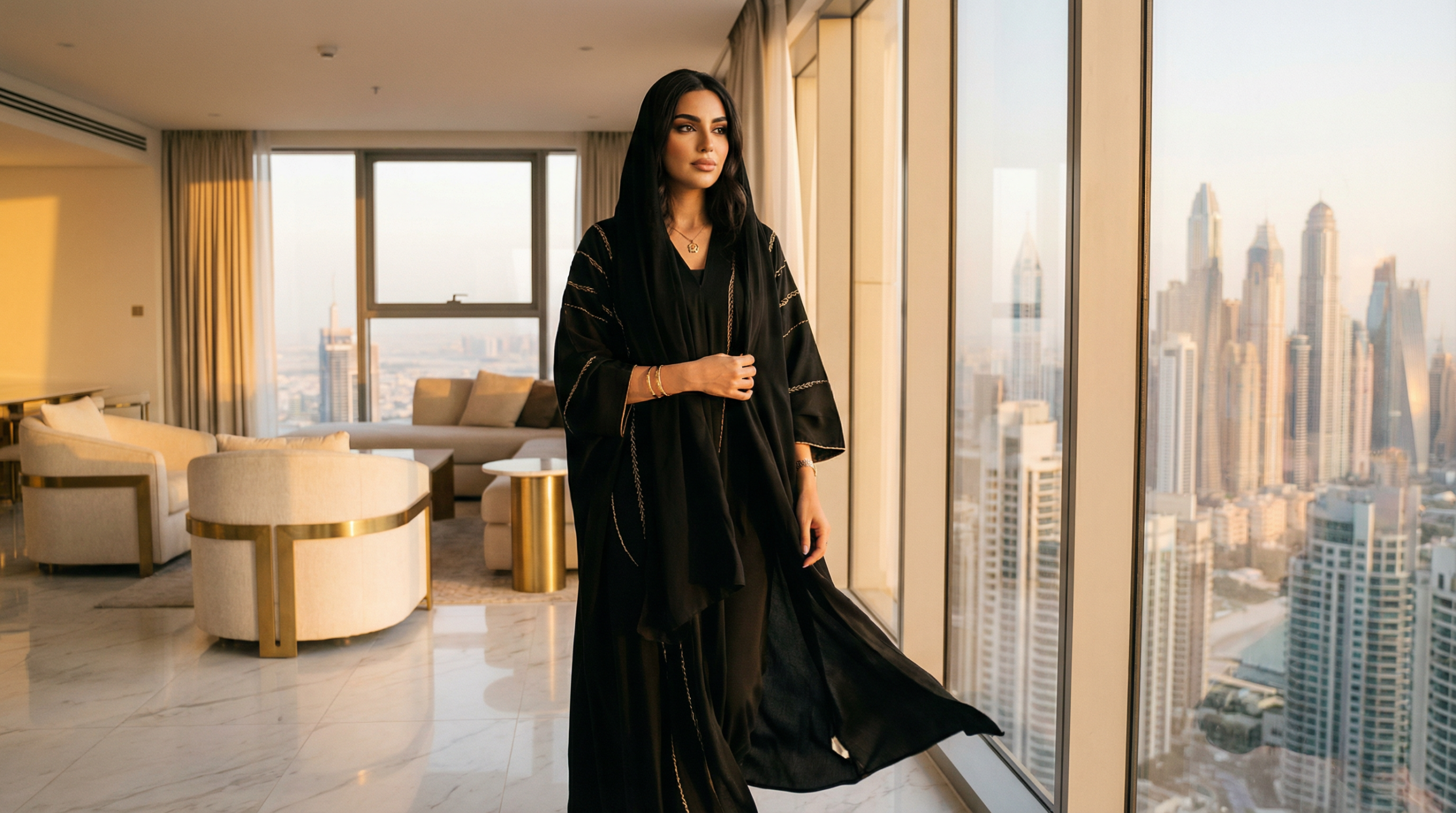

Understanding the Essence: Why Scent Matters for Your Abaya
The relationship between fragrance and modest fashion represents one of the most overlooked aspects of personal styling in the GCC region. While countless hours are devoted to selecting the perfect abaya—considering fabric, embellishment, and cut—the scent that accompanies this elegant garment often receives less strategic attention.
In Middle Eastern culture, perfume holds profound significance beyond mere aesthetics. It represents hospitality, refinement, and personal identity. When thoughtfully paired with an abaya, fragrance becomes an invisible accessory that completes your presence, leaving a memorable impression that extends far beyond visual impact.
The art of scent selection for modest fashion requires understanding how different fragrances interact with fabric, weather conditions, and social contexts throughout the Emirates and broader Gulf region.
The 1-2-3 Abaya Scent Rule: A Framework for Flawless Fragrance Layering
The 1-2-3 Abaya Scent Rule offers a structured approach to fragrance layering that honors both traditional Arabian perfumery and contemporary luxury trends. This framework divides scent selection into three distinct layers: the base for your abaya fabric, the heart for your occasion and environment, and the aura for your personal signature.
This systematic method prevents the common pitfall of fragrance overload while ensuring each scent element serves a purposeful role. Rather than applying a single perfume and hoping for the best, this approach creates a harmonious olfactory experience that evolves throughout the day.
Step 1: The Base – Choosing Your Abaya’s Olfactory Foundation
The foundation layer involves selecting a subtle, long-lasting scent specifically for the abaya fabric itself. This base should be applied sparingly to the garment—never directly on skin at this stage—focusing on areas like the inner hem or lining.
Deep, warm notes work exceptionally well for this purpose. Amber, sandalwood, and light oud create an enveloping foundation that becomes barely perceptible to others but provides you with a personal cocoon of comfort. These traditional Arabian elements have molecules that bond well with natural fibers, particularly crepe and silk.
Consider the fabric type carefully. Heavier materials like wool and velvet hold scent longer than lightweight linens or chiffons. For summer abayas in breathable fabrics, choose lighter woody notes. Winter abayas in heavier materials can support richer, more resinous bases.
Step 2: The Heart – Complementing Your Abaya’s Fabric and Occasion
The middle layer addresses the specific occasion and environmental conditions you’ll encounter. This heart note should be applied to pulse points and serves as the primary fragrance others will notice.
For daytime professional settings in Dubai or Riyadh, opt for fresh florals like rose, jasmine, or neroli—scents that feel elevated without overwhelming enclosed office spaces. Evening events and majlis gatherings allow for more opulent choices: rich florals combined with soft spices like saffron or cardamom.
The harsh summer heat of the Gulf requires special consideration. Citrus-based heart notes with bergamot or yuzu provide refreshing relief, while the cooler months of January and February invite warmer floral compositions with depth and complexity.
Step 3: The Aura – Selecting Your Personal Scent Signature
The final layer represents your unique olfactory identity—your signature that makes people think of you long after you’ve left a room. This is where gemstone-infused luxury perfumes have gained remarkable popularity across the GCC in 2026.
Gemstone-infused fragrances incorporate elements like crushed diamonds, sapphire extracts, or amber resin, believed to enhance the perfume’s energy and longevity. Whether the benefits are scientifically proven or culturally symbolic, these perfumes offer an undeniable sense of luxury and individuality.
Apply this signature scent last, focusing on hair (if uncovered at home), the nape of the neck, and behind the knees. This creates a subtle trail that follows your movement without announcing your presence before you enter a room.
Beyond the Rule: Maintaining Longevity and Scent Etiquette in the GCC
Understanding cultural fragrance etiquette remains paramount in Gulf societies. While perfume is deeply appreciated, overpowering scent in public spaces, particularly mosques, medical facilities, or during Ramadan, shows lack of awareness.
The concept of “sillage”—the trail of scent you leave—should remain subtle in most public contexts. Reserve bold, statement fragrances for private gatherings and celebrations where abundant perfume is expected and welcomed.
For longevity, invest in high-quality perfume oils rather than alcohol-based sprays. Traditional attar and concentrated parfums last significantly longer on both skin and fabric, requiring less frequent application throughout the day.