
No products added!
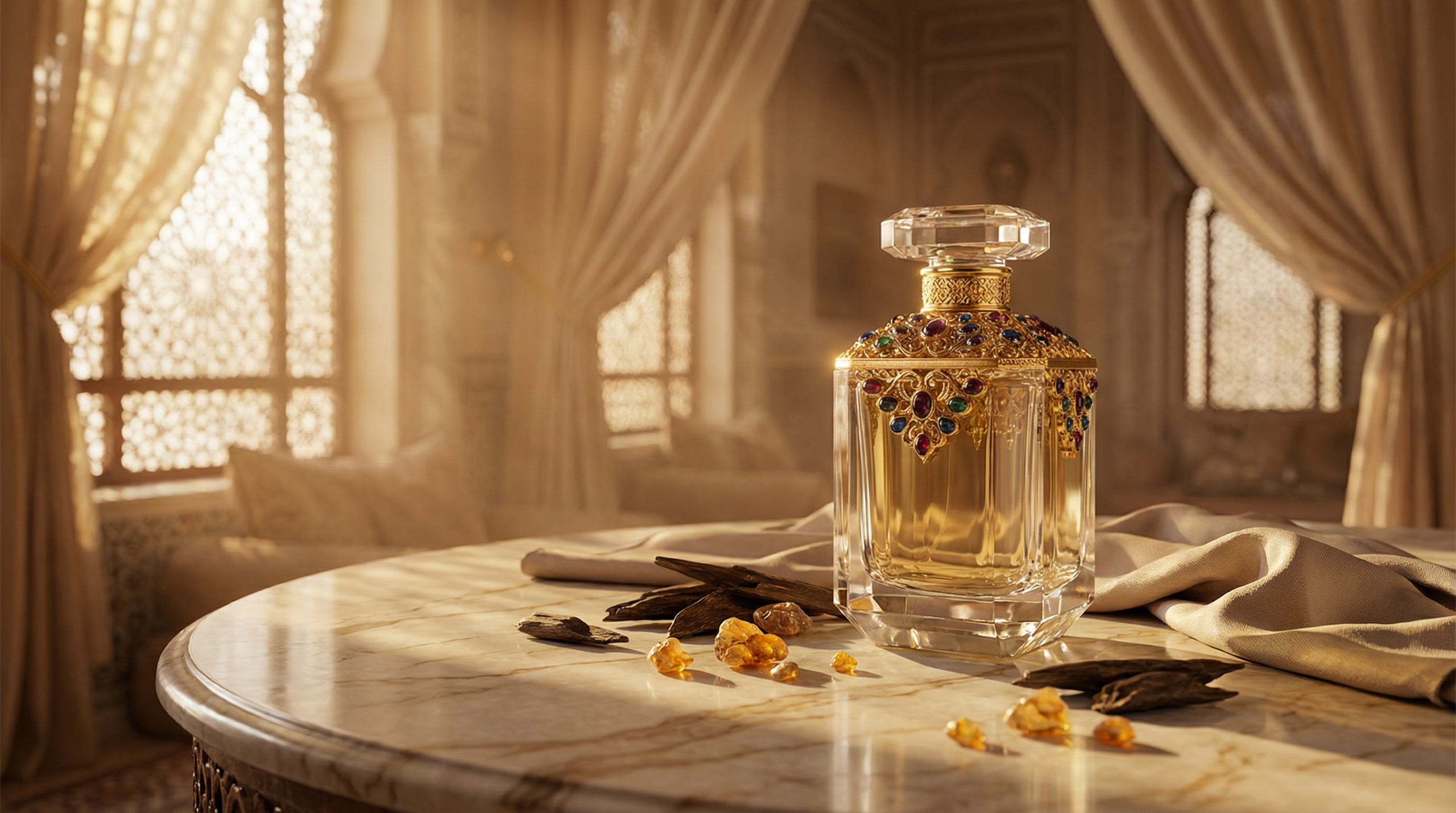

For fashion-conscious women across the UAE and GCC, fragrance is far more than an accessory—it’s a signature, a memory, and an expression of refined taste. If you’ve ever wondered why a single application of an Arabic perfume can linger from morning prayer to evening gatherings, you’re not alone. The extraordinary longevity of these scents is rooted in centuries of tradition meeting cutting-edge perfumery science.
The Enduring Legacy: A Glimpse into Arabic Perfumery’s Rich History
Arabic perfumery traces its roots back thousands of years, when ancient civilizations in the Arabian Peninsula mastered the art of extracting and preserving natural essences. Unlike the alcohol-heavy formulations that became popular in European perfumery, traditional Arabic fragrances were crafted as concentrated oils designed to withstand the region’s intense heat and to last throughout long desert journeys.
This heritage wasn’t just about practicality. In Islamic culture, wearing beautiful fragrances has always been encouraged as part of personal grooming and spiritual cleanliness. The demand for long-lasting scents became woven into the fabric of daily life, from Friday prayers to wedding celebrations. These cultural expectations pushed perfumers to perfect their craft over generations, creating formulations that would endure from dawn to dusk.
Beyond Alcohol: The Science of Longevity in 2026 Formulations
The primary secret behind Arabic perfume longevity lies in concentration levels that far exceed typical Western eau de toilettes. While a standard commercial perfume might contain 5-15% fragrance oils diluted in alcohol, Arabic perfumes often feature concentrations of 20-40% or exist as pure perfume oils with minimal to no alcohol content.
Alcohol evaporates quickly, especially in warm climates. By using oil-based carriers or drastically reducing alcohol content, Arabic formulations create a slower evaporation rate. The fragrance molecules release gradually throughout the day rather than dissipating in the first few hours.
In 2026, advanced molecular encapsulation techniques have further enhanced this natural advantage. Microscopic spheres now protect delicate scent molecules, releasing them slowly when exposed to body heat and movement. This technology respects traditional formulation wisdom while extending wear time even further—often 12-24 hours or more.
Precious Ingredients & Advanced Extraction: Unveiling the Heart of Lasting Scents
The ingredients themselves matter tremendously. Arabic perfumery has always prized base notes known for their tenacity: precious oud wood, amber resins, natural musks, and smoky bakhoor. These materials have larger, heavier molecules that evaporate slowly, providing the foundation that keeps a fragrance alive on skin.
Oud, perhaps the most celebrated ingredient, can last days rather than hours. Its complex molecular structure means it transforms beautifully over time, revealing different facets as it wears. Similarly, amber and musk create a lingering warmth that anchors lighter top notes.
Modern extraction methods have revolutionized how these traditional ingredients are captured. CO2 extraction and cold-pressing techniques preserve the full aromatic profile without degrading the compounds that contribute to longevity. Some luxury formulations now incorporate gemstone-infused essences—where precious stones are used during the maceration process to subtly influence the oil’s energetic properties and stability.
The aging process matters too. Like fine wine, many premium Arabic perfumes are aged for months or years, allowing ingredients to marry and mature into more stable, long-lasting compositions.
Sillage and Story: How Culture Amplifies the Arabic Perfume Experience
In the GCC, fragrance application is both an art and a ritual. Women layer their scents strategically: starting with rich perfume oils on pulse points, perhaps burning bakhoor to scent hair and clothing, then finishing with a spray perfume as a final touch.
This layering technique creates extraordinary sillage—the scent trail that lingers when someone passes. It also multiplies longevity because the fragrance exists in multiple formats and locations on the body, each releasing at different rates.
The cultural context matters too. In a society where personal grooming is deeply valued and fragrances are gifted as precious tokens, there’s both expectation and expertise around choosing scents that truly last. This demand drives perfumers to maintain the highest standards.
The Future of Fragrance: Innovations Shaping Arabic Perfume Durability by 2026
Looking ahead, the perfume industry is embracing sustainability without sacrificing performance. Biotechnology now produces ethical alternatives to rare ingredients while maintaining their lasting power. Synthetic oud compounds, for example, can replicate the longevity of natural agarwood sustainably.
Personalization technology is emerging too. DNA-based fragrance matching and AI-powered scent profiling help women find formulations that work best with their unique skin chemistry—maximizing wear time based on individual pH levels and body temperature.
Smart packaging innovations protect precious oils from light and air degradation, ensuring the perfume in the bottle maintains its potency from first spray to last.
Key Takeaways
The exceptional longevity of Arabic perfumes stems from a perfect marriage of tradition and innovation: high concentration levels, precious base ingredients, oil-based formulations, expert layering techniques, and now, cutting-edge preservation and extraction technologies. For the discerning woman in Dubai or Riyadh, understanding these factors empowers you to invest wisely in fragrances that honor both heritage and modernity—scents that truly accompany you through every meaningful moment of your day.