
No products added!

The Soul of Scent: Exploring Gemstone Lore in Perfumery
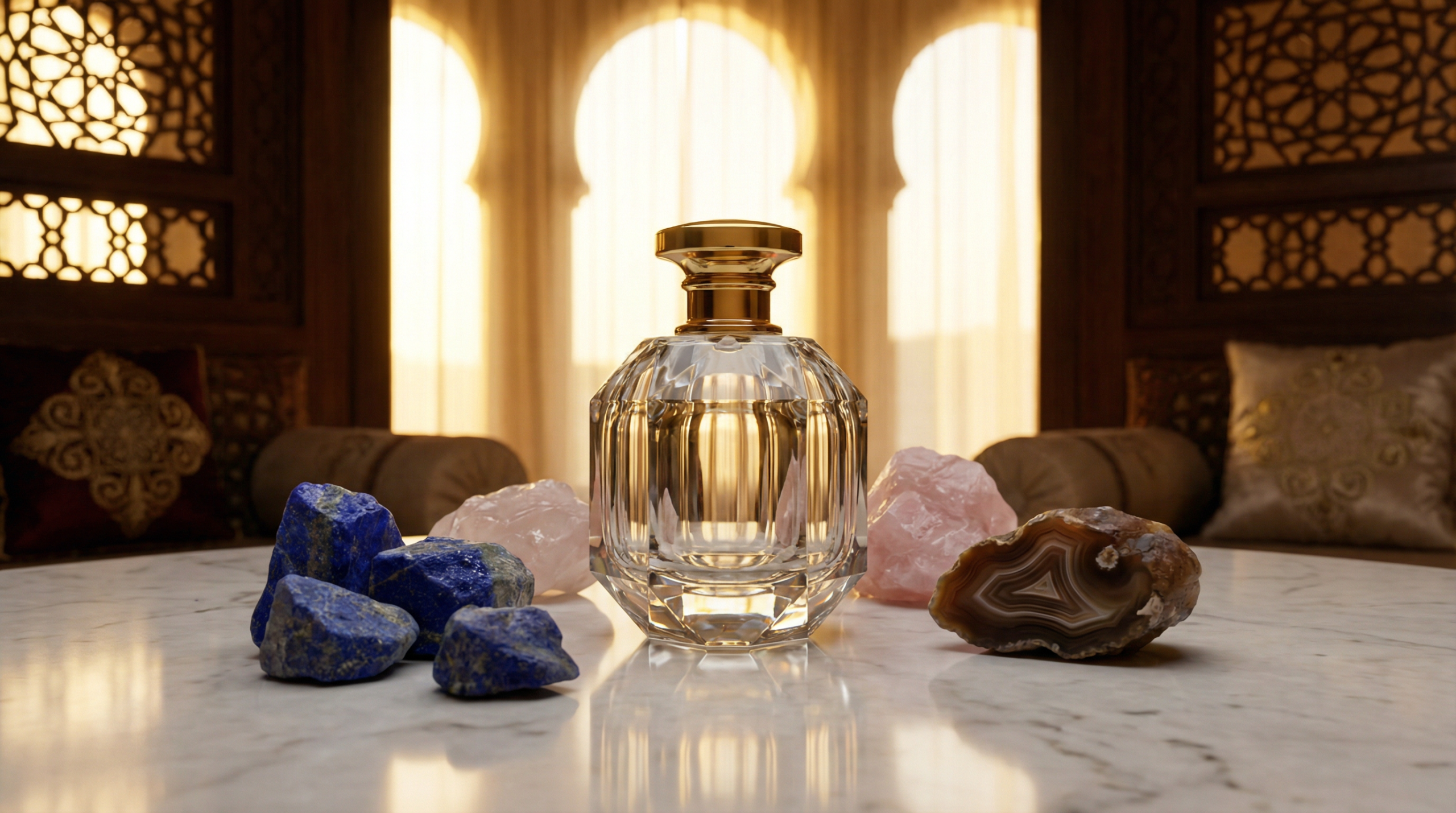
The marriage of gemstones and fragrance is far from a modern marketing gimmick. Ancient civilizations believed that crystals and precious stones possessed vibrational energies that could influence emotions, spiritual well-being, and even physical health. From Egyptian priestesses storing sacred oils in lapis lazuli vessels to Arabian alchemists blending attars in agate containers, the relationship between minerals and scent runs deep in human history.
In the Middle Eastern perfume tradition, this connection holds particular significance. The philosophy underlying gemstone-infused perfumery aligns with centuries-old beliefs about the intentional preparation of fragrance. Just as a master attar maker dedicates months to distilling rose petals, gemstone perfumers invest patient care into their craft, believing that the stone’s energy subtly influences the final composition.
Contemporary perfumers who practice this art view gemstones not as decorative additions but as active participants in the fragrance creation process. The belief centers on the idea that prolonged contact between carefully selected crystals and aromatic oils creates an energetic exchange that cannot be measured by conventional chemistry yet can be experienced by those attuned to subtle differences.
Alchemy in a Bottle: The Meticulous Process of Gemstone Infusion
The technical process of gemstone infusion requires precision, patience, and an almost meditative approach. Unlike simple maceration of flowers or spices, gemstone infusion operates on principles that blend traditional perfumery with subtle energy work.
The process typically begins with selecting ethically sourced, unpolished gemstones that correspond to the desired fragrance profile. Rose quartz might accompany floral compositions, while black tourmaline could complement deeper oud-based formulations. These stones are cleansed through specific rituals—often involving moonlight exposure or sound vibration—before being introduced to the fragrance base.
The actual infusion occurs in controlled environments where temperature, light, and time are carefully managed. Gemstones rest in contact with precious oils for periods ranging from lunar cycles to entire seasons. This extended contact period is considered essential, as practitioners believe the stone’s vibrational frequency gradually harmonizes with the aromatic molecules.
Throughout 2026, master perfumers in the Gulf region have refined these techniques further, incorporating scientific understanding of crystalline structures while honoring traditional wisdom. The result is a methodology that respects both ancestral knowledge and modern sustainability standards.
Sourcing the Sacred: Ingredients Beyond the Ordinary
The discerning consumers of the GCC market have elevated expectations regarding ingredient provenance. Ethical sourcing has transitioned from optional virtue to absolute necessity, particularly for luxury perfumery incorporating gemstones.
Responsible perfumers now trace their gemstone sources as meticulously as they document their oud wood origins. Conflict-free mining, fair labor practices, and environmental restoration programs have become standard considerations. The same attention extends to aromatic ingredients—sustainably harvested sandalwood, ethically sourced musk alternatives, and amber collected through traditional, non-destructive methods.
This commitment to ethical sourcing resonates deeply with values held across Middle Eastern luxury markets. The concept of barakah—the blessing or spiritual goodness in something—applies not just to the final product but to every step of its creation. When ingredients are obtained through just means, consumers believe the resulting fragrance carries a purer essence.
Additionally, the traceability these practices demand has introduced transparency previously uncommon in perfumery. Knowing the journey of both the gemstone and the botanical ingredients adds layers of meaning to the wearing experience.
Aromatic Narratives: Connecting Scent to Modest Arabic Aesthetics
The philosophy underlying gemstone perfumery mirrors principles found in modest Arabic fashion—both celebrate intentionality, quality over quantity, and the beauty found in restraint and depth rather than ostentation.
A carefully composed gemstone-infused fragrance operates like a well-tailored abaya or jalabiya. The immediate impression is refined and appropriate, while closer appreciation reveals intricate details and profound craftsmanship. The scent doesn’t announce itself aggressively but unfolds gradually, rewarding those who take time to notice.
This alignment extends to the spiritual dimension. Just as modest fashion represents a conscious choice reflecting inner values, gemstone perfumery practitioners view their creations as tools for mindfulness and self-expression. The ritual of applying such fragrances becomes a moment of intention-setting, a daily practice of connecting with something crafted with purpose and care.
For the fashion-conscious woman navigating Dubai’s cosmopolitan landscape or Riyadh’s evolving style scene, these fragrances complement rather than compete with personal presentation. They enhance presence without overwhelming, creating an aromatic signature that is both distinctive and harmonious with cultural sensibilities.
Glimpsing the Future: The Evolution of Artisanal Perfumery by 2026
As 2026 unfolds, the gemstone perfumery landscape continues evolving in fascinating directions. Technology now allows perfumers to measure subtle electromagnetic frequencies in gemstones, providing data that informs traditional intuition without replacing it. This synthesis of ancient wisdom and modern science has created unprecedented possibilities.
Sustainability certifications specific to gemstone-infused perfumery have emerged, offering consumers clear standards for evaluating products. Blockchain technology tracks gemstone and ingredient journeys from source to bottle, addressing authenticity concerns while supporting ethical producers.
Education has also expanded significantly. Workshops throughout the Gulf region now teach the fundamentals of gemstone selection, cleansing, and infusion, democratizing knowledge once guarded within family traditions. This openness strengthens the entire industry while preserving its cultural significance.