
No products added!
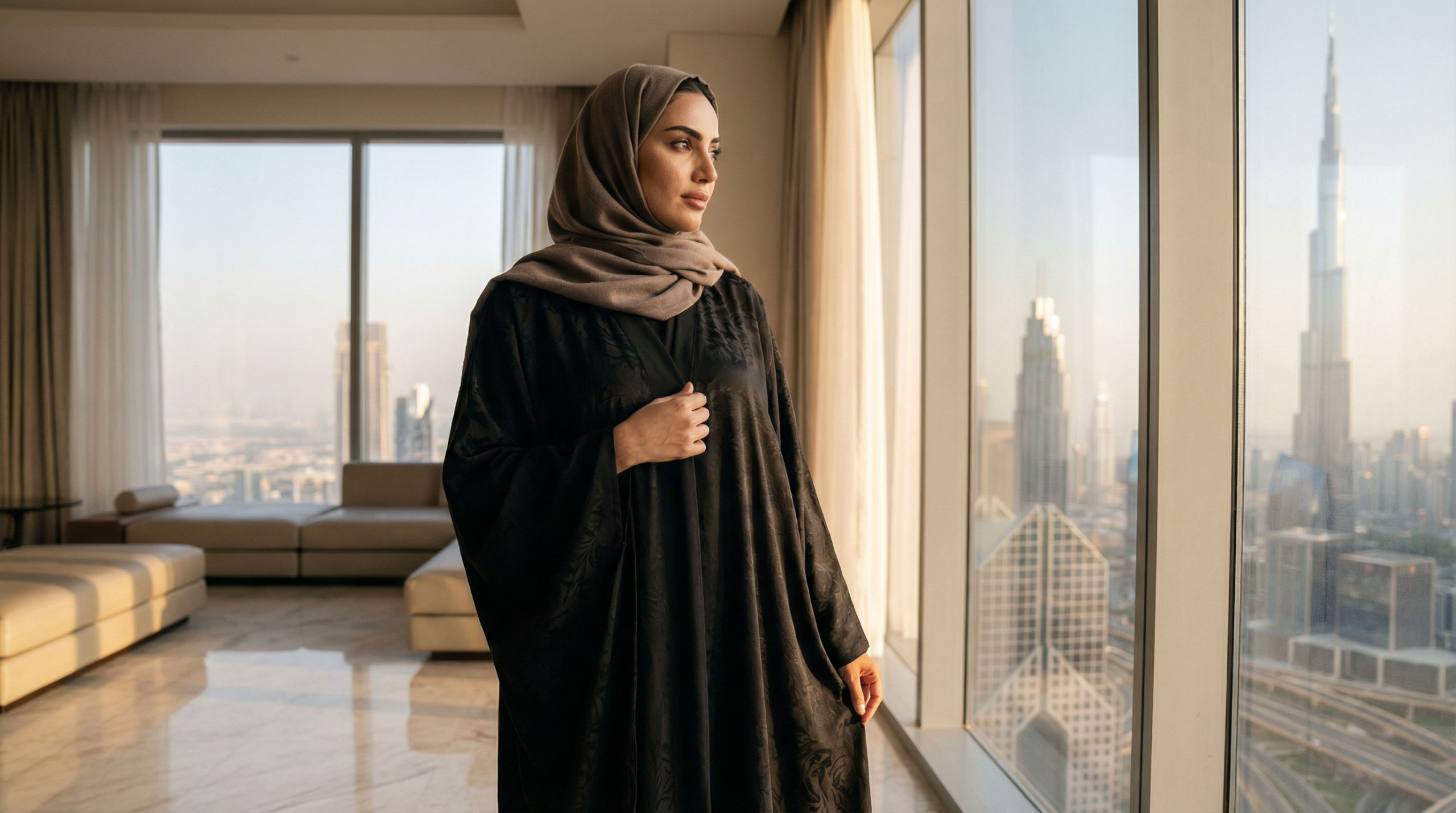

Understanding January in the GCC: The Nuance of ‘Cool’ Weather
January in the Gulf presents a unique climate paradox that shapes modest fashion choices throughout the region. While Dubai mornings might greet you with pleasant 15°C temperatures, afternoons can climb to a comfortable 24°C. Riyadh experiences cooler variations, occasionally dipping to 10°C at dawn, while coastal cities like Jeddah maintain milder conditions.
This temperature fluctuation demands intelligent wardrobe planning. The traditional notion of “winter wear” doesn’t quite apply here—instead, think transitional elegance. Your abaya needs to function across multiple microclimates within a single day, from air-conditioned indoor spaces to sun-drenched outdoor gatherings.
Understanding these regional differences helps refine your fabric selections and styling approach. What works for a morning school run in Abu Dhabi might feel excessive by midday, making versatility your most valuable fashion asset this January.
Fabric First: Your Guide to January Abaya Textiles
The foundation of comfortable January styling lies in textile intelligence. Lightweight wool blends have emerged as January favorites, offering subtle warmth without bulk. These fabrics drape beautifully while providing just enough insulation for cooler moments.
Heavier silk crepes and satin-backed fabrics deliver temperature regulation that feels almost intuitive. The natural breathability of quality silk allows air circulation during warmer hours while maintaining a touch of warmth when needed. Structured linen-cotton combinations work exceptionally well for those navigating predominantly outdoor schedules.
Consider double-layered fabrics where the inner lining differs from the outer shell. This construction technique provides natural insulation pockets while maintaining the flowing silhouette that defines abaya elegance. Ponte knits and technical blends designed specifically for transitional weather have also gained significant traction throughout GCC fashion circles.
Texture matters equally. Fabrics with subtle nap or brushed finishes add visual richness while contributing to thermal comfort. Avoid purely synthetic materials that trap heat—January afternoons can still warrant breathability despite the cooler mornings.
Chic Layering for the Climate: Mastering the Art of Abaya Styling
Strategic layering transforms a single abaya into multiple outfit possibilities. Begin with thoughtful innerwear choices—lightweight turtlenecks in neutral tones, fine-knit cardigans, or silk undershirts create warmth without visible bulk.
The open-front abaya style excels in January’s variable climate. Worn loosely over tailored trousers and a modest tunic, it provides coverage while allowing easy temperature adjustment. Button-front designs offer similar versatility, letting you adapt your coverage throughout the day.
Consider the art of draping. A pashmina or lightweight cashmere wrap folded strategically over shoulders adds dimension and warmth without compromising the abaya’s lines. This approach works particularly well for evening events when temperatures drop.
For truly cool mornings, a structured coat worn over your abaya creates a sophisticated silhouette. Choose styles that complement rather than overwhelm—clean lines and coordinated colors maintain the elegant aesthetic central to modest fashion.
2026 Abaya Trends: Embracing Warmth with Elegance
January 2026 sees several distinctive trends shaping abaya design. Enriched textures dominate, with jacquard patterns, subtle brocades, and embossed fabrics adding depth without excessive embellishment. These textured surfaces catch light beautifully, creating visual interest appropriate for both daytime and evening wear.
Sleeve details have evolved significantly. Bell sleeves with structured cuffs, bishop sleeves that taper at the wrist, and kimono-inspired sleeves offer both style and practical warmth. These designs allow for layering underneath while maintaining proportional balance.
Nuanced embellishments focus on craftsmanship—hand-stitched details along seams, tonal embroidery, and geometric patterns inspired by Islamic art traditions. The emphasis shifts from flashy decoration to subtle artistry that reveals itself upon closer inspection.
Architectural cuts incorporating gentle pleating, asymmetrical hemlines, and innovative collar designs add contemporary flair while respecting traditional modesty principles. Color palettes lean toward warm earth tones, deep jewel shades, and sophisticated neutrals that transition effortlessly between seasons.
Accessorizing Your January Abaya: From Scarves to Statement Pieces
Accessories elevate January styling from functional to exceptional. Silk scarves in complementary colors add warmth around the neck while introducing pattern or texture contrast. Cashmere hijabs provide gentle insulation perfect for cooler mornings.
Statement belts define the waist, creating structure and visual interest while allowing layered pieces underneath to remain discreet. Choose leather or fabric options that coordinate with your footwear for cohesive styling.
Consider fragrance as an invisible accessory. Winter-appropriate scent profiles—warm ambers, rich ouds, spiced florals—create a sensory dimension that complements heavier fabrics beautifully. The interplay between textile and fragrance crafts a complete aesthetic experience.
Footwear choices matter significantly. Closed-toe options in soft leather or suede suit cooler temperatures while maintaining elegance. Ankle boots paired with floor-length abayas create sophisticated proportions ideal for January styling.
Seamless Transition: Day-to-Evening Abaya Looks for January
Mastering the day-to-evening transition requires minimal effort with intelligent planning. Begin with a quality base abaya in a versatile fabric and neutral color. For daytime, keep accessories minimal and practical.
As evening approaches, introduce one or two elevated elements. Exchange a simple hijab for one with subtle embellishment. Add a statement jewelry piece—a sculptural ring or elegant bracelet. These small adjustments shift the entire aesthetic from casual to refined.
Consider fragrance layering for evening events. A deeper, more complex scent applied over your daytime fragrance creates olfactory sophistication that matches the visual transformation. This subtle shift completes the transition without requiring a complete outfit change.
The key lies in choosing abayas with inherent versatility—designs that hold their elegance across contexts while adapting to your styling choices.
Key Takeaways for January Abaya Styling
Successful January abaya styling in the GCC centers on fabric intelligence, strategic layering, and versatile design choices. Prioritize textiles that offer natural temperature regulation, embrace transitional pieces that adapt throughout the day, and incorporate trends that align with your personal aesthetic while respecting modest fashion principles. By understanding the unique climate nuances of GCC winters and selecting pieces that balance comfort with elegance, you create a wardrobe that serves you beautifully from cool mornings through warmer afternoons, embodying the sophisticated grace that defines contemporary modest fashion.