
No products added!
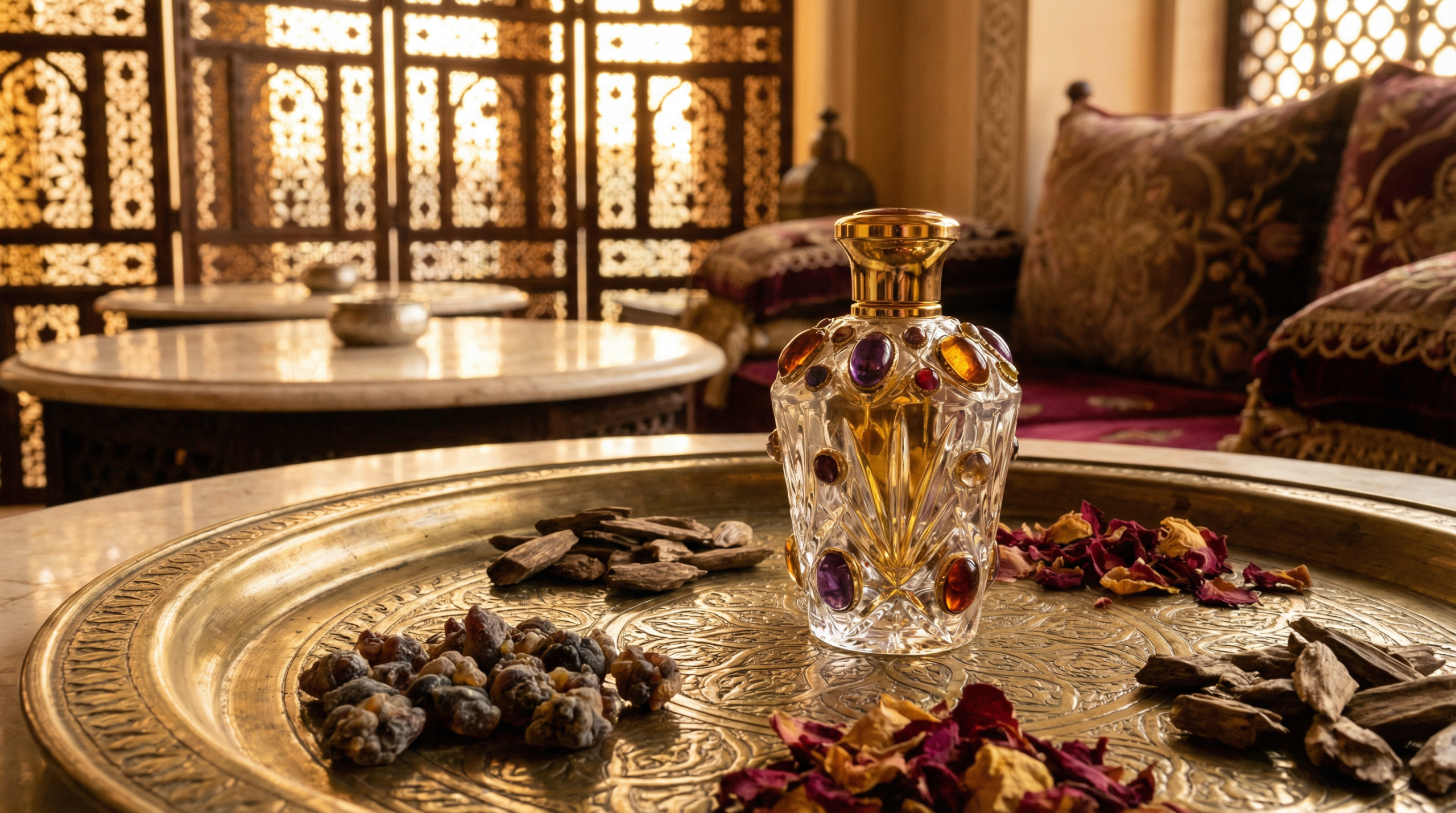

Every fragrance tells a story that stretches back through centuries. When you apply perfume each morning, you’re participating in an ancient ritual—one that connects you to the desert traders, royal courts, and sacred temples of civilizations long past. Understanding your scent DNA means tracing these aromatic threads back to their origins, particularly in the Middle East, where perfumery was born.
Unearthing the Echoes: What is Your Scent DNA?
Scent DNA encompasses more than just the molecular structure of fragrance compounds. It represents the historical lineage, cultural significance, and evolutionary journey of aromatic ingredients from ancient times to the present day. Just as genealogists trace family trees, perfume enthusiasts can map their favorite fragrances back to specific geographic regions, historical periods, and traditional practices.
The concept reveals that modern luxury perfumery isn’t an invention of contemporary chemistry—it’s a continuation of knowledge passed down through generations. Each ingredient carries its own heritage, and when combined, these elements create a fragrance genealogy unique to certain cultures and regions.
From Ancient Lands to Modern Luxury: The Middle East’s Enduring Fragrance Legacy
The Arabian Peninsula, Mesopotamia, and the broader Levant region served as the birthplace of sophisticated perfumery. Archaeological evidence from these areas dates fragrance creation back over 4,000 years. Ancient texts describe elaborate distillation processes, aromatic trade routes, and the sacred use of incense in religious ceremonies.
This region’s dominance in perfumery wasn’t accidental. The natural landscape yielded precious ingredients like frankincense from Oman, myrrh from Yemen, and rose from Persia. The strategic position along trade routes allowed Middle Eastern perfumers to access exotic materials from India, Africa, and Southeast Asia, creating a unique aromatic vocabulary.
These traditions never disappeared. While European perfumery gained prominence in the 18th and 19th centuries, Middle Eastern practices continued unbroken, preserving techniques and formulations that modern perfumers now recognize as invaluable heritage.
Timeless Triumphs: Key Fragrance Families & Their Ancestral Roots
Understanding fragrance families reveals direct links to ancient practices. The Oriental family, characterized by warm, spicy, and resinous notes, directly descends from incense-burning traditions in temples and palaces. These scents carried spiritual significance and symbolized luxury.
The woody family traces its lineage to sacred materials like sandalwood and agarwood, used in meditation and ceremonial contexts across Asia and the Middle East. Floral families, particularly rose-based perfumes, connect to Persian gardens where rose water production reached artistic heights during the Islamic Golden Age.
Amber compositions, beloved across the GCC today, replicate ancient formulations that combined labdanum, vanilla, and benzoin—ingredients traded along the Silk Road and valued as highly as gold.
Decoding the Oud & Sandalwood Story: Pillars of Oriental Perfumery
Oud, derived from agarwood infected with specific mold, represents perhaps the most illustrious branch of the fragrance family tree. Referenced in religious texts and poetry spanning millennia, oud’s complex, deeply woody character forms the backbone of traditional Arabian perfumery. Its rarity and labor-intensive production made it a status symbol in ancient courts—a significance it retains in 2026.
Sandalwood holds equally prestigious ancestry. Used in Vedic rituals and Islamic traditions alike, this creamy, meditative wood became central to both spiritual practices and personal adornment. Its ability to fix other fragrances made it invaluable to ancient perfumers, a role it continues to play in modern compositions.
Together, these ingredients represent the intersection of spirituality, luxury, and artisanal craft—values deeply embedded in GCC culture.
The Cultural Tapestry: Scent as Identity & Heritage in the GCC
In the Gulf region, fragrance extends beyond personal preference into cultural identity. The tradition of layering scents—applying bakhoor to clothing, using fragrant oils, then finishing with perfume—creates a personalized aromatic signature passed down through families.
This practice reflects a sophisticated understanding that scent communicates social status, personal values, and cultural belonging. The continuity of these traditions demonstrates how perfumery in this region functions as living heritage rather than historical artifact.
The preference for rich, long-lasting compositions isn’t simply about luxury—it reflects climatic adaptation developed over centuries and a cultural appreciation for presence and permanence in fragrance.
Cultivating Your Signature Scent: A Journey Through Time
Discovering your scent DNA begins with curiosity about the ingredients you gravitate toward. Notice whether you prefer resinous notes like frankincense, floral elements like jasmine and rose, or woody bases like sandalwood. Each preference connects you to specific historical traditions and geographical origins.
Research the cultural contexts of your favorite notes. Understanding that rose water production in Persia reached its zenith during the 10th century, or that frankincense trade routes shaped ancient economies, enriches your relationship with fragrance beyond superficial appreciation.
Consider how traditional layering techniques might enhance your scent experience. This approach, refined over millennia in the Middle East, allows you to create depth and longevity that single applications cannot achieve.