
No products added!
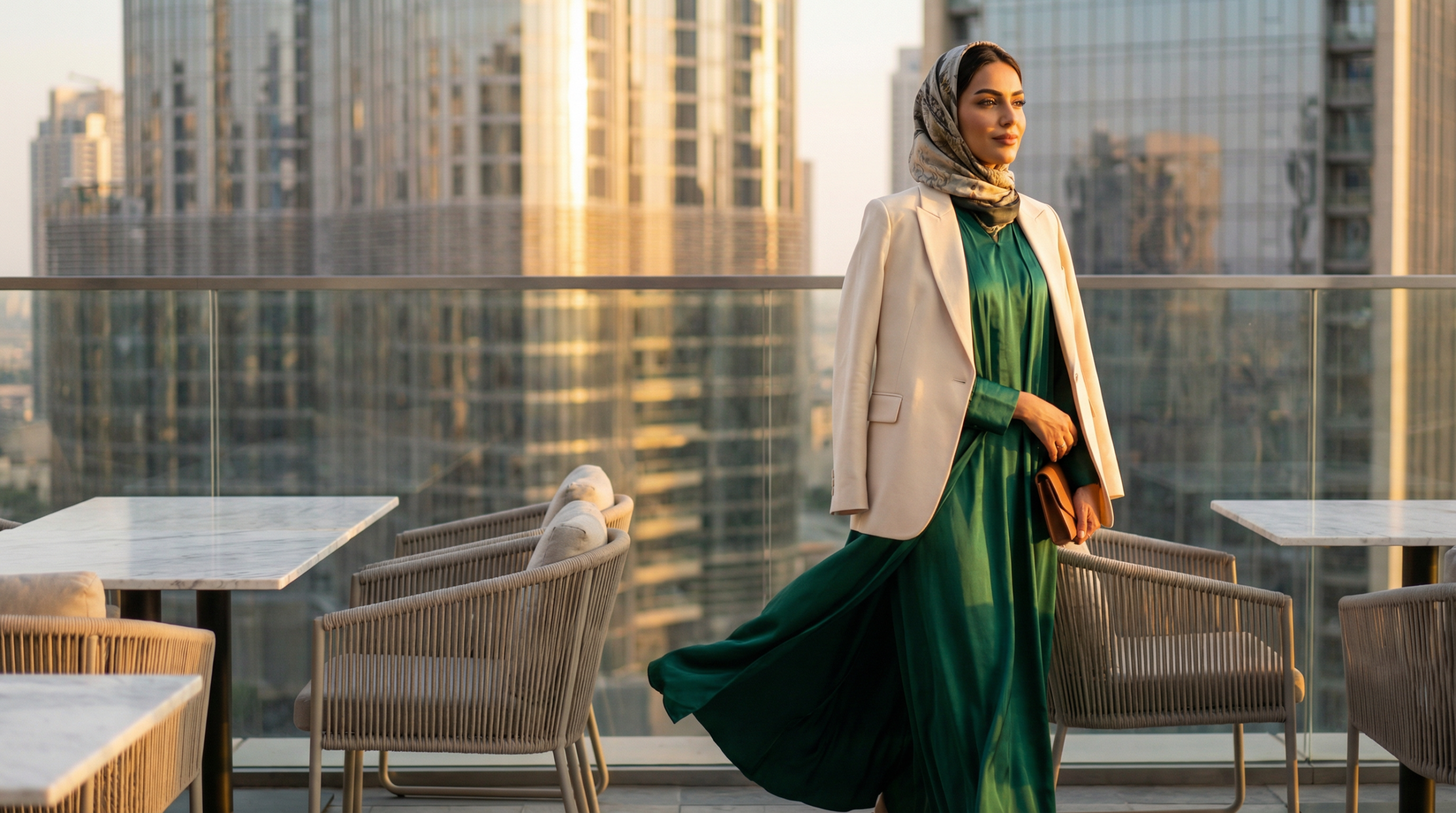

The Gulf’s fashion capitals are experiencing a renaissance this winter, with Dubai and Riyadh each carving distinct identities in the modest fashion landscape. January 2026 has brought forth fascinating contrasts between these two powerhouses, revealing how climate, culture, and creative energy shape what women wear on the streets.
The Evolving Canvas: Dubai’s Modest Street Style in January 2026
Dubai’s streets this January showcase a masterclass in cosmopolitan layering. The city’s relatively mild winter has inspired a fusion aesthetic where structured outerwear meets flowing traditional silhouettes.
Lightweight wool blends dominate the scene, with fashion-forward women pairing tailored blazers over floor-length tunics. The color palette skews toward rich jewel tones—emerald greens, sapphire blues, and deep burgundies—reflecting the city’s international influences. Japanese-inspired minimalism has also made significant inroads, with clean lines and architectural draping becoming increasingly popular.
What sets Dubai apart is the confident mixing of global trends with traditional modesty. Oversized scarves styled as statement pieces, asymmetrical hemlines on abayas, and unexpected texture combinations signal a city comfortable with fashion experimentation while maintaining cultural authenticity.
Riyadh’s Resurgence: Defining Saudi Street Elegance This Season
Riyadh has emerged as a powerhouse of refined, heritage-forward styling that feels simultaneously rooted and revolutionary. January 2026 has seen the Saudi capital embrace a more formal, sophisticated approach to street style.
The city’s cooler winter temperatures have allowed for luxurious layering with heavier fabrics like cashmere-blend abayas and silk-lined outerwear. Riyadh’s fashion enthusiasts favor a more tonal aesthetic—monochromatic looks in blacks, camels, and soft grays create visual impact through texture rather than color contrast.
What distinguishes Riyadh is the meticulous attention to craftsmanship details. Hand-embroidered cuffs, subtle metallic threading, and precision tailoring reflect a city that values artisanal excellence. The influence of local design talent has created a distinctly Saudi vernacular that honors tradition while pushing boundaries.
Silhouette Story: Abayas, Kaftans, and Contemporary Modesty Across Cities
The abaya remains central to both cities but tells different stories depending on location. Dubai’s interpretations lean toward versatility—wrap styles that can transform from formal to casual, and convertible designs with detachable sleeves or layers.
Riyadh’s abayas tend toward statement-making through subtle details rather than structural innovation. Think concealed pockets, weighted hems for perfect draping, and interior lining in contrasting luxury fabrics that hint at hidden elegance.
Kaftans have experienced a resurgence in both cities as elevated loungewear transitions to street-appropriate attire. Dubai favors printed kaftans with bold geometric patterns, while Riyadh gravitates toward solid colors with embellishment focused on necklines and sleeve edges.
The Essence of Style: Gemstone-Infused Perfumes in Daily Wear
Fragrance has become the invisible accessory completing every ensemble, with distinct preferences emerging between the two cities. Dubai’s cosmopolitan energy favors lighter, layerable scents with gemstone associations—crystal-clear bergamot notes, aquamarine-inspired marine accords, and translucent florals that complement the city’s modern aesthetic.
Riyadh’s perfume culture runs deeper and richer. Amber-infused compositions reminiscent of carnelian warmth, intense oud blends associated with onyx sophistication, and resinous formulations create lasting impressions. The preference leans toward concentrated oils and attars that develop throughout the day.
Both cities share an appreciation for fragrance as personal signature rather than fleeting accessory. Women build scent wardrobes as carefully as clothing collections, understanding that perfume communicates identity and intention.
Cultural Currents and Climate Callings: Influences on January Fashion
Dubai’s international population creates constant cross-pollination of ideas. Korean modest fashion influences, European tailoring standards, and traditional Emirati aesthetics coexist, creating endless styling possibilities. The city’s position as global business hub means professional versatility remains paramount.
Riyadh’s recent cultural opening has unleashed creative energy long present but newly visible. Local design schools, art initiatives, and cultural festivals provide inspiration that feels authentically Saudi. The climate allows for winter fabrics rarely possible in summer months, encouraging investment in quality cold-weather modest wear.
Anticipating the Style Verdict: Which City Leads in 2026?
Rather than declaring a winner, January 2026 reveals two distinct fashion philosophies, each winning in different dimensions. Dubai excels in versatility and global fusion, creating looks that translate across borders. Riyadh triumphs in craftsmanship and cultural authenticity, developing a signature aesthetic rooted in Saudi heritage.
The real victory lies in how both cities demonstrate that modest fashion contains multitudes—conservative yet creative, traditional yet contemporary, locally inspired yet globally relevant. Whether you connect with Dubai’s cosmopolitan experimentation or Riyadh’s refined elegance, both cities prove that modest street style has never been more dynamic, sophisticated, or culturally significant than it is right now.