
No products added!
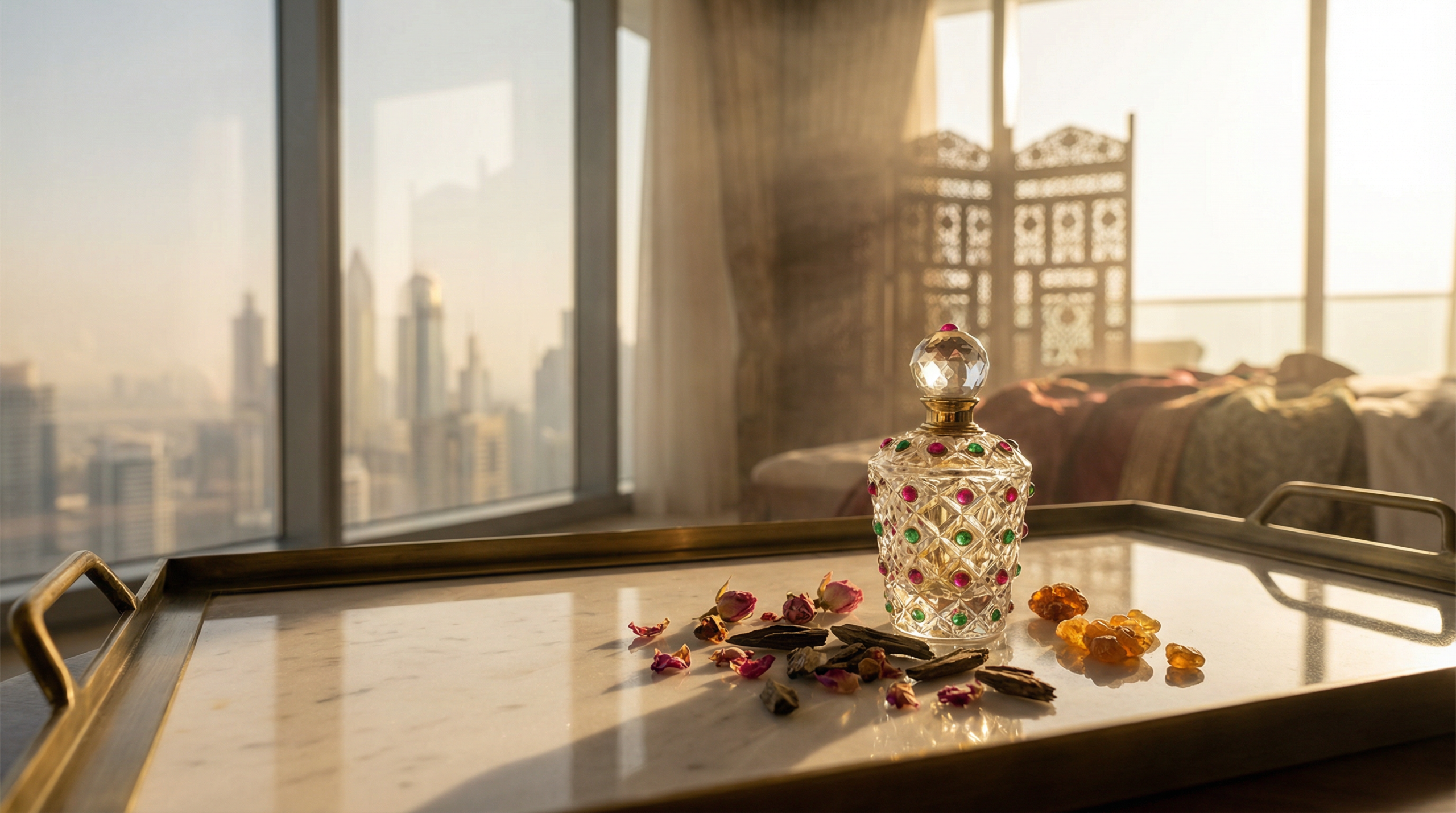

The world of Arabic perfumery holds secrets passed down through generations, and at its heart lies mukhallat—the noble art of blending multiple precious ingredients into a harmonious, personalized fragrance. As we enter 2026, this ancient craft is experiencing a renaissance among those who seek deeper connections to cultural heritage and authentic luxury experiences.
For the discerning woman who values tradition and personal expression, creating a signature mukhallat represents more than fragrance—it’s a journey into the soul of Arabian artistry.
The Enduring Legacy of Mukhallat: A Fragrance Journey Through Time
Mukhallat, derived from the Arabic word meaning “mixture,” has adorned the bodies of Arabian royalty and scholars for centuries. This tradition emerged from the souks and perfume houses of the ancient Middle East, where master perfumers would carefully marry rare oils and resins to create singular compositions.
Unlike mass-produced fragrances, mukhallat represents the pinnacle of bespoke luxury. Each blend tells a story—reflecting the wearer’s personality, memories, and aspirations. Historically, families guarded their signature formulas as precious heirlooms, passing them through matriarchal lines as invisible jewelry more valuable than gold.
In 2026, this practice continues to thrive as women rediscover the empowerment of creating scents that truly represent their identity. The art form honors the wisdom of ancestors while allowing for contemporary interpretation and innovation.
Understanding the Scent Palette: Essential Ingredients for Your Signature Blend
Mastering mukhallat begins with knowledge of foundational ingredients, each carrying distinct aromatic properties and cultural significance.
Oud forms the backbone of most Arabic blends—a rich, woody essence extracted from agarwood trees. Its depth provides longevity and gravitas, symbolizing strength and resilience. Musk adds warmth and sensuality, traditionally valued for its ability to enhance natural body chemistry. Amber, created from botanical resins, contributes golden sweetness and acts as a harmonizing element between contrasting notes.
Rose, particularly the prized Taif rose, brings floral elegance and spiritual purity to compositions. Its presence balances heavier base notes while adding feminine sophistication. Sandalwood offers creamy, meditative qualities that extend the fragrance’s staying power while grounding more volatile top notes.
Additional elements like saffron, jasmine, frankincense, and myrrh allow for infinite creative possibilities. Understanding how these ingredients interact forms the foundation of successful blending.
The Art of Harmonious Blending: Crafting Your Personal Mukhallat
Creating mukhallat requires patience, intuition, and respect for the materials. The process mirrors traditional perfumery’s three-note structure: top, middle, and base notes that unfold over time.
Begin with base notes—your heaviest ingredients like oud, musk, and sandalwood. These form the foundation and provide longevity, sometimes lasting days on fabric. Use dropper bottles and start conservatively; a single drop of pure oud can dominate an entire blend.
Middle notes, including rose, jasmine, or spices, build upon the base. These heart notes reveal the blend’s character and should complement rather than compete with foundational elements. Top notes—lighter citrus or herbal essences—provide the initial impression but evaporate quickly.
Record your proportions meticulously. Successful mukhallat creation often requires multiple iterations and adjustments. After mixing, allow your blend to mature in a dark glass bottle for at least two weeks. This maceration period allows molecules to marry, revealing the true character of your creation.
Test small amounts on pulse points, observing how the scent evolves throughout the day and interacts with your unique skin chemistry.
Beyond the Bottle: Mukhallat in Modern Arabic Lifestyle
The application of mukhallat extends beyond personal wear into a holistic lifestyle approach. Traditional practices include scenting prayer garments, bedding, and personal spaces to create environments of tranquility and luxury.
Layering techniques—applying attars to moisturized skin, then adding complementary oil-based blends—intensify and extend fragrance longevity. Some women create seasonal variations, lighter blends for summer heat and richer compositions for cooler months.
In 2026, the mindful practice of creating and wearing mukhallat aligns with broader wellness trends emphasizing intentionality and connection to heritage. The meditative process of blending serves as a form of creative expression and self-care.
Nurturing Your Olfactory Art: Storage and Appreciation of Homemade Scents
Proper storage ensures your mukhallat creations maintain their integrity and complexity. Natural oils deteriorate when exposed to light, heat, and air.
Store blends in amber or cobalt glass bottles with tight-fitting stoppers, away from direct sunlight and temperature fluctuations. Traditional attar bottles with glass rollers or dip sticks protect against oxidation while allowing controlled application.
Keep detailed journals documenting formulas, maturation dates, and observations about how scents evolve. This practice deepens understanding and creates a personal archive of olfactory memories.
Key Takeaways for Your Mukhallat Journey
Creating mukhallat connects you to centuries of Arabian perfume artistry while expressing your unique identity. Start with quality ingredients, practice patience during the blending and maturation process, and trust your instincts as you develop your olfactory vocabulary. The journey requires investment in time and materials, but rewards you with fragrances that cannot be replicated—scents as individual as your fingerprint, carrying your personal story in every precious drop.