
No products added!
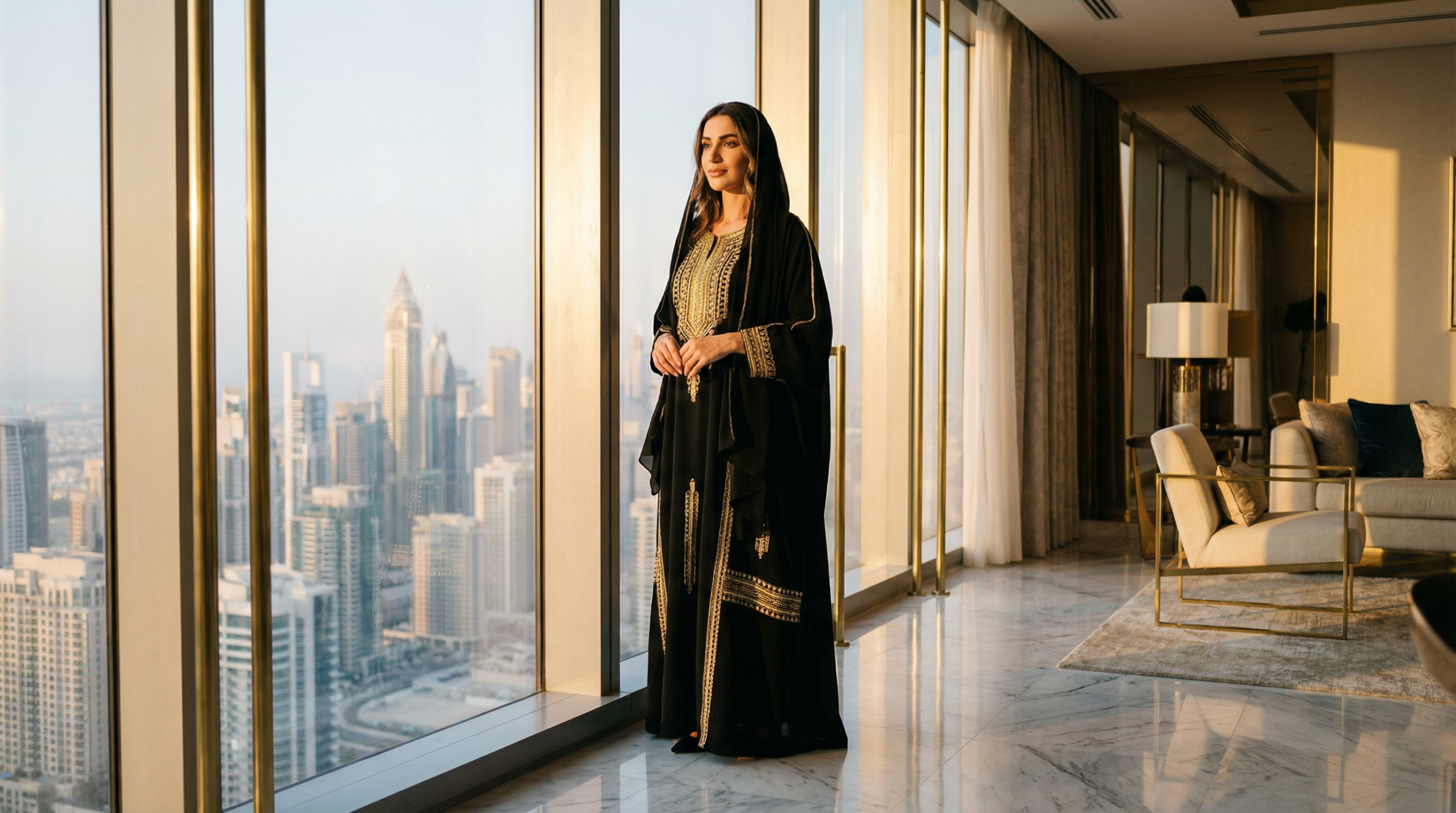

The Echo of Ancestral Threads: Emirati Heritage in Modern Modest Fashion
In the heart of Dubai’s winter season, where ancient desert traditions meet contemporary luxury, the abaya has evolved far beyond its utilitarian origins. Today’s modest fashion landscape celebrates a profound truth: every stitch carries a story, and in the context of DSF 2026, those stories speak of Emirati heritage woven into modern silhouettes.
Traditional Emirati embroidery techniques, passed down through generations of skilled artisans, find new life in contemporary abaya design. The delicate talli lace, once adorning the garments of Bedouin women, now graces modern necklines and sleeve cuffs with its intricate metallic threads. Sadu weaving patterns, originally created by nomadic tribes to decorate tents and camel accessories, inspire geometric embellishments that transform simple black fabric into wearable art.
These heritage techniques aren’t merely decorative choices. They represent a deliberate conversation between past and present, where each carefully placed stitch honors the hands that came before while speaking to fashion-conscious women of today.
DSF 2026: A Canvas for Cultural Expression in Abaya Design
Dubai Shopping Festival has transformed into more than a retail event. It serves as a cultural showcase where Emirati identity takes center stage through fashion. The festival’s 2026 edition particularly emphasizes the intersection of heritage craftsmanship and contemporary luxury modest wear.
During DSF, abayas become storytelling mediums. Designers draw inspiration from traditional architecture, pearl diving heritage, and desert landscapes, translating these elements into embroidery patterns and fabric choices. The festival atmosphere encourages innovation while maintaining deep respect for cultural roots.
This platform allows modest fashion to claim its rightful space in global luxury conversations. The abayas showcased aren’t compromises between tradition and modernity—they’re celebrations of both.
Beyond the Fabric: The Art of Emirati Embroidery and Sadu Weaving
Understanding Emirati textile arts requires appreciation for their historical context. Talli embroidery, traditionally worked in silver and gold threads, required hours of meticulous handwork. Artisans would create intricate patterns that symbolized protection, prosperity, and femininity.
Sadu weaving, recognized by UNESCO as Intangible Cultural Heritage, employs bright geometric patterns with specific meanings. Red triangles might represent desert flowers, while black and white stripes evoke the stark beauty of sand dunes. These patterns weren’t arbitrary—they communicated tribal identity and personal stories.
Contemporary designers study these traditional motifs extensively, learning not just the techniques but their cultural significance. This knowledge ensures that heritage elements incorporated into modern abayas carry authentic meaning rather than superficial decoration.
The process mirrors the artistry found in luxury perfume creation, where ingredient sourcing matters as much as final composition. Just as master perfumers select precious oud from specific regions for its unique character, abaya designers source materials that honor their cultural origins—hand-loomed fabrics, ethically sourced metallic threads, and beadwork created by local artisans.
From Inspiration to Creation: The Journey of a Heritage-Infused Abaya
The conceptual journey begins with research. Designers immerse themselves in museum archives, studying historical garments and textile samples. They consult with elderly craftswomen who maintain traditional skills, learning the symbolism behind specific patterns and color combinations.
Next comes translation—determining how traditional motifs can enhance modern silhouettes without overwhelming them. A full Sadu pattern might appear too bold, but its geometric principles can inform subtle beading placement. Traditional talli might edge a contemporary cape-style abaya, creating dialogue between old and new.
Material selection carries ethical weight. Many designers prioritize working with local artisan cooperatives, ensuring traditional craftspeople receive fair compensation while keeping heritage skills economically viable. This sustainable approach preserves cultural knowledge while supporting community livelihoods.
The actual creation involves multiple hands—pattern makers, embroiderers, seamstresses—each contributing specialized expertise. A single heritage-infused abaya might require fifty hours of handwork, with every stitch representing conscious choice and cultural reverence.
The Future Weaves In: Sustaining Emirati Craftsmanship in Luxury Fashion
The integration of Emirati heritage into luxury modest fashion addresses crucial sustainability questions. As fast fashion threatens traditional crafts globally, intentional preservation through high-end design creates economic incentives for maintaining ancestral skills.
Young Emirati women increasingly seek fashion that reflects their identity—modern, sophisticated, yet culturally rooted. This demand encourages investment in heritage techniques, with some designers establishing training programs where master artisans teach traditional embroidery to new generations.
The luxury modest fashion movement also challenges Western-centric fashion narratives. By centering Emirati heritage at prestigious events like DSF, the industry affirms that cultural specificity enhances rather than limits global appeal.
Key Takeaways
The story of a stitch at DSF 2026 ultimately represents more than fashion innovation. It demonstrates how cultural heritage remains vibrantly alive when honored through contemporary craftsmanship. For women seeking meaningful modest fashion, understanding this heritage connection enables more intentional wardrobe choices that celebrate both personal style and cultural legacy. Look for pieces that demonstrate authentic craftsmanship, support ethical production, and carry forward the ancestral knowledge embodied in every carefully placed thread.