
No products added!
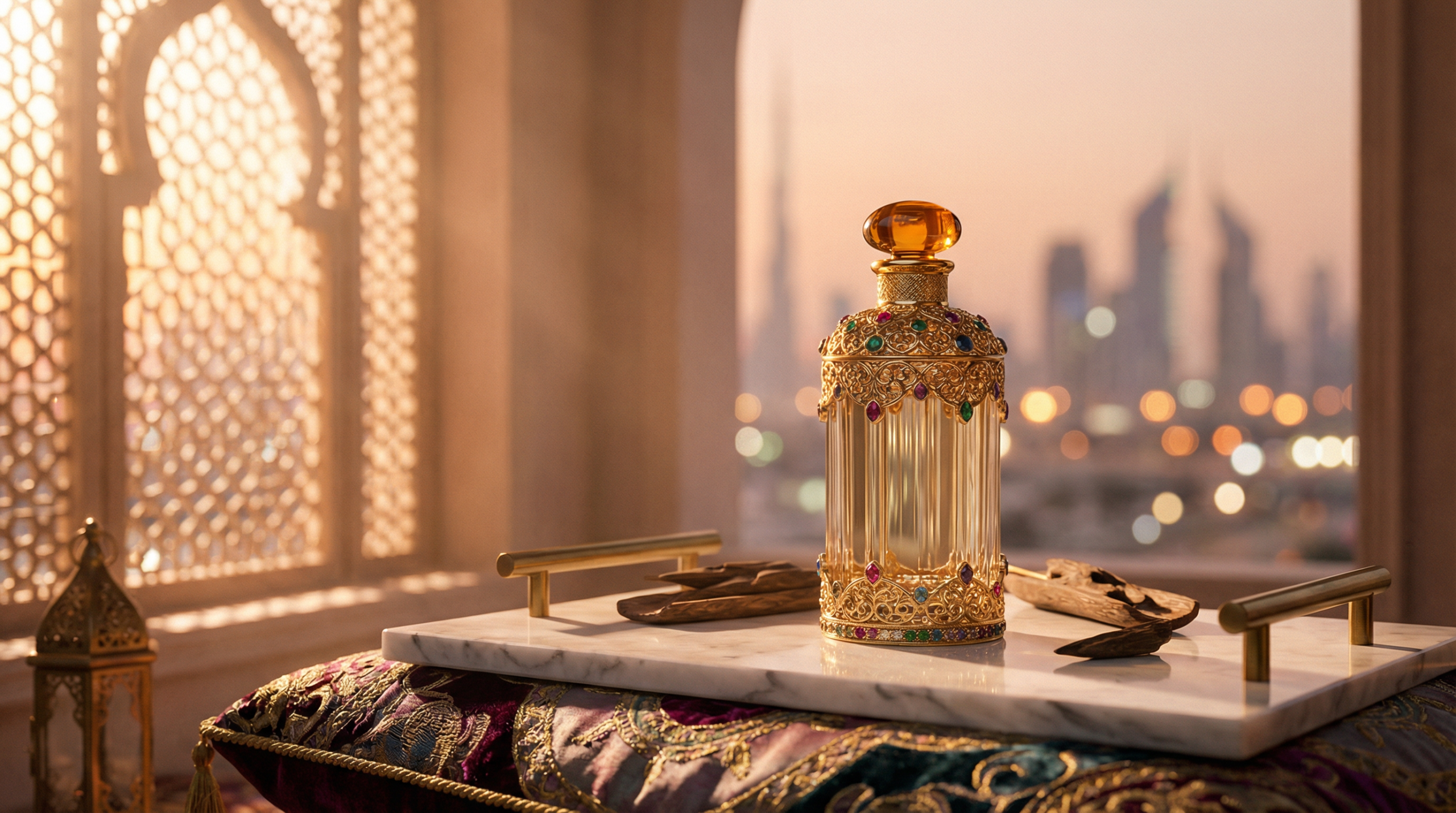

The frustration is universal among perfume enthusiasts: you apply an exquisite fragrance in the morning, only to find it has vanished by midday. For those living in the UAE and wider GCC region, this challenge feels particularly acute. The combination of intense heat, low humidity, and the unique considerations of modest fashion creates a perfect storm for fragrance fade.
Understanding why perfumes disappear—and how to counter this in culturally relevant ways—transforms your relationship with luxury scents.
Understanding the Ephemeral Nature of Fragrance: Why Perfumes Fade
Perfume longevity depends on three fundamental factors: your body’s unique chemistry, the fragrance concentration, and environmental conditions. Each person’s skin produces different levels of natural oils and has a distinct pH balance, which directly affects how long scent molecules cling to the skin.
Fragrance concentration matters immensely. Eau de parfum typically contains 15-20% perfume oil, while eau de toilette holds only 5-15%. This difference translates to hours of wear time. In 2026, many luxury Arabic perfumes feature higher concentrations, often approaching pure perfume (extrait) levels of 20-30%.
The volatility of fragrance notes also plays a crucial role. Top notes—citrus, light florals, herbs—evaporate within 15-30 minutes. Middle notes last 3-4 hours. Base notes, rich in amber, oud, musk, and resins common in Arabic perfumery, can linger for 8-12 hours or more when properly applied.
The GCC Climate & Modest Fashion: Unique Challenges for Perfume Longevity
The UAE’s climate presents specific obstacles for fragrance retention. Temperatures regularly exceed 40°C during summer months, causing perfume molecules to evaporate rapidly from exposed skin. Paradoxically, air-conditioned environments can also dry out skin, reducing its ability to hold scent.
Modest fashion introduces both advantages and considerations. Multiple fabric layers—abayas, hijabs, undercaps—can trap and diffuse fragrance differently than Western clothing. Natural fabrics like cotton and silk absorb and release scent gradually, extending wear time. Synthetic materials may not hold fragrance as effectively.
The covered areas of the body typically stay cooler and more protected, potentially preserving fragrance better than exposed skin in hot climates. However, fabric absorption means the scent transfers from skin to clothing, where it behaves differently based on material composition.
Unlocking Lasting Scent: Culturally-Aligned Strategies for the Modern Muslimah
Traditional Arabian perfumery offers time-tested wisdom for fragrance longevity. Layering techniques have been perfected over centuries, starting with richly scented oils (dahn) applied to pulse points, followed by bakhoor to scent clothing and hair coverings.
Moisturized skin holds fragrance exponentially longer than dry skin. Apply an unscented body oil or lotion immediately before perfume. The oils create a barrier that slows evaporation while giving fragrance molecules something to bind with.
Strategic application points matter in modest dress. Focus on areas that generate warmth but remain covered: behind the knees, inner elbows, the nape of the neck beneath the hijab. Apply to hijab fabrics themselves, particularly along edges that won’t touch the face directly.
Hair holds fragrance remarkably well. For those who cover their hair, a light mist on the inner layers of the hijab or undercap creates a personal scent cloud that releases gradually throughout the day. Avoid direct application to silk, which can stain.
Consider the traditional practice of scenting with attars or concentrated oils first, then layering a complementary spray perfume over them. This creates depth and complexity while significantly extending wear time.
Beyond Application: Preserving the Essence of Your Luxury Arabic Perfumes
Proper storage is critical in the GCC’s intense heat. Never store perfumes in bathrooms or near windows. Heat and light break down fragrance molecules, particularly the delicate gemstone infusions and natural ingredients prevalent in luxury Arabic perfumery.
Keep bottles in cool, dark places—ideally below 20°C. A dedicated drawer or closet shelf away from external walls works well. For extremely valuable bottles, some collectors use small wine coolers set to 15-18°C.
Understanding fragrance structure helps set realistic expectations. Arabic perfumes traditionally emphasize rich base notes—oud, amber, musk, sandalwood—which naturally last longer than Western perfumes heavy in citrus or green notes. These compositions are specifically designed for the regional climate and lifestyle.
Dispelling Myths: What Doesn’t Work for Perfume Longevity in the GCC
Rubbing wrists together after application actually crushes fragrance molecules and generates heat that speeds evaporation. Simply dab and let dry naturally.
Petroleum jelly as a base layer sounds logical but can alter the perfume’s scent profile and create an unpleasant texture in hot weather. Unscented natural oils work better.
Spraying perfume onto abaya fabrics immediately before wearing can cause staining and uneven scent distribution. Instead, hang the garment and lightly mist from a distance, allowing it to dry completely.