
No products added!
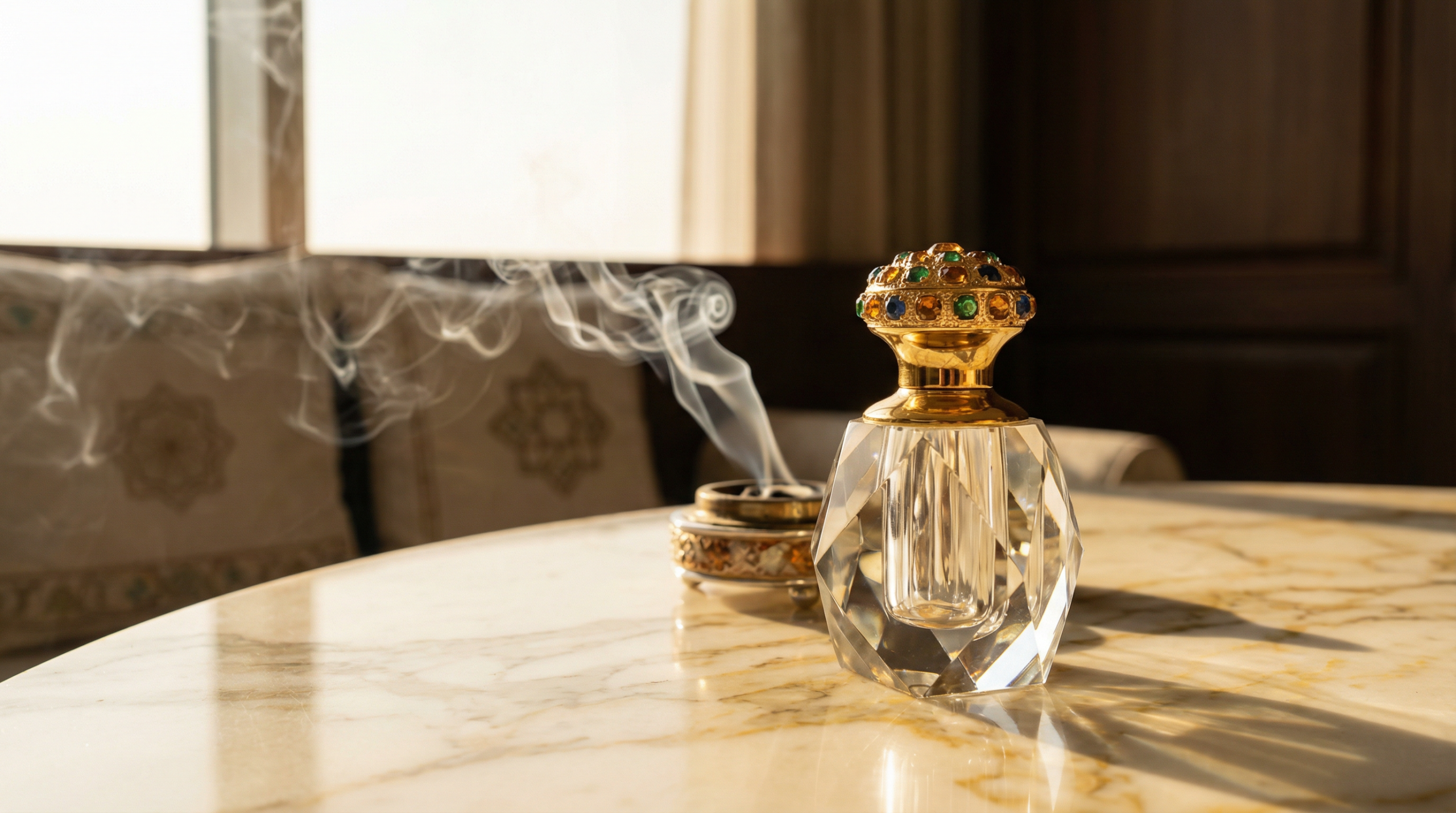

The Enduring Legacy: Why Arabic Perfumes Stand the Test of Time
Arabic perfumes have earned a global reputation for their remarkable staying power, often outlasting Western fragrances by hours or even days. This isn’t merely perception—it’s the result of centuries-old perfumery traditions combined with deliberate formulation choices that prioritize depth and longevity above all else.
For fragrance enthusiasts across the UAE and broader GCC region, understanding what makes these scents so enduring reveals both a scientific marvel and a cultural inheritance. As we move through 2026, the gap between traditional Arabic perfumery and modern Western fragrances continues to intrigue those seeking scents that truly last.
Unveiling the Scent Science of 2026: Key Longevity Factors
The primary secret behind Arabic perfume longevity lies in concentration levels. While typical eau de toilettes contain 5-15% perfume oil, Arabic formulations frequently reach 20-40% pure perfume oil concentrations, qualifying as extrait de parfum or pure perfume—the highest concentration category available.
Additionally, many traditional Arabic perfumes reduce or eliminate alcohol content entirely. This matters because alcohol acts as an evaporative carrier that disperses fragrance quickly but also causes it to dissipate faster. Oil-based formulations cling to skin and clothing, releasing scent molecules gradually over extended periods.
Advanced encapsulation technologies emerging in 2026 promise to extend longevity even further. These microscopic capsules protect fragrance molecules from immediate evaporation, releasing them slowly throughout the day as they interact with body heat and movement. This innovation builds upon traditional Arabic oil-based formulations rather than replacing them.
Beyond the Bottle: Cultural Practices Enhancing Sillage and Stay-Power
Fragrance application in Middle Eastern culture transforms scent-wearing into an art form. The practice of layering multiple fragrance forms—perfumed oils, attars, bakhoor (incense), and spray perfumes—creates a complex scent profile that evolves throughout the day while maintaining presence.
Bakhoor burning before dressing allows fragrance smoke to permeate clothing fibers, creating a base layer of scent that lasts for days. This is often followed by oil application to pulse points, then topped with alcohol-based perfumes for initial projection. Each layer reinforces the others, extending overall longevity exponentially.
These cultural practices aren’t merely traditional—they demonstrate sophisticated understanding of how different fragrance forms interact with fabrics, skin chemistry, and environmental conditions unique to the region’s warm climate.
Decoding the Ingredients: Heavy Notes and High Concentrations
The molecular weight of fragrance ingredients directly impacts longevity. Arabic perfumery heavily favors base notes composed of large, complex molecules that evaporate slowly—oud, amber, musk, sandalwood, and frankincense form the foundation of most formulations.
Oud, derived from agarwood, contains particularly heavy molecular compounds that can persist on skin for 24 hours or more. Natural musks and ambers similarly feature dense molecular structures that resist evaporation. These ingredients contrast sharply with the lighter citrus and floral top notes favored in many Western fragrances.
The strategic balance in Arabic perfumes typically inverts the traditional fragrance pyramid. Rather than fleeting top notes dominating initial wear, base notes take center stage from application through final dry-down, ensuring the scent’s character remains recognizable throughout its lifespan.
Future-Proofing Your Fragrance: Longevity in a Changing Climate
The GCC’s warm, humid climate presents unique challenges for fragrance longevity. Heat accelerates evaporation, potentially shortening a perfume’s lifespan. However, oil-based Arabic formulations actually perform better in warmth than alcohol-based alternatives, as heat helps release fragrance molecules gradually rather than all at once.
In 2026, climate-adaptive formulations are gaining attention. These intelligent blends adjust their evaporation rates based on temperature and humidity, maintaining consistent performance whether in air-conditioned interiors or outdoor heat. For residents of Dubai and neighboring emirates, this technology addresses a genuine practical need.
Proper storage remains crucial regardless of formulation advances. Keeping perfumes away from direct sunlight and temperature fluctuations preserves the integrity of fragrance molecules, ensuring they perform as intended when applied.
The Art of Application: Maximizing Your Arabic Perfume’s Aura
Strategic application amplifies any perfume’s longevity. Pulse points—wrists, neck, behind ears, inner elbows—generate warmth that activates fragrance molecules. However, applying to moisturized skin significantly extends wear time, as fragrance adheres better to hydrated skin than dry surfaces.
Hair acts as an excellent scent reservoir, holding fragrance longer than skin. A light mist on brushed hair or a drop of perfume oil on a hairbrush distributes scent that releases with movement throughout the day. Similarly, applying perfume to clothing hems or scarves creates lasting scent trails, though testing for staining on inconspicuous areas first is wise.
For maximum impact, apply oil-based perfumes immediately after showering while skin remains slightly damp. This locks in both moisture and fragrance, creating ideal conditions for extended wear.