
No products added!
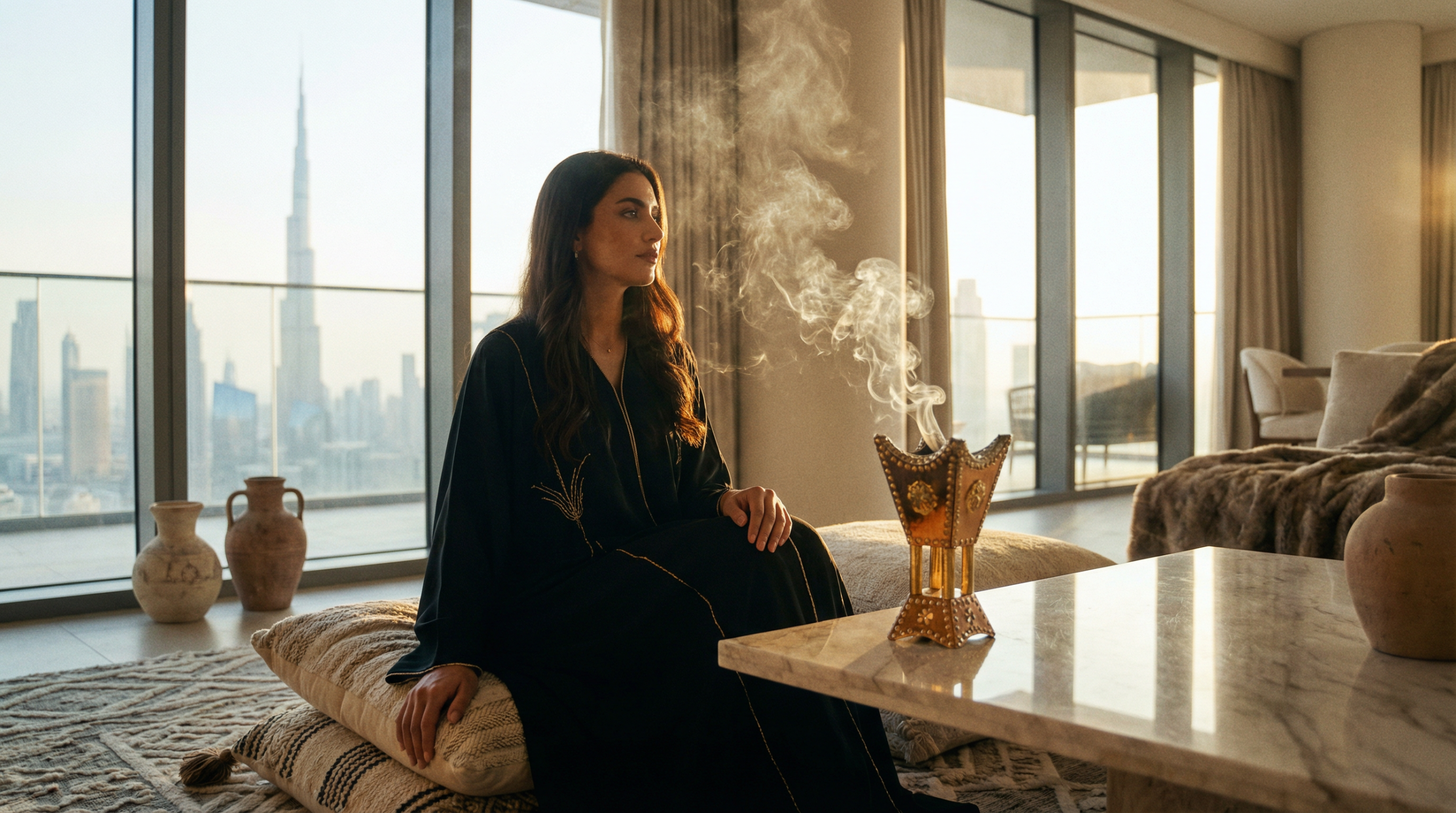

The Enduring Legacy: Reclaiming Bakhoor’s Historical Heart
Bakhoor has perfumed Arabian homes for over 5,000 years, transcending generations as more than mere fragrance. This ancient practice of burning fragrant wood chips, resins, and aromatic blends represents a profound connection to heritage, hospitality, and spiritual cleansing.
Originally reserved for royalty and religious ceremonies, bakhoor evolved into a cornerstone of daily life across the Arabian Peninsula. The word itself derives from the Arabic “bukhūr,” meaning incense or smoke that rises. Traditional ingredients like agarwood (oud), sandalwood, amber, and musk were precious commodities traded along ancient spice routes.
In 2026, this time-honored tradition experiences a renaissance among discerning homeowners in the GCC. Modern Arab women increasingly recognize bakhoor not as a relic of the past, but as an intentional lifestyle choice that bridges ancestral wisdom with contemporary luxury living.
Beyond the Burner: The Future of Bakhoor in Modern Homes (2026)
The bakhoor landscape has transformed significantly. While traditional clay burners and charcoal remain beloved, electric bakhoor burners now dominate elegant living spaces, offering precise temperature control and enhanced safety features.
Contemporary artisans craft limited-edition blends that balance reverence for tradition with innovative compositions. Sustainable sourcing has become paramount, with certified oud plantations and eco-conscious harvesting practices gaining prominence.
Smart home integration represents the frontier of this ancient art. Temperature-regulated burners with timers allow precise scent scheduling, while air quality sensors ensure optimal fragrance diffusion without overwhelming spaces. This technological evolution honors tradition while embracing modern convenience.
Secret 1: Mastering the Ritual – Selecting & Preparing Your Bakhoor for Optimal Release
Understanding bakhoor composition transforms the experience from routine to ritual. Oud-based bakhoor delivers rich, woody depth ideal for majlis and reception areas. Amber blends offer warmth perfect for winter evenings. Floral compositions with rose and jasmine create lighter, feminine atmospheres suitable for bedrooms.
Quality assessment requires attention to texture and aroma intensity. Premium bakhoor should feel slightly moist with visible resin content, never completely dried or crumbly. The cold scent—before burning—provides insight into the blend’s complexity and ingredient quality.
Preparation matters significantly. Break larger pieces into smaller chips for more controlled burning and extended fragrance release. Store bakhoor in airtight glass containers away from direct sunlight to preserve aromatic oils and prevent premature drying.
Secret 2: Scent Stratification – Layering Bakhoor with Other Fragrances & Home Elements
Advanced practitioners create signature home fragrances through strategic layering. Begin with bakhoor as the foundational scent, then complement with reed diffusers in adjacent rooms for subtle transitions between spaces.
Natural elements enhance bakhoor’s complexity. Fresh rose petals in decorative bowls harmonize with floral bakhoor blends. Cardamom pods and cinnamon sticks placed near burners amplify warm, spicy notes as the heat gently releases their essential oils.
Fabric absorption extends fragrance longevity. Allow bakhoor smoke to permeate curtains, cushions, and throws, creating lasting ambient scent. Rotate textiles through the scenting process to maintain freshness while building aromatic depth throughout living spaces.
Secret 3: The Art of Placement – Directing Fragrance for Maximum Impact & Longevity
Strategic burner placement dramatically affects scent distribution. Position burners near air return vents for whole-home fragrance circulation, or in room corners where convection currents naturally disperse smoke upward and outward.
Height matters. Elevating burners on decorative stands or console tables allows smoke to rise freely, preventing concentrated pooling at floor level. For large spaces, consider multiple burners at varying heights to create three-dimensional scent architecture.
Timing influences intensity. Burn bakhoor thirty minutes before guests arrive for optimal fragrance presence. For daily use, evening burning creates lasting overnight ambiance as aromatic molecules settle into fabrics and furnishings.
Secret 4: Mindful Moments – Integrating Bakhoor for Wellness & Atmosphere
The ritual of burning bakhoor offers profound mindfulness opportunities. The deliberate preparation, lighting, and observation create meditative pauses in busy schedules, transforming homes into sanctuaries.
Specific blends support different intentions. Sandalwood and frankincense combinations promote relaxation and prayer preparation. Energizing citrus-infused bakhoor enhances morning routines. Understanding these associations allows intentional atmosphere creation aligned with daily rhythms.
Regular practice establishes comforting routines that signal transitions—from workday to evening, from external demands to family time. This ceremonial aspect connects modern life to centuries of cultural tradition.
Secret 5: Sustainable Scent – Eco-Conscious Bakhoor Practices for the Modern Connoisseur
Sustainability defines luxury in 2026. Seek suppliers committed to responsible sourcing, particularly for oud, which faces environmental pressures. Cultivated agarwood from managed plantations ensures this precious resource endures for future generations.
Natural charcoal from coconut shells or bamboo provides cleaner burning than traditional options, reducing indoor air pollutants while maintaining authentic burning characteristics. Electric alternatives eliminate combustion concerns entirely while preserving the aromatic experience.
Minimal waste practices honor both tradition and environmental stewardship. Utilize every fragment, combining smaller pieces for extended burns. Repurpose decorative bakhoor containers for storage, embracing the circular economy principles that align with Islamic teachings on resource respect.