
No products added!
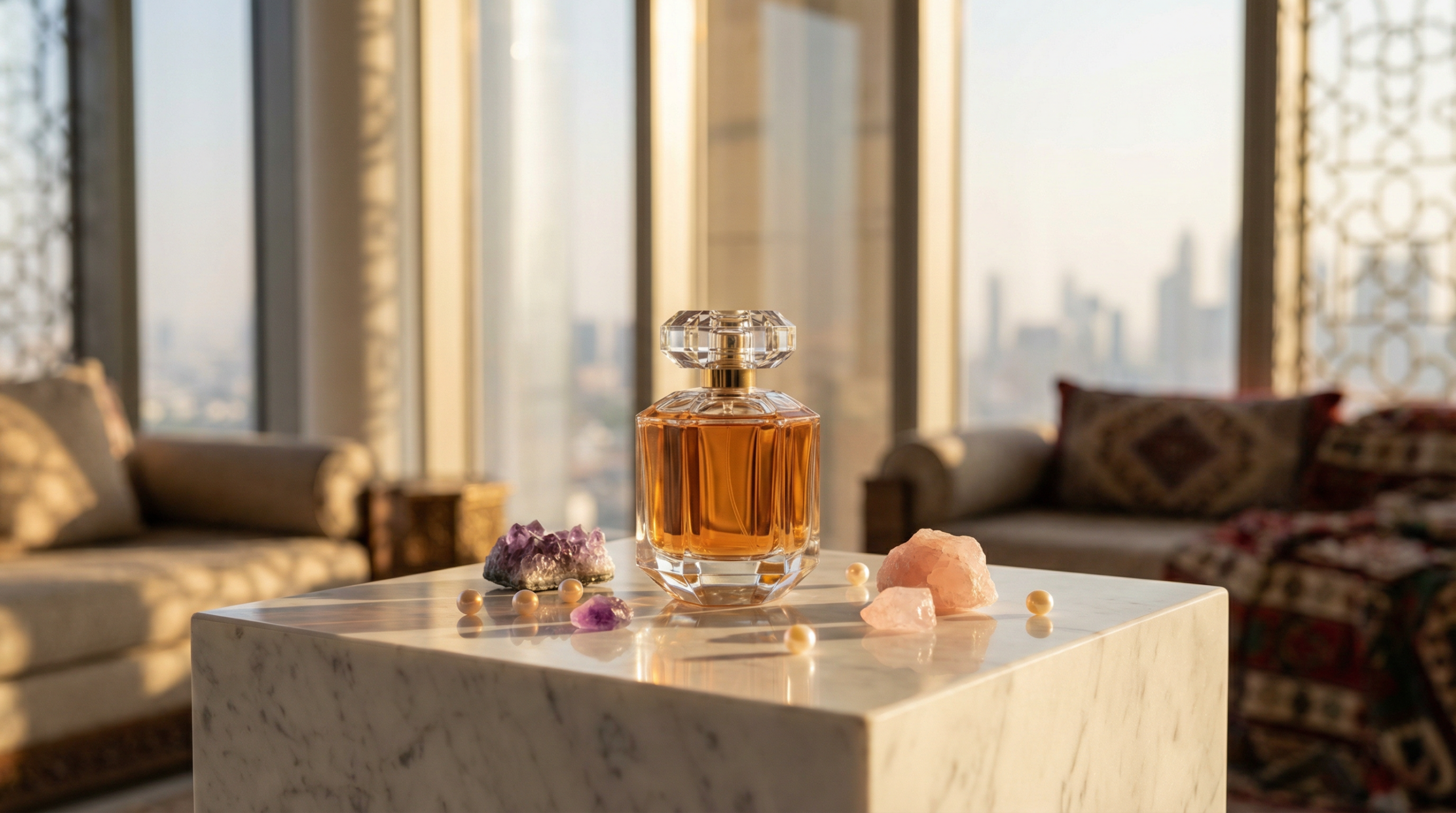

The perfume souks of Dubai have always been temples of olfactory devotion, but the landscape of luxury fragrance in 2025 has evolved into something altogether more refined. At the intersection of ancient tradition and contemporary innovation, a new generation of perfumes emerges—creations that marry the smoky depth of oud with the metaphysical properties of gemstones, speaking directly to the sophisticated sensibilities of the Gulf’s most discerning women.
The Enduring Allure of Oud in Emirati Perfumery
Oud—known as “liquid gold” throughout the Arabian Peninsula—remains the cornerstone of luxury fragrance in the Emirates. This resinous treasure, harvested from Aquilaria trees infected with a specific mold, has been cherished across the Islamic world for over a millennium. The scent carries profound cultural weight, mentioned in Islamic texts and worn during Friday prayers and special occasions.
For the Emirati elite, oud represents far more than fragrance. It embodies heritage, spiritual connection, and social status. The finest grades of oud, particularly those from Cambodia and India, command astronomical prices and require years of patient aging. A single tola of premium oud can cost thousands of dirhams, making it one of the world’s most precious natural materials.
In 2025, the appreciation for oud has deepened beyond simple application. Connoisseurs now discuss terroir, aging processes, and distillation methods with the same sophistication wine collectors bring to Bordeaux vintages. The Gulf’s luxury consumers demand traceability, authenticity, and above all, excellence.
Beyond Fragrance: The Mystical Power of Gemstones
The integration of gemstones into perfumery represents a fascinating convergence of aromatherapy, crystal healing, and haute luxury. While gemstones themselves have no scent, their symbolic resonance and energetic properties have become central to how elite perfumes are conceived and experienced.
Amethyst, believed to promote clarity and calm, might inspire a lavender-infused oud blend designed for meditation. Rose quartz, the stone of unconditional love, could guide a composition featuring damask rose absolute and sandalwood. These aren’t arbitrary associations—they draw from centuries of Islamic and Middle Eastern traditions surrounding precious stones.
Some perfumers take this connection literally, infusing oils in vessels lined with specific crystals or incorporating gemstone essences created through specialized extraction processes. Others work more conceptually, allowing the symbolic properties of stones to guide their olfactory choices. Crushed pearls, for instance, have been used in Arabic perfumery for generations, adding subtle mineral facets to attars.
Crafting Excellence: The Perfumer’s Vision for 2025
Creating a perfume worthy of Dubai’s elite demands exceptional artistry. Master perfumers—or “noses”—working in this rarefied space often combine formal French training with deep knowledge of traditional Arabic perfumery techniques passed down through generations.
The process begins with sourcing. Ethical procurement of wild oud has become paramount, with reputable suppliers providing detailed documentation of sustainable harvesting practices. Similarly, gemstones must be conflict-free and ethically mined, reflecting the growing consciousness among luxury consumers about the provenance of their purchases.
Blending oud with complementary notes requires extraordinary skill. Too heavy a hand and the composition becomes overwhelming; too light and the precious ingredient disappears. Top perfumers layer oud with unexpected elements—saffron from Iran, frankincense from Oman, rare musks, and precious florals—creating symphonies of scent that evolve over twelve hours or more on the skin.
Harmonizing Tradition and Innovation: A Scent Story
The most compelling perfumes for the Gulf market in 2025 tell stories that honor the past while embracing the future. They might open with the bright sparkle of Emirati lime and cardamom, transition through a heart of Bulgarian rose and oud, and settle into a base enriched with amber, vanilla, and the warm glow of sandalwood.
Each ingredient carries meaning. Cardamom recalls the coffee ceremonies central to Emirati hospitality. Rose represents beauty and femininity across Islamic culture. The base notes provide the lasting impression—the scent memory that lingers on clothing and in rooms long after the wearer has departed.
These creations are engineered for the unique climate of the Gulf, where temperatures soar but air conditioning creates constant transitions between hot and cool. The formulations must be robust yet refined, with exceptional longevity and sillage appropriate for the flowing fabrics of abayas and jalabiyat.
The Future of Luxury: Sustainable Sourcing and Ethical Artistry
Looking ahead, the luxury perfume sector in the Emirates is embracing sustainability without compromising quality. Oud plantations are being cultivated to reduce pressure on wild trees. Gemstone suppliers are being held to rigorous ethical standards. Even packaging is evolving, with refillable crystal flacons becoming status symbols in their own right.
The modern Emirati consumer demands transparency. She wants to know the origin story of her oud, the journey of her gemstones, and the values of those who create her signature scent. This isn’t performative—it reflects a genuine evolution in luxury consumption, where quality of conscience matters as much as quality of product.