
No products added!
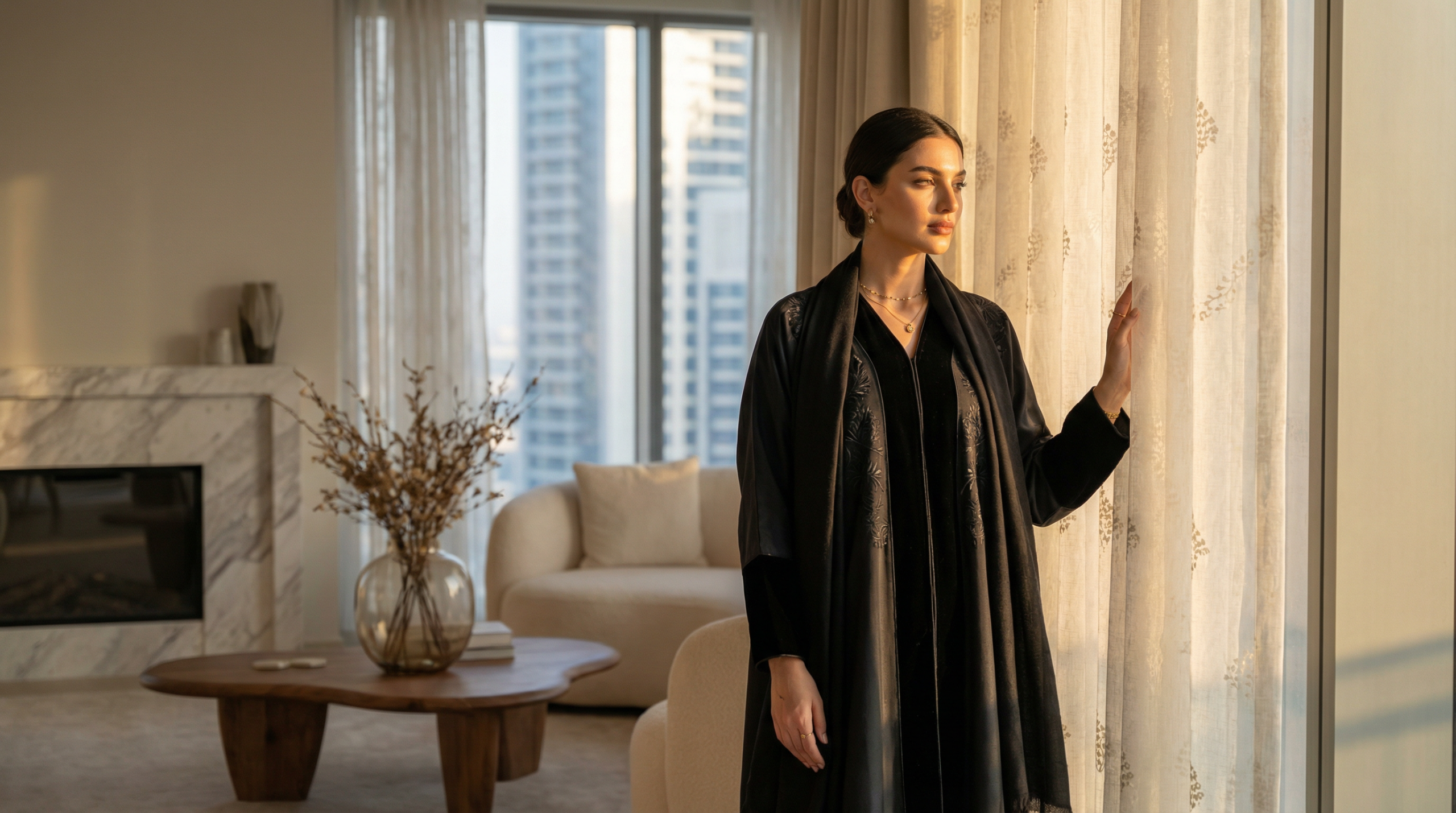

Winter in the Gulf presents a unique sartorial challenge for the discerning modest dresser. While temperatures rarely plunge to extremes, the cooler months from December through February call for fabrics that balance warmth, elegance, and breathability. This season, three luxurious materials dominate the conversation: silk, velvet, and wool. Each offers distinct advantages for winter abayas, yet understanding their nuances is essential for making an informed wardrobe investment.
The Allure of Silk Abayas: Winter Elegance Redefined
Silk may seem counterintuitive for winter, yet this natural fiber possesses remarkable temperature-regulating properties that make it surprisingly versatile during GCC winters. The smooth, lustrous drape creates an effortlessly sophisticated silhouette that moves gracefully with every step.
The primary advantage of silk lies in its breathability. Unlike synthetic materials, silk allows air circulation while providing a subtle insulating layer against cooler evening breezes. This makes it ideal for the fluctuating temperatures typical of winter days in Dubai or Riyadh—warm afternoons that transition into crisp evenings.
However, silk demands careful consideration. Its delicate nature requires professional dry cleaning and meticulous storage to prevent snagging or water spots. The fabric also shows moisture marks easily, which can be problematic during unexpected winter showers. For formal evening events, gallery openings, or intimate gatherings, silk’s refined elegance remains unmatched. Yet for daily wear, the maintenance requirements may prove impractical.
Velvet Abayas: A Touch of Regal Opulence for Colder Nights
Velvet has experienced a renaissance in modest fashion, and for good reason. This sumptuous fabric combines visual richness with genuine warmth, making it the quintessential choice for winter celebrations and cooler evenings.
The pile structure of velvet creates natural insulation, trapping air between fibers to provide warmth without excessive weight. The fabric’s light-reflective qualities add depth and dimension, creating a luxurious appearance that photographs beautifully. For weddings, Eid celebrations, or formal dinners, velvet delivers unparalleled elegance.
The drawbacks center primarily on climate appropriateness. Velvet can feel heavy in milder winter weather, and the fabric tends to crush easily, leaving visible wear patterns with frequent sitting. Care also requires attention—velvet should be hung carefully and brushed in the direction of the pile to maintain its characteristic sheen. Additionally, certain velvet qualities may appear overly formal for casual daytime settings, limiting versatility.
Wool Abayas: Unparalleled Warmth Meets Modest Chic
Wool represents the practical luxury option for winter abayas. This natural fiber offers superior insulation while maintaining breathability, making it ideal for genuinely cool weather or travel to colder climates during winter months.
Modern wool blends have evolved significantly, offering softer textures than traditional iterations. Merino wool, in particular, provides exceptional warmth-to-weight ratios and natural moisture-wicking properties. The fabric’s inherent structure resists wrinkles, making it perfect for busy professionals and frequent travelers.
Wool’s challenges include potential sensitivity for some wearers—the texture may feel scratchy against skin, though quality blends minimize this issue. The fabric also requires proper care to prevent shrinkage, and moths pose a storage concern in humid climates. Aesthetically, wool tends toward structured, tailored silhouettes rather than the flowing drapes preferred for some occasions.
Comparing the Contenders: Silk vs. Velvet vs. Wool for Your Winter Abaya
When weighing these fabrics, consider your lifestyle and climate needs. Silk excels in moderate winter weather and formal settings but demands high maintenance. Velvet offers maximum visual impact and warmth for special occasions yet proves less versatile for everyday wear. Wool provides practical warmth and durability, ideal for travel and daily use, though it may lack the ethereal elegance of silk or velvet’s drama.
Temperature considerations matter significantly in the GCC. For cities like Dubai where winter temperatures hover around 15-25°C, silk or lightweight wool blends often suffice. In higher-altitude areas or for those spending time in air-conditioned environments, velvet or heavier wool becomes more appropriate.
Styling Your Winter Abaya: Beyond the Fabric
The right fabric choice creates a foundation, but styling elevates the entire ensemble. Silk abayas pair beautifully with delicate shawls and metallic accents. Velvet naturally complements jewel-toned accessories and structured bags. Wool abayas work well with leather details and oversized scarves for added warmth.
Layering remains key during GCC winters. Lightweight knit pieces underneath provide additional warmth without compromising the abaya’s silhouette. Consider the drape—silk flows effortlessly over layers, while velvet requires more careful planning to avoid bulk.
Making Your Informed Choice: The Ultimate Winter Abaya Fabric Decision
The ideal winter abaya fabric depends entirely on personal priorities. Evaluate how you spend your days, the specific climate conditions you face, and your commitment to fabric care. A well-rounded winter wardrobe might include pieces in all three materials, each serving distinct purposes.
Focus on quality over quantity—one exceptional silk abaya for formal occasions, a versatile wool piece for daily wear, and perhaps a statement velvet option for celebrations creates a strategic, sustainable approach. Understanding these fabrics’ distinct characteristics empowers you to invest wisely, building a winter wardrobe that honors both personal style and practical needs while maintaining the elegance modest fashion deserves.