
No products added!
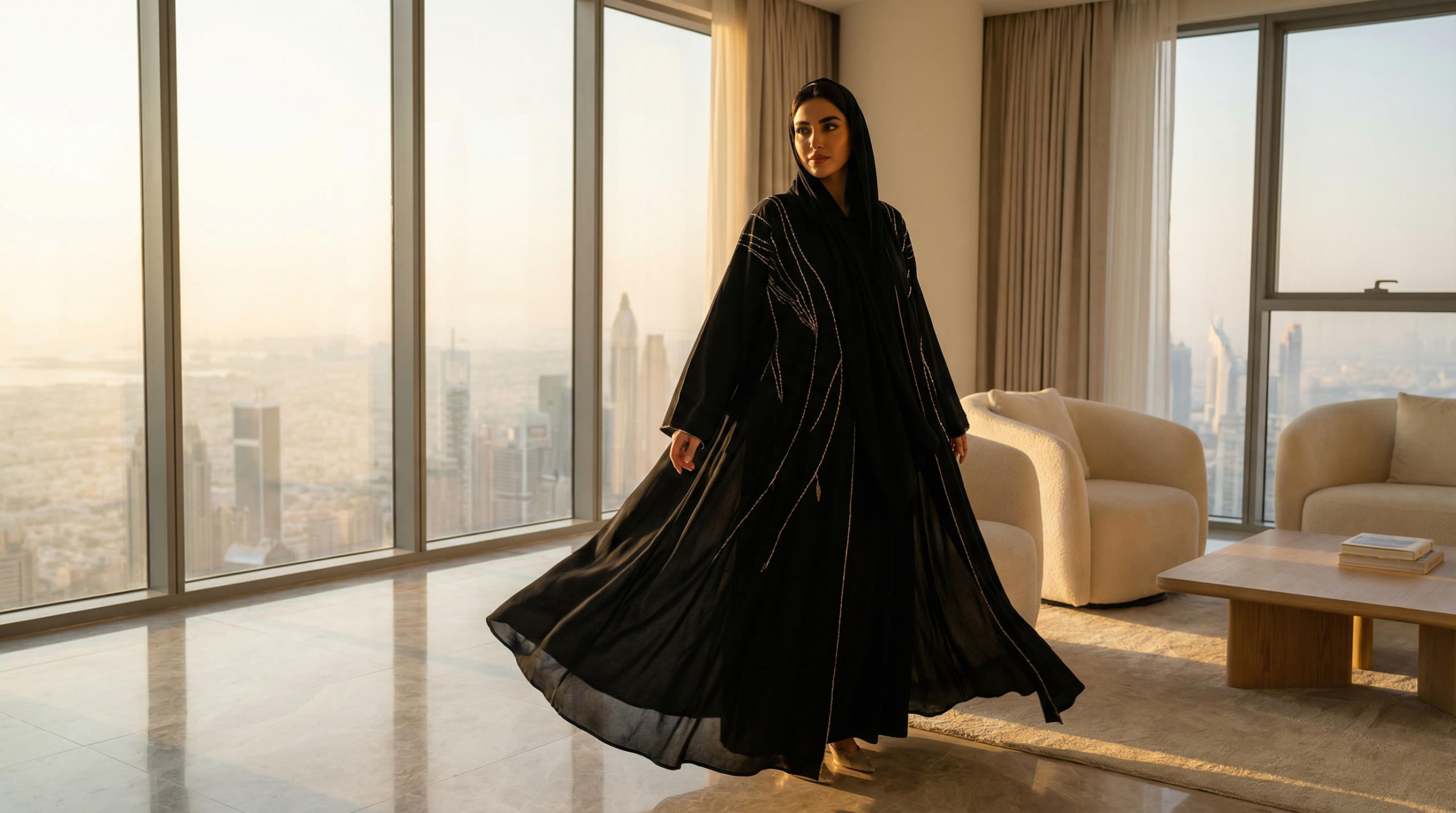

UAE National Day represents one of the most significant celebrations in the Emirates, where cultural pride meets contemporary elegance. For fashion-conscious women across the GCC, this occasion demands an abaya that reflects both tradition and impeccable style. Yet many discover too late that improper care has diminished their garment’s luxurious appearance precisely when it matters most.
Understanding the investment behind a premium abaya—and the simple mistakes that can irreversibly damage it—becomes essential for maintaining that flawless National Day presentation.
Understanding the Delicacy of Your National Day Abaya Fabrics
The abayas selected for ceremonial occasions often feature materials far more delicate than everyday wear. Silk crepe, chiffon overlays, and georgette draping require fundamentally different care approaches than standard polyester blends.
Embellished abayas present additional challenges. Hand-sewn crystals, metallic threading, and intricate embroidery can’t withstand standard washing processes. The adhesives securing embellishments often dissolve in water above 30°C, while certain detergents cause metallic threads to tarnish.
Natural fabrics like silk and fine cotton absorb moisture differently than synthetics, making them prone to water spots and ring marks. These characteristics aren’t flaws—they’re inherent to the luxurious drape and flow that makes these garments so striking. Recognizing these differences prevents treating a delicate ceremonial abaya like a casual everyday piece.
Common Washing and Drying Blunders That Diminish Abaya Luster
The most frequent mistake involves machine washing embellished or delicate abayas. Even gentle cycles create friction that loosens embellishments and distorts fabric structure. For National Day pieces, hand washing in cool water with pH-neutral detergent remains the safest approach.
Harsh detergents strip natural fibers of their sheen. Products containing bleach, optical brighteners, or strong enzymes damage both fabric and embellishments. Many women don’t realize that “regular” detergent formulated for cotton can devastate silk or crepe.
Wringing or twisting wet fabric creates permanent creases and stretches fibers beyond recovery. Instead, gently press water out between clean towels and lay flat to dry. Direct sunlight while drying causes color fading, particularly in black abayas where sun exposure creates a reddish or brownish tint.
Tumble drying remains completely unsuitable for quality abayas. The heat degrades fabric elasticity, shrinks natural fibers, and can melt synthetic elements like beading or appliqués.
Storage and Ironing: Preserving the Form and Flow of Your Garment
Improper storage destroys an abaya’s elegant drape faster than any other care mistake. Folding embellished pieces creates permanent crease lines and puts pressure on crystals or beadwork, causing them to loosen or fall off entirely.
Quality abayas require hanging storage on padded hangers that support the shoulders without creating stress points. Wire hangers create shoulder bumps, while thin plastic hangers cause fabric to slip and bunch. Cedar or breathable garment bags protect against dust while preventing the mustiness that develops in sealed plastic.
Overcrowded closets crush fabric and prevent air circulation. Each ceremonial abaya needs adequate space to hang freely, maintaining its intended silhouette.
Ironing mistakes prove equally damaging. Applying direct heat to embellishments melts adhesives and can scorch delicate fabrics. Always iron inside-out on the lowest appropriate temperature, using a pressing cloth between the iron and fabric. For silk and chiffon, steaming provides safer results than direct pressing.
Perfume Application and Stain Removal: Protecting Against Unseen Damage
The ritual of applying fragrance before dressing carries hidden risks for abaya preservation. Alcohol-based perfumes cause permanent discoloration on silk, leaving yellowish marks that intensify over time. Oil-based fragrances create darker stains that attract dust and become increasingly visible.
The solution involves applying perfume to pulse points well before dressing, allowing complete absorption. Never spray directly onto fabric, particularly on necklines and cuffs where contact occurs most frequently.
Aggressive stain removal attempts often worsen the problem. Rubbing fresh stains pushes them deeper into fibers, while hot water sets protein-based stains permanently. For ceremonial abayas, professional cleaning represents the safest approach for anything beyond minor dust.
Home remedies like lemon juice or vinegar can bleach or discolor delicate fabrics. What works on casual cotton proves disastrous on luxury materials.
Proactive Care for a Lasting Impression: Your 2025 National Day Perfection
The distinction between an abaya that looks pristine and one that appears worn comes down to consistent, gentle care practices. Inspection after each wear catches loose threads or stressed seams before they become major repairs.
Allowing garments to air for several hours before storage prevents moisture buildup and odor development. This practice proves especially important in humid climates across the GCC, where trapped moisture encourages mildew.
Seasonal professional cleaning maintains fabric integrity without the wear of frequent washing. For embellished pieces, specialized cleaners experienced with delicate Middle Eastern garments understand the unique requirements these pieces demand.
The investment in a stunning National Day abaya deserves protection through proper care techniques. By avoiding these common mistakes and adopting gentle, informed practices, ceremonial garments maintain their luxurious appearance season after season. Meticulous care doesn’t just preserve fabric—it honors the cultural significance and personal style these elegant pieces represent throughout their lifetime.