
No products added!
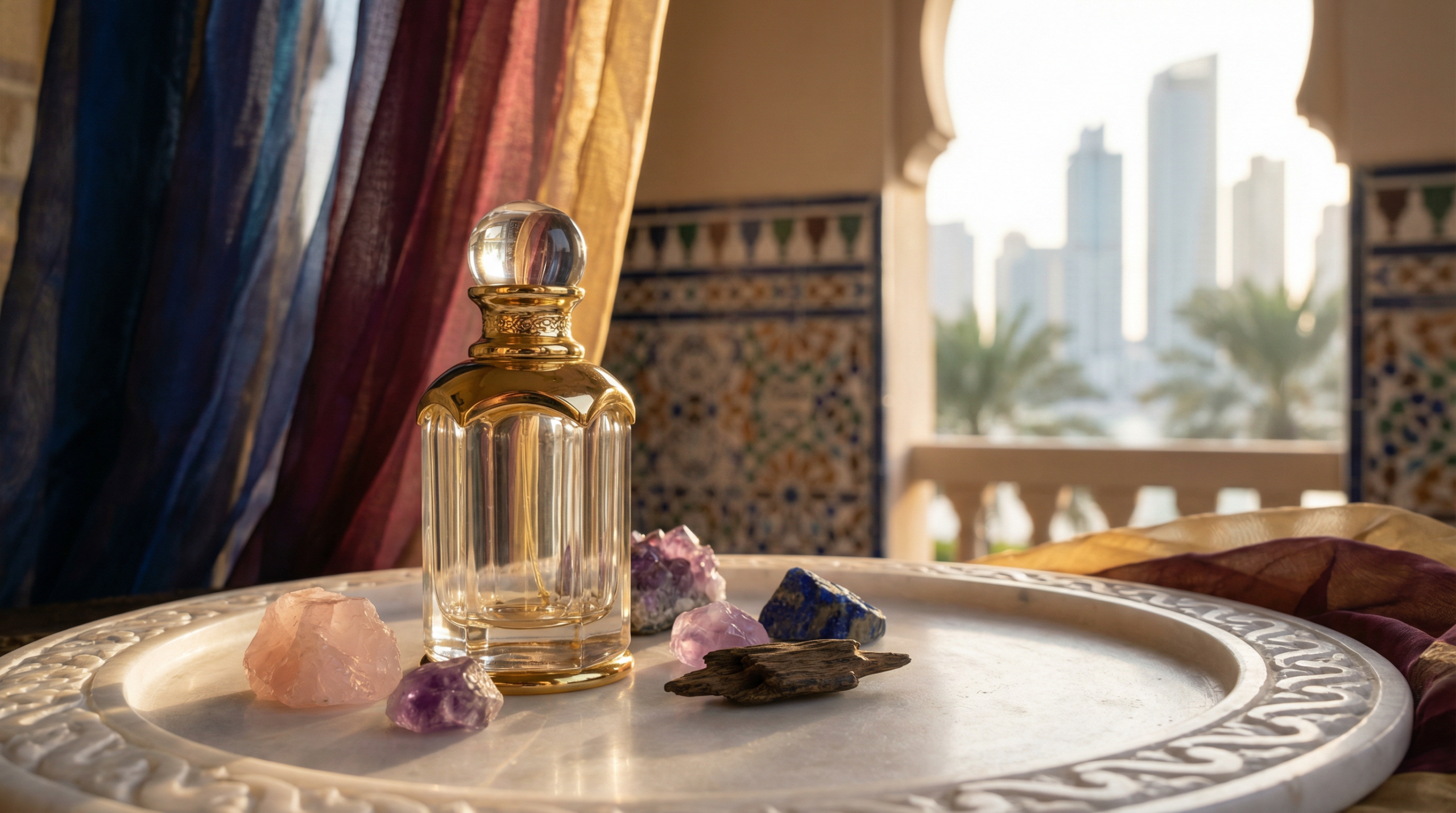

Understanding the Energetic Landscape: Introduction to Chakras and Aroma
The ancient practice of chakra balancing has found renewed resonance across the GCC, where wellness-conscious women increasingly seek holistic approaches to self-care. Chakras—seven primary energy centers aligned along the spine—have long been associated with physical, emotional, and spiritual well-being in Eastern traditions.
What many don’t realize is that the Arab world has its own rich history of using scent for spiritual elevation. While bakhoor has traditionally been the cornerstone of aromatic spiritual practice, a sophisticated evolution is underway. Modern Arabic perfumery, particularly gemstone-infused fragrances, offers nuanced tools for energetic alignment that complement contemporary lifestyles.
Scent works on both physiological and energetic levels. Aromatic molecules interact with the limbic system, influencing emotions and memories, while traditional wisdom suggests certain fragrances resonate with specific energetic frequencies. This intersection of science and spirituality creates a powerful pathway for personal transformation.
Beyond Bakhoor: The Rise of Gemstone-Infused Arabic Perfumes
Traditional bakhoor—wood chips soaked in fragrant oils and burned—remains beloved throughout the UAE and Gulf region. However, the practical limitations of smoke-based aromatics have inspired innovation. Gemstone-infused oil perfumes provide a portable, smoke-free alternative that honors tradition while fitting seamlessly into modern routines.
These contemporary formulations combine time-honored Arabic ingredients with carefully selected crystals and gemstones. The process involves placing precious stones in perfume bases, allowing the oil to absorb what practitioners believe are the stones’ vibrational properties. This ancient technique, rooted in both Islamic and pre-Islamic Arabian traditions, has gained renewed attention in 2025’s wellness landscape.
The beauty of these perfumes lies in their versatility. They can be worn throughout the day, applied before prayer or meditation, or used during quiet reflection—making spiritual practice accessible regardless of location or schedule.
Decoding the Scents: Arabic Ingredients for Each Chakra
Matching specific Arabic perfume notes to individual chakras creates a personalized approach to energetic wellness. The root chakra, governing grounding and security, responds beautifully to deep, earthy notes like oud and amber. These rich, resinous scents have been used in Arabian culture for centuries to promote stability and presence.
The sacral chakra, associated with creativity and sensuality, aligns with warm spices such as cinnamon and saffron—both staples of Arabic perfumery. These notes stimulate without overwhelming, encouraging emotional fluidity.
For the solar plexus chakra, the seat of personal power, musky notes combined with amber create confidence and clarity. The heart chakra finds its match in the region’s most precious florals: rose and jasmine. Damascus rose, particularly prized in Arabic perfumery, has long been associated with love and emotional healing.
Frankincense, with its sacred history spanning millennia in the Arabian Peninsula, beautifully supports the throat and third eye chakras. This ancient resin promotes communication and intuition. The crown chakra, representing spiritual connection, responds to lighter, more ethereal notes like white musk and delicate oud blends.
The Power of Precious Stones: Infusing Fragrance with Energy
Gemstone infusion adds another dimension to chakra-balancing perfumes. Rose quartz, when placed in heart chakra blends featuring rose absolute, amplifies themes of compassion and self-love. Amethyst, traditionally used for crown chakra work, enhances spiritual awareness when combined with frankincense-based formulations.
Lapis lazuli, historically significant in both ancient Egyptian and Mesopotamian cultures neighboring Arabia, supports throat chakra expression. When infused into perfumes containing blue tansy or chamomile, it’s believed to facilitate authentic communication.
The science behind crystal infusion remains debated, but the practice draws on principles recognized in traditional medicine systems worldwide. Whether the mechanism is vibrational energy or the power of intention, many practitioners report meaningful experiences with these preparations.
Crafting Your Scented Sanctuary: Incorporating Chakra-Balancing Perfumes into Your Ritual
Application methods matter when working with energetically focused perfumes. For targeted chakra work, apply perfume directly to the corresponding body area—pulse points near the heart for heart chakra blends, the base of the spine for root chakra scents.
Morning application sets energetic intentions for the day ahead. Evening use supports reflection and release. Some practitioners create layering rituals, applying different chakra-specific scents throughout the day as focus shifts between grounding, creativity, or spiritual connection.
Pairing perfume application with mindful breathing amplifies effects. Take three deep breaths after applying, visualizing the scent’s energy activating the intended chakra. This simple practice transforms a beauty routine into a wellness ritual.
Culturally Conscious Well-being: A Holistic Approach in the GCC
The integration of chakra wisdom with Arabic perfumery represents more than trend—it’s a natural evolution honoring multiple cultural traditions. Islam emphasizes holistic well-being, and the Prophet Muhammad (peace be upon him) valued pleasant scents highly. This spiritual precedent creates space for aromatherapy practices within faith-based lifestyles.
Across the GCC in 2025, wellness communities increasingly recognize that spiritual practices can be both culturally rooted and globally informed. The key lies in approaching these tools with intention and respect for their origins.