
No products added!
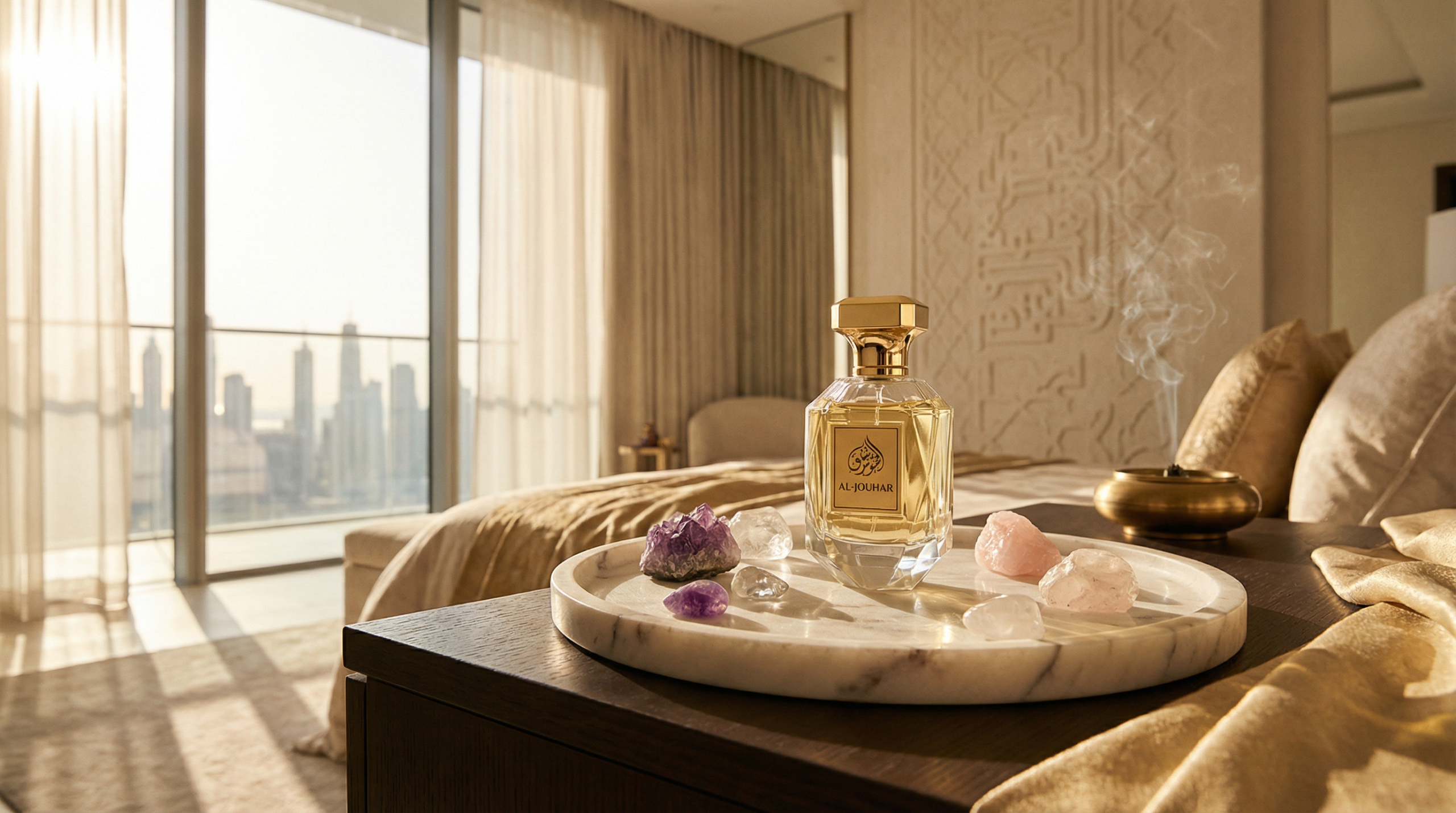

The wellness landscape of 2026 has witnessed a profound shift toward sensory-focused rituals that honor both ancient wisdom and modern luxury. Among these emerging practices, scent bathing has captured the attention of discerning women across the UAE and GCC region who seek deeper connections between fragrance, spirituality, and personal well-being.
This intentional aromatic practice transcends the simple application of perfume, transforming fragrance into a holistic wellness experience that nurtures both body and spirit.
Defining Scent Bathing: A Luxurious Immersion for the Senses
Scent bathing is the deliberate practice of enveloping oneself in carefully selected aromatic elements to create a transformative sensory and energetic experience. Unlike conventional perfume application, this ritual involves multiple layers of fragrance—from essential oils and incense to gemstone-infused perfumes—applied with mindful intention.
The practice draws inspiration from centuries-old Middle Eastern traditions of bakhoor burning and attar application, elevating these customs into a contemporary wellness ritual. Women throughout the Gulf region have long understood the power of scent to shift moods, mark sacred moments, and create atmospheric sanctuaries within their homes.
In its modern incarnation, scent bathing incorporates principles of aromatherapy, energy work, and luxury fragrance application. The ritual typically unfolds in a quiet, dedicated space where one can engage fully with the aromatic journey without distraction.
The Energetic Alchemy: Gemstones and Fragrances in Harmony
The integration of gemstones with fragrance represents one of the most innovative aspects of contemporary scent bathing. Precious and semi-precious stones have been revered across Islamic and pre-Islamic Arabian cultures for their believed metaphysical properties and protective qualities.
Amethyst, known for its association with tranquility and spiritual awareness, pairs beautifully with calming lavender or gentle rose notes. Clear quartz, considered an amplifier of intention and clarity, complements bright citrus and clean musk compositions. Rose quartz, connected to matters of the heart and self-love, harmonizes naturally with delicate floral bouquets.
During scent bathing, gemstones may be held during application, placed around the bathing space, or worn as jewelry while engaging with fragrance. The belief centers on the idea that gemstones enhance and direct the energetic properties of aromatic compounds, creating a synergistic effect that extends beyond the physical scent itself.
This practice resonates deeply within GCC culture, where gemstones have historically adorned everything from prayer beads to ceremonial dress, representing both spiritual significance and refined taste.
Essential Oils and Arabic Ouds: Crafting Your Aromatic Sanctuary
The foundation of any scent bathing ritual rests in the selection of aromatic elements. Essential oils offer concentrated, natural fragrances with documented therapeutic benefits. Frankincense, harvested in the Arabian Peninsula for millennia, promotes grounding and meditation. Sandalwood oil soothes anxiety and enhances spiritual practice. Neroli oil, distilled from orange blossoms, uplifts the spirit while calming nervous tension.
Arabic oud holds particular significance in this ritual. This precious resinous wood, deeply embedded in Khaleeji heritage, carries profound cultural and spiritual weight. Its complex, woody-ambery profile creates an immediate sense of luxury and contemplation.
Traditional oud burning during scent bathing connects modern practice to ancestral wisdom, honoring the region’s rich aromatic legacy. The smoke itself becomes part of the sensory immersion, cleansing the space energetically while perfuming the environment and hair.
Layering these elements—beginning with essential oils on pulse points, followed by oud smoke, and completing with gemstone-infused perfume—creates a multi-dimensional aromatic experience that evolves throughout the day.
Connecting with the Self: Chakra Alignment Through Scent
Many practitioners of scent bathing incorporate chakra principles into their aromatic rituals. This ancient system of energy centers aligns naturally with fragrance application points on the body.
Root chakra scents, including patchouli and vetiver, ground and stabilize when applied to the lower body or feet. Heart chakra fragrances featuring rose and jasmine open emotional pathways when dabbed at the chest. Crown chakra aromatics like lotus and frankincense enhance spiritual connection when applied to the crown of the head or diffused above.
This mindful placement transforms perfume application from routine grooming into intentional energy work, creating moments of meditation within daily life.
Incorporating Scent Bathing into Your Luxury Wellness Routine
Establishing a scent bathing practice requires minimal investment beyond quality aromatic materials and dedicated time. Many women in the region practice this ritual during the quiet morning hours before dawn prayers or in the evening as a transition from daily responsibilities to personal reflection.
Begin by selecting one or two essential oils that address current emotional or physical needs. Add a gemstone that resonates with your intention—whether clarity, peace, or joy. Choose a signature perfume that harmonizes with these elements.
Create ritual through consistency. Designate a beautiful tray or corner of your dressing area for aromatic tools. Light a candle, burn bakhoor, or play soft Quranic recitation to enhance the sacred atmosphere.
Apply fragrances with intention, pausing to inhale deeply and set personal intentions for the day or evening ahead. Allow the scents to settle on your skin, observing how they evolve and interact with your natural chemistry.
The beauty of scent bathing lies in its adaptability to individual preferences and schedules. Whether practiced for five minutes or an hour, this ritual offers a accessible pathway to luxury wellness that honors both cultural heritage and contemporary self-care principles.