
No products added!
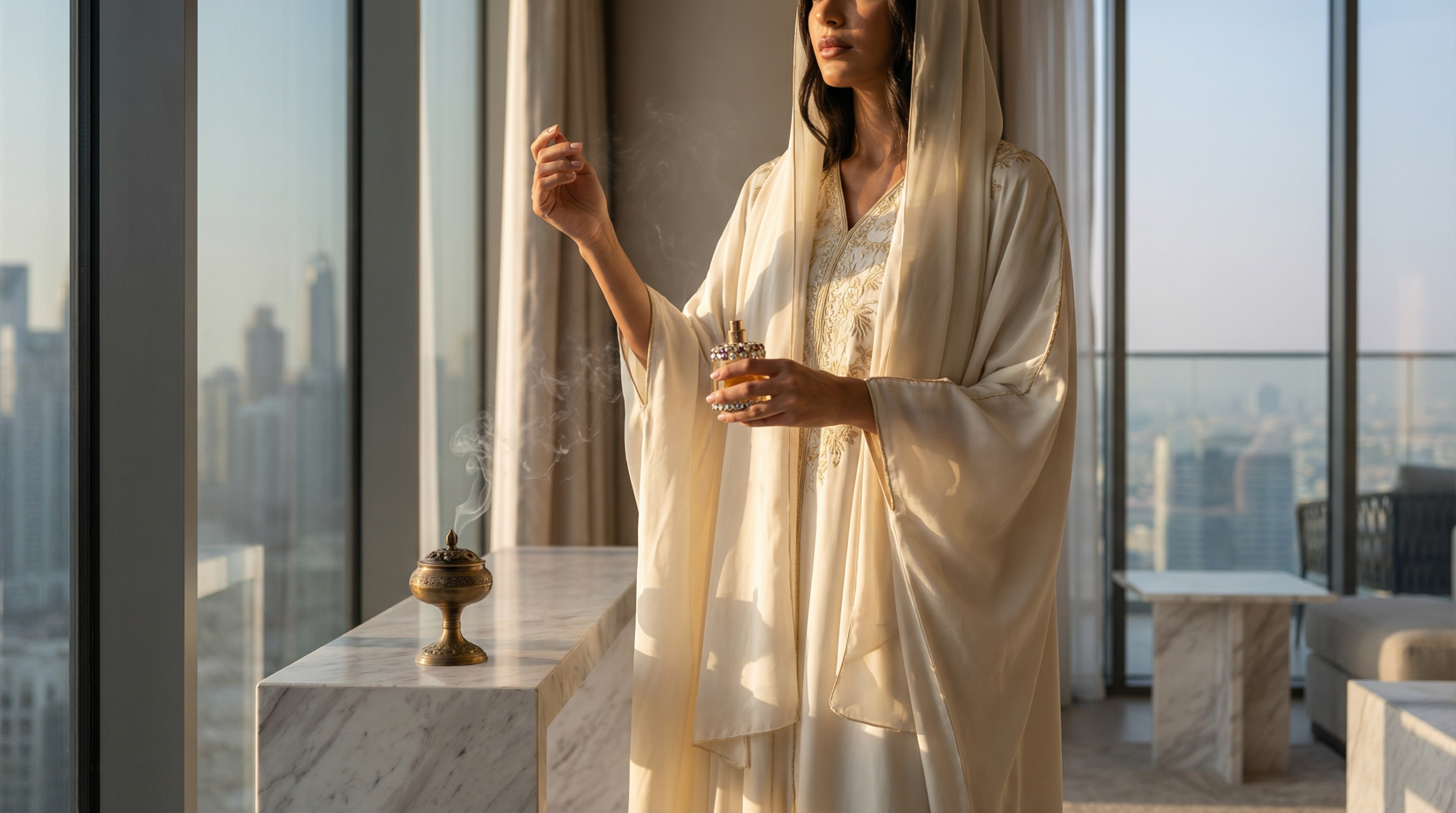

For fashion-conscious women across the UAE and GCC who cherish their abayas as both spiritual garments and style statements, fragrance plays an essential role in completing the ensemble. Yet despite investing in exquisite perfumes and luxurious abayas, many still struggle with scent longevity and proper application. The most common mistake? Directly spraying alcohol-based perfumes onto delicate abaya fabrics—a practice that damages both garment and fragrance experience.
Unveiling the #1 Abaya Perfume Mistake: A Cultural and Olfactory Oversight
The primary error women make involves treating their abayas like Western garments, spraying alcohol-based perfumes directly onto the fabric. This approach contradicts centuries of Middle Eastern fragrance tradition and causes multiple problems simultaneously.
Alcohol-based perfumes can stain delicate fabrics, particularly lighter-colored abayas in champagne, dove grey, or ivory. The alcohol component leaves water marks or darkened spots on materials like Nida, crepe, and especially silk. Beyond visible damage, the alcohol evaporates too quickly from fabric, taking the fragrance notes with it and leaving behind an unpleasant synthetic residue.
Traditional Emirati and Saudi customs emphasize modesty in scent projection as well as dress. Direct fabric application often creates overwhelming sillage that contradicts the principle of subtle, personal fragrance meant for close encounters rather than public announcement.
Why Your Abaya Might Not Be Holding Scent (And It’s Not Your Perfume)
Understanding fabric composition explains much about fragrance retention challenges. Most contemporary abayas use synthetic fibers like polyester-blend Nida, which doesn’t absorb oils or alcohols effectively. The smooth, tightly-woven surface causes perfume molecules to sit on top rather than penetrate, leading to rapid dissipation.
Natural fabrics like cotton, wool blends, and especially silk absorb fragrances differently but remain vulnerable to staining. Silk particularly reacts poorly to alcohol, developing permanent discoloration that no dry cleaning can fully reverse.
Temperature also affects scent behavior. In the Gulf’s climate, abayas stored in air-conditioned environments then worn in outdoor heat experience rapid molecular volatilization. The fragrance literally evaporates within minutes of stepping outside, leaving no trace by the time you reach your destination.
Mastering the Art of Abaya Perfuming: Techniques for Lasting Fragrance
The solution lies in returning to traditional Middle Eastern application methods. The most effective technique involves perfuming your body and inner garments before wearing your abaya, allowing the scent to radiate naturally through the fabric layers.
Apply concentrated oils or oil-based perfumes to pulse points—behind ears, inner wrists, behind knees—at least fifteen minutes before dressing. The body heat warms these areas, creating gentle diffusion that permeates your abaya from within without direct contact damage.
For special occasions, the ancient practice of “dukhoun” remains unmatched. Using a traditional incense burner with oud wood chips or bakhoor, allow the fragrant smoke to infuse your abaya while it hangs. This method deposits scent molecules deep into fabric fibers without moisture or alcohol risks. The result lasts for days, even weeks with proper storage.
Layer your sheila (headscarf) separately with lighter scents, as fabric closer to your face benefits from more delicate fragrances. A small drop of rose or jasmine attar on the underside works beautifully without overwhelming.
Beyond Application: Selecting the Right Perfumes for Your Abaya
Traditional Arabic perfume formulations—oil-based attars, pure oud, concentrated parfums—work superior to alcohol-heavy Western fragrances for abaya wear. These concentrated oils apply to skin rather than fabric, providing eight to twelve hours of development as they interact with body chemistry.
Choose fragrances with deeper base notes like amber, sandalwood, and musk for maximum staying power. These heavier molecules cling to natural skin oils and release slowly throughout the day. Lighter citrus or aquatic notes, while refreshing, evaporate within hours even from skin application.
Consider seasonal variations. Winter 2026 calls for richer, spicier compositions with saffron, cardamom, and darker roses. These warm notes complement heavier abaya fabrics and provide comforting depth during cooler months.
For daytime professional settings, opt for softer concentrations that suggest rather than announce. Reserve potent oud-dominant blends for evening events where stronger sillage aligns with social expectations.
Caring for Your Abaya: Preserving Fabric and Fragrance Integrity
Regular gentle care maintains both your abaya’s appearance and its ability to carry fragrance gracefully. Air your abayas after each wear rather than immediate washing, allowing natural scents to dissipate properly. This prevents fragrance buildup that can turn stale or clash with fresh applications.
When washing becomes necessary, choose specialized gentle detergents designed for delicate fabrics. Avoid heavily scented fabric softeners that compete with your perfumes. Instead, add a few drops of lavender or rose water to the final rinse for subtle, complementary freshness.
Store abayas in breathable garment bags with cedar sachets or cotton pouches filled with dried roses. This protects against musty odors while maintaining a neutral background for your chosen fragrances.