
No products added!
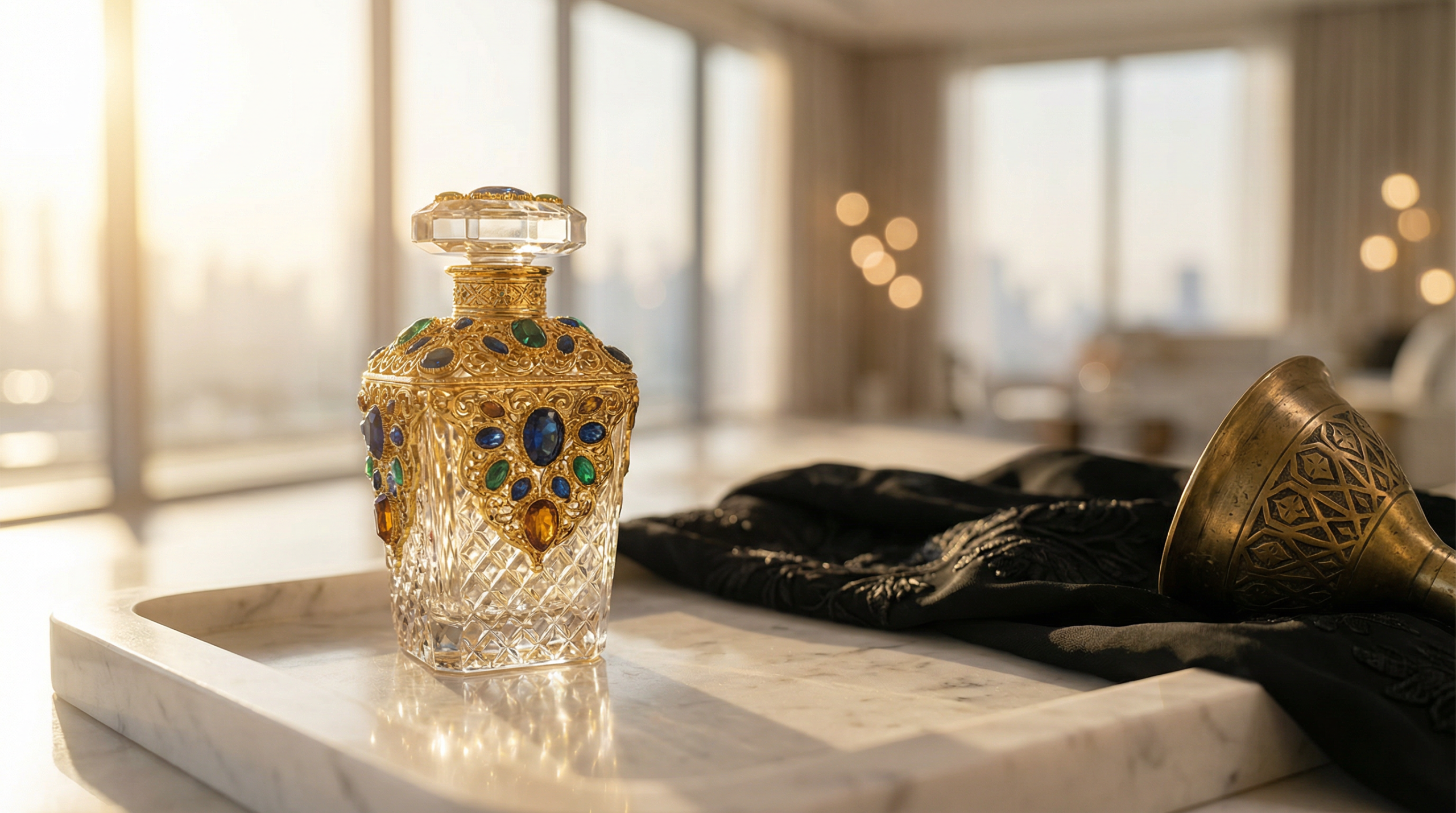

The art of wearing Arabic perfume is a delicate balance between presence and subtlety. While these luxurious fragrances are celebrated for their depth and longevity, many women in the GCC find themselves asking: Is my perfume leaving too strong an impression? Understanding how to control your fragrance’s sillage isn’t just about personal preference—it’s about cultural grace and sophisticated self-expression.
The Essence of Arabic Perfumery: Why the Power?
Arabic perfumes carry an inherent strength that sets them apart from Western fragrances. This intensity stems from centuries-old formulation traditions that prioritize highly concentrated natural essences. Oud, musk, amber, and rose absolute form the foundation of these compositions, each ingredient chosen for its remarkable tenacity and depth.
Unlike alcohol-based eau de toilettes that evaporate quickly, traditional Arabic perfumes often use oil-based formulations with concentration levels reaching 20-40%. This means fewer volatile top notes and more persistent base notes that cling to skin and fabric for hours—sometimes days. The precious ingredients themselves, particularly aged oud and natural musks, possess molecular structures that naturally project farther and last longer than synthetic alternatives.
This potency is intentional. In the Arabian Peninsula’s climate and cultural context, fragrances historically needed to withstand heat while making a memorable impression. However, what works beautifully in open desert spaces may feel overwhelming in air-conditioned majlis settings or professional environments.
Understanding Sillage: Is Your Fragrance Speaking Too Loudly?
Sillage—derived from the French word for “wake”—describes the scent trail you leave as you move. Projection refers to how far your fragrance radiates from your person at any given moment. These two characteristics determine whether your perfume whispers elegantly or announces your presence before you enter a room.
A simple test can reveal your perfume’s sillage: Apply your fragrance as usual, wait fifteen minutes, then ask a trusted companion to stand at arm’s length. Can they detect your scent? Step back two meters. Three meters? If your fragrance is noticeable beyond two meters, you’re working with strong sillage.
The climate in the UAE and wider GCC region amplifies perfume performance. While heat can dissipate lighter notes, it intensifies the projection of oil-based fragrances. Indoor spaces with air conditioning then trap and circulate these scents, creating a more concentrated aromatic experience than you might intend.
Mastering the Art of Sillage Control for Modest Wear
Strategic application transforms how your fragrance performs throughout the day. The traditional pulse points—inner wrists, behind ears, at the base of the throat—warm the perfume and encourage diffusion. However, for sillage control, consider applying to just one or two points rather than all of them.
The “spray and walk” technique works beautifully with alcohol-based perfumes: mist lightly in front of you, then step through the fragrance cloud. This distributes scent particles more evenly and subtly across your clothing and hair. For concentrated oils, use the “dab don’t pour” approach—a single drop on one pulse point often suffices.
Layering offers sophisticated control. Start with an unscented or lightly scented body cream as a base, which helps modulate how your skin releases fragrance molecules. Apply your perfume to clean, moisturized skin rather than over other scented products that might clash or amplify projection.
Consider your modest fashion choices as part of your fragrance strategy. Abayas and headscarves in natural fabrics like cotton or linen hold scent differently than synthetic materials. Apply perfume to your skin before dressing rather than directly onto your abaya, where it may stain or create an overwhelming scent reservoir.
Cultural Etiquette and Fragrance: A Subtle Balance
In GCC cultures, fragrance holds deep significance—it’s an expression of hospitality, cleanliness, and personal pride. However, cultural awareness requires understanding context. During prayer times, particularly in mosque settings, strong perfumes can be distracting to others seeking spiritual focus. Many scholars recommend minimal fragrance application before attending congregational prayers.
Professional environments increasingly favor moderate sillage as workplaces become more diverse and scent-sensitive. In healthcare settings, educational institutions, or international business meetings, a lighter hand demonstrates consideration for colleagues who may have allergies or sensitivities.
Social gatherings present their own etiquette. While generous application suits weddings and celebrations, intimate family gatherings or daytime events call for restraint. The goal is to invite conversation, not overwhelm conversation.
Selecting Your Signature Scent: Sillage Considerations
When choosing new fragrances, consider concentration levels as a starting point. Eau de Parfum typically contains 15-20% fragrance oils, offering noticeable presence without overwhelming intensity. Concentrated perfume oils require a more practiced hand but provide exceptional longevity with minimal application.
Test fragrances during different times and settings. A perfume that feels perfect in the boutique’s controlled environment may perform quite differently in Dubai’s summer heat or Riyadh’s dry climate. Allow at least six hours to observe how a fragrance evolves and projects on your particular skin chemistry.
Note-structure matters significantly for sillage control. Fragrances with prominent top notes (citrus, green notes, light florals) tend to project strongly initially but settle into softer sillages. Those built on base notes (oud, amber, vanilla) maintain steady projection throughout their wear time.
Caring for Your Abaya and Perfume: Harmony in Longevity
Your modest wardrobe and fragrance collection deserve harmonious care. Store perfumes away from direct sunlight in cool, dry spaces to preserve their composition. Extreme temperature fluctuations can alter how fragrances perform on your skin.
Abayas that have absorbed perfume should be aired regularly between wears. Natural fabrics benefit from gentle steaming rather than frequent washing, which helps release trapped scent molecules without damaging delicate embellishments or embroidery.
Create a rotation system for both fragrances and garments. This prevents scent fatigue—where you no longer accurately perceive your perfume’s strength because your olfactory system has adapted—and ensures your abayas maintain their elegance without becoming permanently scented.
Key Takeaways: Elegant Sillage Mastery
Controlling Arabic perfume sillage is an art that honors both tradition and contemporary sensibilities. Start with minimal application—you can always add more, but you cannot easily remove excess. Understand your fragrance’s concentration level and adjust application accordingly. Consider your setting, from prayer spaces to professional environments, and let cultural awareness guide your choices.
Your signature scent should enhance your presence, not precede it. By mastering strategic application, understanding your fragrance’s characteristics, and remaining mindful of context, you achieve that perfect balance: memorable enough to leave a lasting impression, subtle enough to invite closeness rather than demand distance. In 2026’s evolving landscape of modest fashion and refined personal style, sillage control represents the ultimate expression of sophisticated self-awareness.