
No products added!

The convergence of fashion and fragrance has never been more pronounced than at Dubai Fashion Week 2026. For the discerning woman navigating the intersection of modest style and luxury living, understanding these emerging olfactory trends offers a pathway to personal expression that honors both tradition and innovation.
This season’s runway shows revealed an intriguing narrative: perfume is no longer merely an accessory to fashion, but an integral component of personal branding and cultural identity.
The DFW 2026 Olfactory Palette: A Prelude to Modest Radiance
The dominant scent profiles emerging from DFW 2026 reflect a sophisticated understanding of Middle Eastern aesthetics. Warm oriental notes anchored by precious oud remain foundational, yet they’re being reinterpreted with unexpected lightness and complexity.
Subtle florals such as jasmine sambac and damask rose are experiencing a renaissance, layered with modern transparency that complements the flowing silhouettes of contemporary modest fashion. These fragrances create an aura rather than announcing presence, aligning perfectly with the understated elegance many GCC women prefer.
Rich amber and saffron combinations continue to dominate, but in 2026, perfumers are balancing these traditional powerhouses with fresh citrus top notes and delicate white musks. This evolution speaks to a generation equally rooted in heritage and global sophistication.
The trend toward “skin scents” has particular resonance for modest fashion enthusiasts. These intimate fragrances radiate within personal space rather than projecting outward, creating a private luxury that complements covered elegance.
From Runway to Reality: Translating Trends for the Modest Wardrobe
The relationship between fragrance and fabric takes on heightened significance in modest dressing. As abayas and modest silhouettes incorporate luxurious textures like silk, velvet, and embroidered organza, perfume selections are evolving to complement rather than compete with these tactile experiences.
Lighter, airier compositions work beautifully with flowing fabrics, allowing both scent and textile to breathe. This season’s trend toward transparent layers in both fashion and fragrance creates a harmonious aesthetic unity.
Color psychology plays an unexpected role in perfume selection. As neutral palettes dominate modest fashion runways, fragrance becomes a means of expressing personality and mood. Deep burgundies and emerald greens in fashion find their olfactory counterparts in spicy rose and verdant oud combinations.
The minimalist approach to embellishment in contemporary modest fashion allows fragrance to take center stage as the primary form of sensory expression. This shift empowers women to curate complete sensory experiences rather than viewing perfume as an afterthought.
The Art of Adornment: Gemstone-Infused Perfumes and Their Ethos
One of the most intriguing developments in luxury perfumery involves the incorporation of gemstone essences and actual gemstone fragments into fragrance formulations. This practice bridges ancient Arabic traditions of wearing precious stones for protection and energy with modern luxury expectations.
Gemstones like rose quartz, aquamarine, and black tourmaline are selected not merely for aesthetic appeal but for their symbolic resonance within Middle Eastern culture. The process involves macerating gemstones in alcohol bases, theoretically infusing the liquid with the stone’s energetic properties.
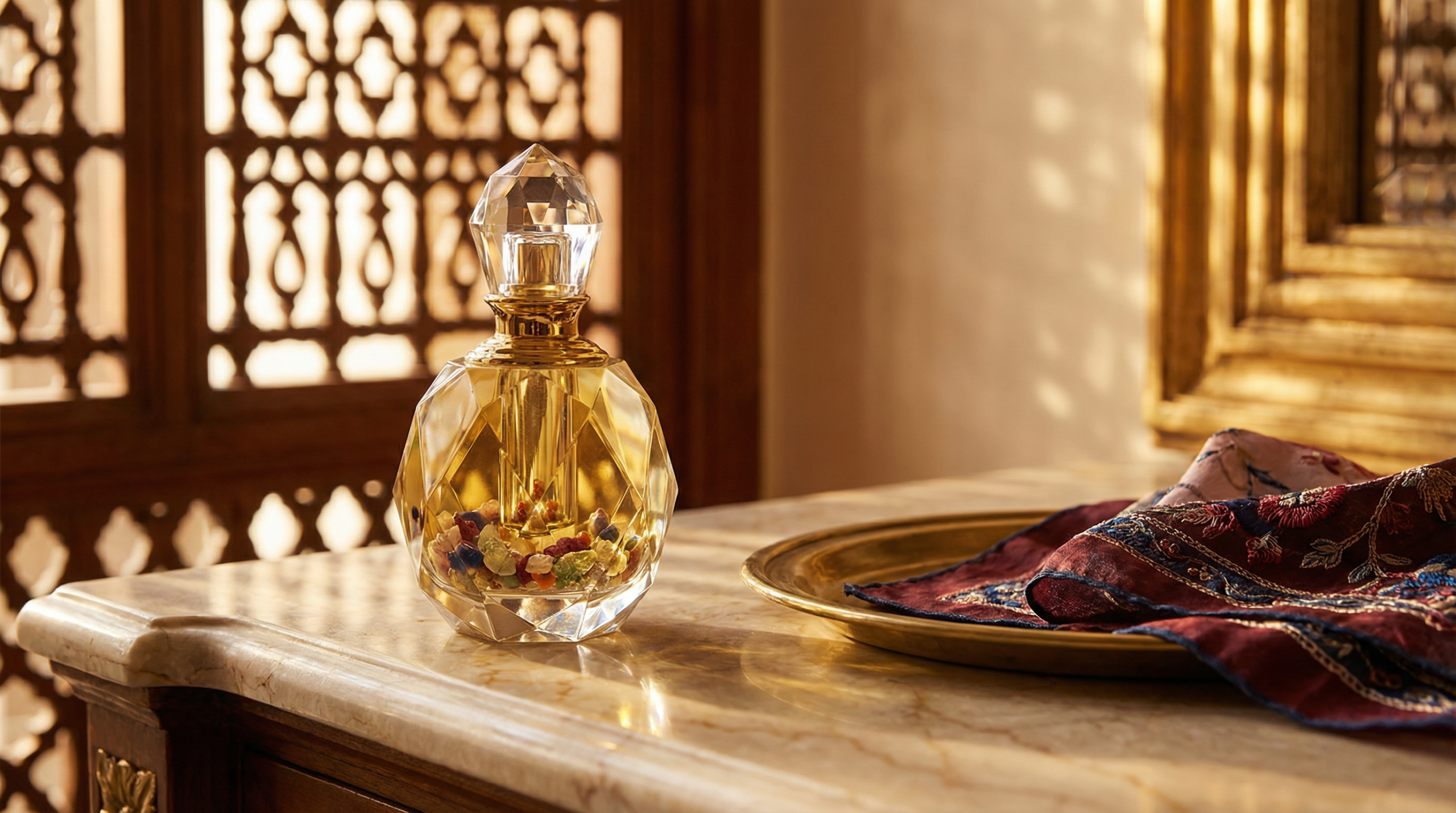
Beyond metaphysical considerations, gemstone-infused perfumes represent meticulous craftsmanship. The visual element of visible gemstone fragments suspended in crystal bottles transforms perfume into objets d’art, worthy of display on vanity tables.
This trend particularly appeals to collectors who value the intersection of jewelry, fashion, and fragrance as interconnected expressions of personal luxury and spiritual intention.
Sustainable Scents, Ethical Styles: Craftsmanship Beyond the Surface
The luxury sector faces increasing pressure to reconcile opulence with responsibility. In perfumery, this manifests through transparent sourcing of rare ingredients like oud, rose absolute, and amber.
Ethical harvesting practices for oud have become paramount, with sustainable plantations and controlled harvesting replacing destructive wild collection methods. This ensures the continuation of this treasured ingredient for future generations while supporting local communities.
Similarly, the textile industry supporting modest fashion is embracing ethical production. Artisanal embroidery workshops, fair-trade silk sourcing, and reduced water consumption in fabric production reflect broader values among GCC consumers.
The woman purchasing luxury modest fashion and fine perfumes in 2026 increasingly demands to know the complete story behind her purchases. Transparency about ingredient origins, production methods, and environmental impact has shifted from marketing advantage to baseline expectation.
The Enduring Allure: Arabic Perfumery Traditions in a Modern Context
Traditional Arabic perfumery techniques are experiencing renewed appreciation among younger generations. The art of layering scents, beginning with oil-based attars and finishing with lighter eaux de parfum, allows for personalized fragrance experiences that evolve throughout the day.
Bakhoor ceremonies and the practice of scenting clothing with incense smoke remain deeply embedded in GCC culture, now complemented by modern spray formulations designed to layer with traditional methods.
Master perfumers are honoring ancestral formulations while incorporating contemporary extraction technologies that preserve delicate notes previously lost in traditional distillation. This synthesis respects heritage while embracing innovation.
The result is a perfume landscape uniquely positioned between East and West, tradition and modernity, personal and public expression.
Key Takeaways for the Discerning Fragrance Enthusiast
Understanding these trends empowers you to make informed choices that align with both personal values and aesthetic preferences. Focus on quality over quantity, selecting fragrances that complement your modest wardrobe’s color palette and fabric textures. Consider how traditional layering techniques can personalize modern formulations. Most importantly, recognize that perfume selection in the context of modest fashion represents an intimate form of self-expression, visible only to those in your closest circle, making your choice deeply personal and profoundly meaningful.