

No products added!
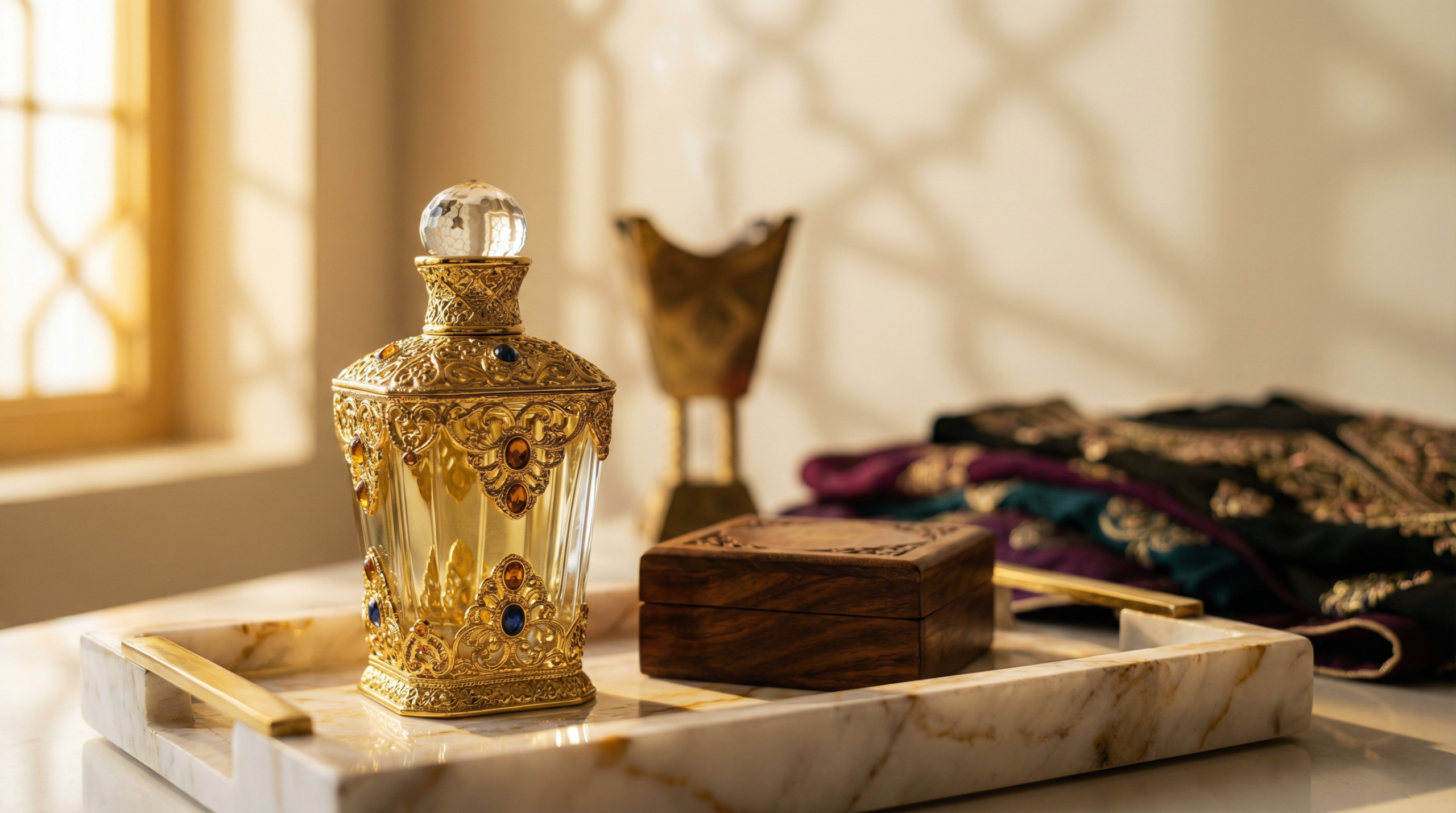

The intoxicating richness of Arabic perfumes has captivated the senses for centuries, but in 2026, many women across the GCC are discovering that less truly is more. If you’ve ever walked into a room and noticed lingering stares—not of admiration, but of overwhelm—your fragrance application might need recalibration.
The Enduring Allure of Arabic Perfumery: Strength and Longevity
Arabic perfumes command attention for a reason. Unlike many Western fragrances that prioritize light, fleeting notes, traditional Middle Eastern perfumery embraces concentration and permanence. These formulations typically contain 20-40% perfume oils compared to the standard 15-20% in European eau de parfums.
The signature ingredients—oud, amber, musk, rose, and saffron—are inherently powerful. A single drop of pure oud oil can permeate a space for hours. When combined with alcohol bases that help project these notes outward, the result is a fragrance designed to announce your presence and linger long after you’ve left.
This intentional strength reflects cultural values. In Arabian perfumery traditions, scent serves as an extension of hospitality and personal dignity, meant to create lasting impressions and fond memories.
Beyond the Bottle: Understanding Traditional Arabic Fragrance Application
Historically, Arabic perfumes were applied generously. Women would dab attar oils on pulse points, clothing hems, and even hair. Bakhoor smoke would infuse entire wardrobes. This abundant approach made sense in open desert environments and spacious majlis settings where scent dissipated naturally.
However, modern life in Dubai, Riyadh, and other GCC cities presents different circumstances. Air-conditioned offices, elevators, shopping malls, and shared prayer spaces concentrate fragrances in ways our grandmothers never experienced. What worked beautifully in traditional contexts can become overwhelming in contemporary settings.
The disconnect isn’t about the quality of Arabic perfumery—it’s about adapting application methods to match modern environments while maintaining cultural authenticity.
The ‘2-Spray Rule’ for 2026: A Modern Approach to Modest Scenting
Enter the 2-spray rule, which is gaining momentum among fragrance enthusiasts throughout the Gulf. This principle advocates for precisely two spritzes of concentrated Arabic perfume, strategically placed for optimal effect without overpowering.
The recommended placement: one spray on the inner wrist, one at the base of the neck just below the collarbone. These pulse points naturally warm the fragrance, allowing it to develop beautifully throughout the day. The scent creates an intimate aura—noticeable when someone embraces you or sits beside you, but never preceding you into a room.
This measured approach aligns perfectly with modest fashion principles. Just as an abaya creates elegant presence through subtlety rather than exposure, properly applied perfume should whisper rather than shout. The fragrance becomes a personal signature discovered by those close to you, not a public announcement.
For particularly potent formulations with heavy oud or musk, consider the single-spray variation: one application to either wrists or neck, allowing the concentration to speak for itself.
Layering Wisdom: Enhancing Your Scent Story, Not Overpowering It
Traditional layering techniques remain valuable when executed thoughtfully. Begin with unscented or lightly scented moisturizer on pulse points—hydrated skin holds fragrance better and releases it more gradually. Apply your perfume using the 2-spray method, then allow it to dry completely.
If using complementary bakhoor, burn it briefly in your dressing area rather than directly on garments. Allow the subtle smoke to kiss your abaya or hijab from a distance. This creates depth without intensity, adding complexity to your scent profile while maintaining restraint.
Avoid combining multiple different perfumes simultaneously. Even if each is applied sparingly, overlapping fragrance families create olfactory confusion rather than sophistication.
Culturally Conscious Scenting: Respecting Spaces and Sensibilities
In GCC culture, consideration for others extends to sensory experiences. Mosques, healthcare facilities, and some professional environments request minimal fragrance use out of respect for those with sensitivities or headaches triggered by strong scents.
The 2-spray rule allows you to honor both your love of Arabic perfumery and communal etiquette. You maintain your personal scent identity without imposing it on shared spaces. This balance reflects the broader principles of modesty—being fully present and beautifully dressed while remaining considerate of others’ comfort.
Maintaining Your Abaya’s Freshness: Perfume & Fabric Care
Many women apply perfume directly to their abayas, but this practice risks permanent staining, especially with oil-rich Arabic formulations. Dark fabrics may show oil spots under certain lighting, while delicate embellishments can be damaged by alcohol content.
Instead, spray perfume on your skin before dressing. Allow it to dry completely—this takes approximately 30-60 seconds—before slipping on your abaya. The fragrance will naturally transfer to fabric through body warmth without causing damage or creating concentrated spots.
For special occasions when you want your garments lightly scented, spray perfume into the air and walk through the mist before it settles, or store your abaya near subtly scented sachets rather than applying fragrance directly.
Key Takeaways for Elegant Fragrance in 2026
Mastering Arabic perfume application means honoring its rich heritage while adapting to contemporary contexts. The 2-spray rule offers a practical framework: enough to express your personal style and cultural identity, but restrained enough to respect shared spaces and modern sensibilities. By focusing on strategic placement rather than generous application, you allow these magnificent fragrances to enhance your presence rather than overwhelm it—a philosophy that perfectly complements the elegance of modest fashion.
