
No products added!

From Ancient Resin to Avant-Garde Alchemy: The Historical Context of Oud
Oud, derived from the agarwood tree’s resinous heartwood, has captivated the Arabian Peninsula for millennia. This precious essence, known as “liquid gold,” emerged from a fungal infection that transforms ordinary wood into something extraordinary. Traditionally harvested in Southeast Asia and the Indian subcontinent, oud became integral to Islamic culture, used in religious ceremonies, hospitality rituals, and personal adornment.
The extraction process historically required decades of patience—waiting for the tree to develop its distinctive dark resin before careful distillation. This rarity made oud a symbol of prestige and refinement throughout the GCC. Yet by 2026, the fragrance landscape has witnessed a remarkable transformation, where ancient traditions meet contemporary innovation.
Defining Post-Modern Oud: Breaking Boundaries, Honoring Roots
Post-modern oud represents a philosophical shift in perfumery. Rather than abandoning tradition, it reinterprets heritage through a contemporary lens. This movement embraces unexpected note combinations while preserving oud’s soul—its deep, woody resonance and spiritual significance.
The defining characteristic of post-modern oud lies in its fearless experimentation. Master perfumers now blend traditional smoky oud with bright citrus accords, delicate florals, or even aquatic notes. These compositions challenge conventional expectations while maintaining the essence that makes oud culturally significant. Sustainable sourcing has also become paramount, with artisans cultivating agarwood trees and utilizing laboratory-grown molecules that replicate natural compounds without depleting precious resources.
The Cultural Tapestry: Why Post-Modern Oud Resonates in the GCC
In Dubai, Riyadh, and beyond, oud remains deeply woven into daily life. The scent evokes memories of family gatherings, milestone celebrations, and spiritual reflection. For fashion-conscious women across the GCC, fragrance serves as an invisible accessory—expressing personality and sophistication without compromising modesty values.
Post-modern oud speaks to a generation balancing heritage with global influences. These consumers appreciate cultural authenticity but seek expressions that align with their cosmopolitan lifestyles. The evolution of oud mirrors the region’s own transformation—rooted in tradition yet confidently embracing innovation.
This resonance extends beyond nostalgia. Oud carries theological significance, mentioned in Islamic texts and used in purification rituals. Contemporary interpretations honor this spiritual dimension while offering fresh sensory experiences that feel relevant to modern life.
Innovations in Aromatic Craftsmanship: Gemstone Infusions and East-West Fusion
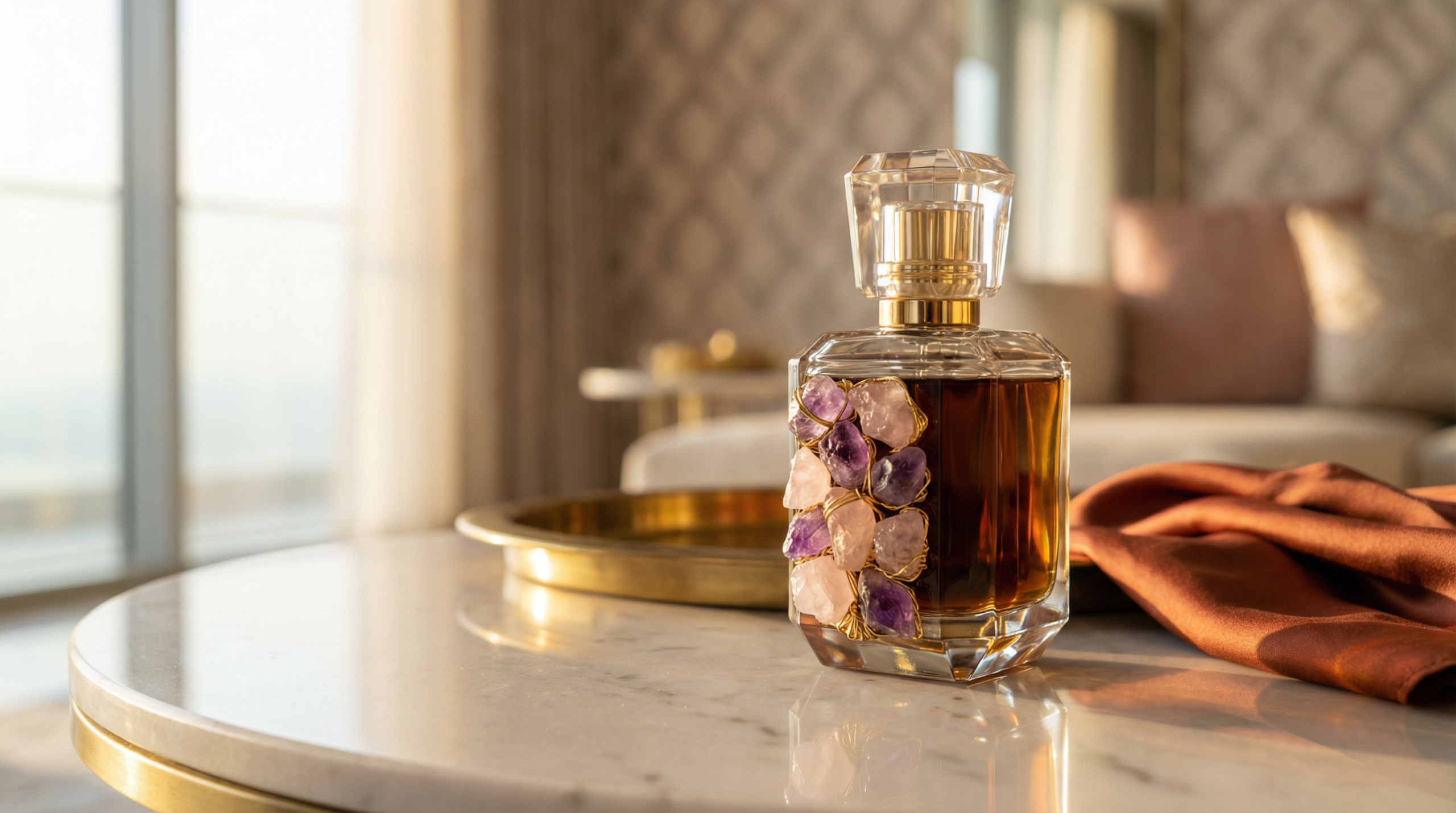
2026 has ushered in groundbreaking approaches to oud composition. One notable trend involves gemstone infusions—a concept merging olfactory artistry with crystalline energy. Perfumers macerate precious and semi-precious stones like rose quartz, amethyst, or jade alongside oud during the aging process, believing these minerals impart subtle energetic qualities to the final fragrance.
East-West fusion has also reached new heights. Japanese yuzu brightens traditional Cambodian oud. French lavender softens intense Hindi oud. Italian bergamot dances with Emirati rose and oud in harmonious contradiction. These cross-cultural dialogues create complexity that appeals to internationally-minded consumers while respecting oud’s Arabian heritage.
Molecular innovation allows perfumers to isolate specific oud facets—highlighting leathery undertones or amplifying sweet balsamic qualities—creating tailored experiences previously impossible with whole natural extracts.
Beyond Scent: The Wellness and Emotional Dimensions of Modern Oud
The wellness movement has profoundly influenced oud’s evolution. Perfumers increasingly design compositions with aromatherapeutic intentions, recognizing fragrance’s impact on emotional states. Certain oud blends aim to promote grounding and centeredness—particularly valuable in fast-paced urban environments like Dubai or Abu Dhabi.
This holistic approach considers circadian rhythms, with lighter oud formulations for daytime wear that energize without overwhelming, and deeper, resinous blends for evening that encourage relaxation. The concept of “mindful fragrance” has emerged—intentional scent selection aligned with personal wellness goals and emotional needs.
Modern consumers seek fragrances that contribute to their overall sense of well-being, not merely pleasant smells. This shift elevates oud from luxury accessory to wellness tool, deepening its relevance in contemporary life.
The Future of Fragrance: What to Expect from Oud in 2026 and Beyond
As we navigate 2026, oud stands at a fascinating intersection. Technology enables unprecedented precision—artificial intelligence assists perfumers in predicting successful note combinations, while sustainable cultivation ensures future availability. Yet the soul of oud remains unchanged: its ability to transport, transform, and connect wearers to something timeless.
Expect increasing personalization, with bespoke oud experiences tailored to individual preferences and skin chemistry. Transparency in sourcing will become standard as conscious consumers demand ethical practices. The boundary between perfumery and wellness will continue blurring, with oud leading this convergence.