
No products added!
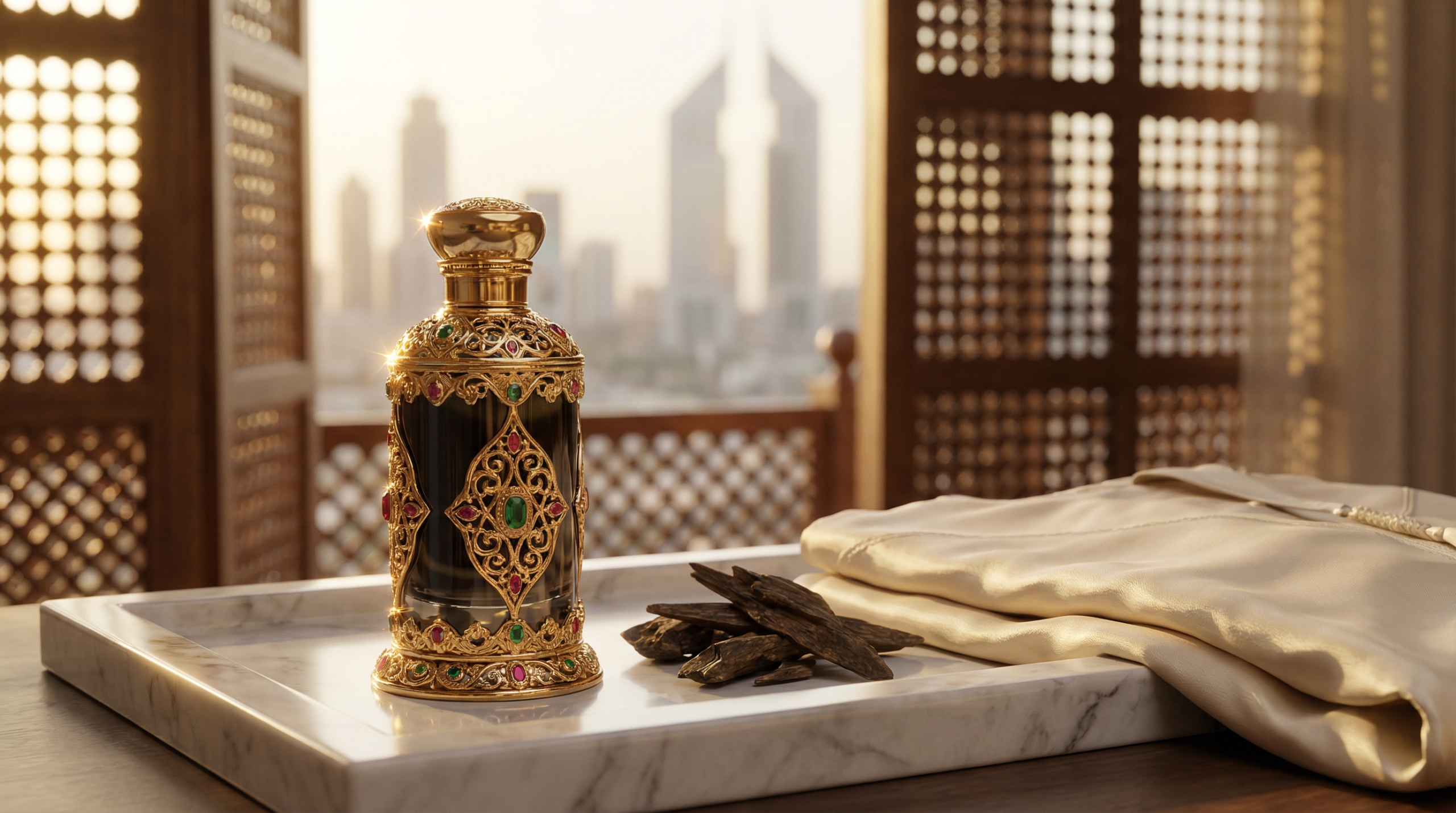

Oud’s Enduring Legacy: A Cultural Cornerstone in Arabic Perfumery
For centuries, oud has transcended mere fragrance in the Arabian Peninsula. This precious ingredient represents hospitality, celebration, and deep cultural identity. In Emirati homes, the smoky, woody scent of burning oud welcomes guests and marks special occasions.
The resinous heartwood of the agarwood tree has commanded prices rivaling gold, reflecting its scarcity and significance. Traditional perfumery in the GCC region has long centered around oud, blending it with rose, amber, and musk to create intensely personal scents. These fragrances become part of individual identity, passed down through generations as treasured family signatures.
In 2026, this cultural reverence remains unchanged, even as the methods of obtaining oud undergo revolutionary transformation.
The Quest for Sustainable Oud: Innovations in Ethical Sourcing
The traditional harvesting of wild agarwood has created environmental concerns. Overharvesting threatened several Aquilaria species, prompting urgent calls for change within the fragrance industry. Today, sustainable alternatives are reshaping how luxury oud reaches discerning consumers.
Cultivated agarwood plantations now provide ethically sourced options. Farmers deliberately infect trees with specific fungi, mimicking the natural process that creates the precious resin. This controlled cultivation ensures consistent quality while protecting wild populations.
Biotechnology offers another frontier. Scientists have developed methods to produce oud compounds through fermentation processes, creating molecules identical to those found in natural agarwood. These lab-derived ingredients maintain the complexity and depth that oud enthusiasts expect, without harvesting a single tree.
Some artisans blend these approaches, combining small amounts of ethically sourced natural oud with sustainable alternatives. This hybrid method preserves authentic character while dramatically reducing environmental impact.
Crafting the Legend: The Art and Science of Oud Perfume Creation
Creating a luxury oud fragrance requires both artistic vision and technical precision. Master perfumers spend months developing a single scent profile, balancing oud’s powerful presence with complementary notes.
The process begins with scent mapping. Different oud varieties—from Cambodian to Indian—offer distinct characteristics. Cambodian oud tends toward barnyard earthiness, while Indian varieties lean sweeter and more medicinal. Understanding these nuances guides the initial direction.
Blending transforms individual ingredients into harmonious compositions. Saffron adds luminous warmth, tempering oud’s intensity. Rose absolute provides floral elegance, softening the woody base. Amber contributes golden richness, extending the fragrance’s longevity on skin.
The refinement stage can take weeks. Small adjustments—a drop more jasmine, slightly less patchouli—dramatically alter the final impression. Perfumers test formulas on different skin types, in various temperatures, ensuring the scent performs beautifully across diverse conditions.
Sustainable oud presents unique creative challenges. Cultivated agarwood may smell lighter than wild-harvested varieties, requiring skilled adjustment of supporting notes to achieve desired depth.
Beyond Fragrance: The Connection to Modest Fashion and Lifestyle
The rise of sustainable oud mirrors broader shifts in modest fashion consumption patterns. Women who carefully select abayas and hijabs with environmental consciousness naturally extend these values to fragrance choices.
Luxury and sustainability no longer exist in opposition. Modern consumers understand that true quality means considering origin, production methods, and long-term impact. A beautifully crafted oud perfume from ethical sources aligns with the mindful approach many women bring to all lifestyle choices.
This conscious consumption reflects Islamic principles of stewardship and responsibility toward Earth’s resources. Choosing sustainable oud becomes an expression of faith values, not merely a fashion statement.
Preserving the Artistry: Passing Down Traditions to a New Generation
Traditional perfumery knowledge risks fading as elder master perfumers retire. Apprenticeship programs now focus on transferring this expertise while incorporating sustainable practices.
Young perfumers learn classical blending techniques alongside modern sustainability science. They study how traditional distillation methods can work with cultivated ingredients, maintaining authentic Arabian fragrance profiles while embracing ethical sourcing.
This generational bridge ensures cultural preservation. The ceremonial significance of oud, the ritualistic application of attar, the art of layering scents—these practices continue through educated, environmentally conscious practitioners.
The Future Scent: What to Expect from Sustainable Oud in 2026
The fragrance landscape in 2026 reflects increasing transparency. Consumers now expect detailed information about ingredient origins, harvesting methods, and environmental impact. Traceability has become paramount, with certification systems verifying ethical sourcing claims.
Technology enables personalization without waste. Digital scent profiling helps individuals identify preferences before purchasing, reducing unwanted bottles. Refillable luxury formats gain popularity, eliminating excessive packaging while maintaining premium presentation.
The definition of luxury itself evolves. Exclusivity now encompasses how ingredients were obtained, not merely their rarity. A sustainably sourced oud commands respect precisely because it represents conscientious choices alongside olfactory excellence.