
No products added!
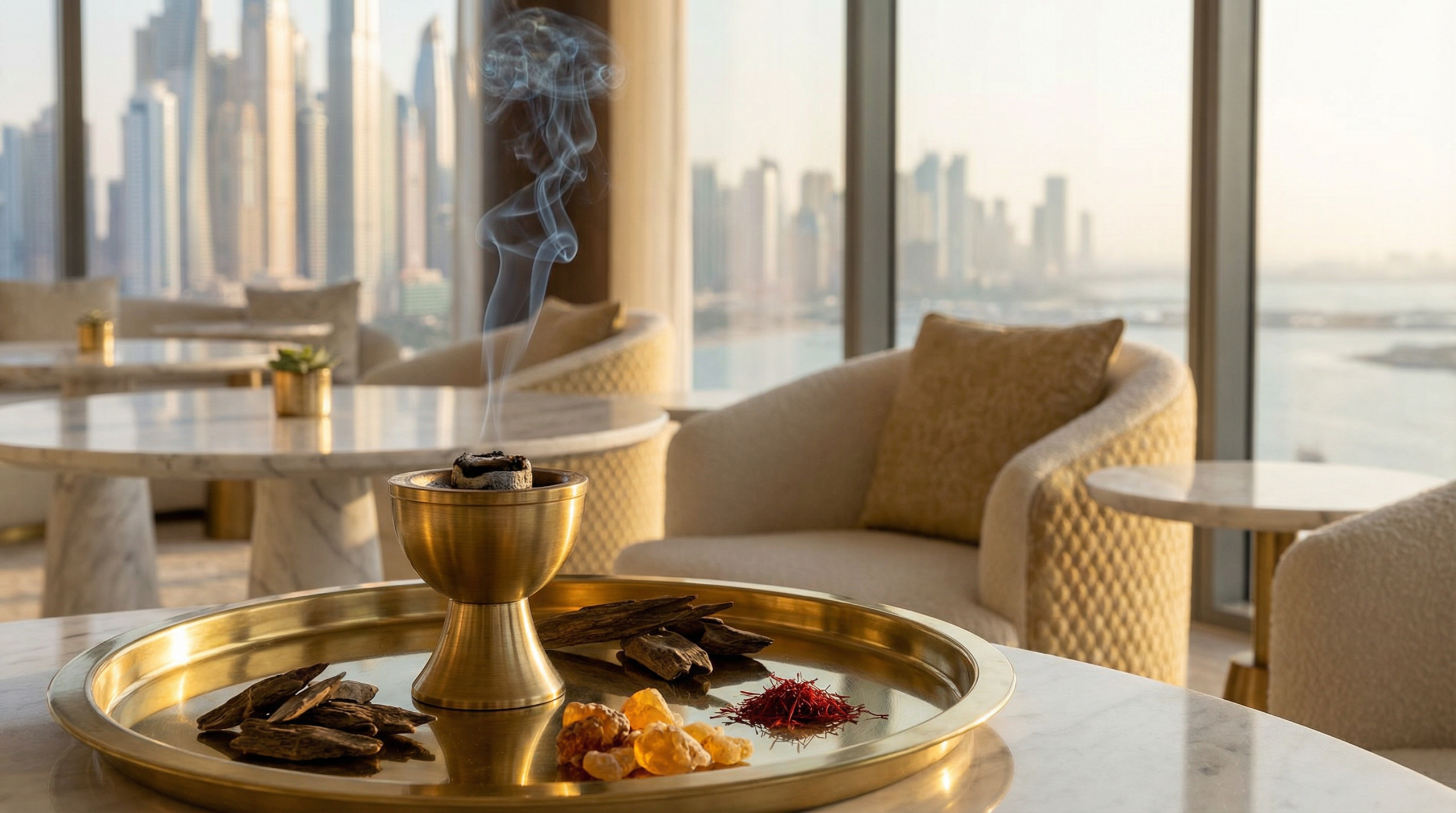

There exists a particular alchemy in fragrance—the way a single wisp of smoke can transport you across decades, landing you precisely in your grandmother’s majlis, her laughter still echoing in corners perfumed by tradition. Bakhoor possesses this extraordinary power, functioning as an olfactory time capsule that unlocks doors to memories we didn’t realize we had catalogued so carefully.
For women across the GCC, bakhoor represents far more than atmospheric ambiance. It embodies generations of wisdom, hospitality rituals, and the unspoken language of home.
The Whispers of Generations: Bakhoor as a Cultural Keystone
Bakhoor serves as an aromatic thread weaving through the fabric of Middle Eastern heritage, connecting contemporary lifestyles to ancestral traditions in remarkably tangible ways. Unlike fleeting fragrances, these wood chips—soaked in precious oils and blended with resins—carry the weight of centuries.
The practice of burning bakhoor transcends simple air freshening. It represents a deliberate act of cultural preservation, a ritual performed by grandmothers who understood that scent could anchor identity when everything else shifted. Each household developed its signature blend, creating an olfactory fingerprint as distinctive as a family crest.
In 2026, as modern life accelerates, this ancient practice offers something increasingly rare: continuity. The smoke rising from a mabkhara carries with it the same intentionality your ancestors brought to their daily rituals, creating invisible bridges between past and present.
Beyond Scent: Decoding the Essence of Your Grandmother’s Bakhoor
Traditional bakhoor compositions reveal sophisticated knowledge of natural ingredients and their harmonious layering. Oud wood forms the foundation—deeply resinous, complex, simultaneously earthy and mystical. Amber adds honeyed warmth, while frankincense contributes sharp clarity that cleanses both space and spirit.
What made your grandmother’s bakhoor distinctively hers likely involved subtle variations in proportion and ingredient selection. Perhaps she favored rose petals from Taif, or insisted on Cambodian oud over Indian varieties. These choices weren’t arbitrary; they reflected regional traditions, family preferences, and personal aesthetics cultivated over lifetimes.
The luxury embedded in traditional bakhoor formulations rivals any contemporary perfume. Saffron threads, sandalwood shavings, musk compounds—ingredients historically reserved for royalty—found their way into household bakhoor preparations, democratizing opulence through aromatic ritual.
Crafting Memories: Traditional Bakhoor Preparation and Rituals
The preparation of bakhoor itself constituted a cherished ritual, often performed during specific times and with particular intentions. Grandmother would carefully soak wood chips in concentrated attars, allowing weeks for proper infusion. The patience required mirrored the patience these matriarchs embodied—understanding that true luxury cannot be rushed.
Burning bakhoor followed its own ceremonial protocol. Before guests arrived, the mabkhara would make its rounds through majlis and bedrooms, perfuming fabrics and creating welcoming atmosphere. The act signified respect, preparation, and the honoring of relationships through sensory generosity.
Friday gatherings, Ramadan iftars, wedding preparations—each occasion had its appropriate bakhoor blend. This olfactory calendar marked time as reliably as any written schedule, creating scent memories that would trigger recognition decades later.
Bridging Eras: Bakhoor’s Enduring Legacy in Modern Luxury
Contemporary luxury homes in Dubai, Riyadh, and Abu Dhabi maintain bakhoor traditions while integrating them into refined modern aesthetics. Designer mabakhir crafted from precious metals sit alongside minimalist décor, proving that heritage and sophistication coexist beautifully.
The resurgence of interest in traditional fragrances reflects a broader cultural movement—recognition that modernity need not erase ancestry. Young women who might layer gemstone-infused perfumes during daytime hours return to bakhoor in evening, understanding these practices complement rather than compete.
This duality honors complexity. One can appreciate innovative fragrance technologies while cherishing smoke-scented memories of grandmother’s embrace. Both occupy essential territory in the architecture of identity.
The Olfactory Tapestry: How Bakhoor Intertwines with Personal Identity
Neuroscience confirms what Middle Eastern women have always known intuitively: scent memory operates differently than other sensory recall. The olfactory bulb connects directly to the hippocampus and amygdala—brain regions governing emotion and memory formation.
When bakhoor smoke reaches your nose, it bypasses rational processing and speaks directly to emotional centers, explaining why grandmother’s specific blend can evoke such profound responses. You’re not simply remembering; you’re re-experiencing moments with startling vividness.
This makes bakhoor extraordinarily powerful for maintaining cultural identity, especially for women navigating multiple cultural contexts. That familiar scent serves as an anchor, reminding you of fundamental truths about who you are and where you come from, regardless of external circumstances.
Preserving Aromatic Heritage
Honoring the legacy of bakhoor requires active participation. Consider documenting family recipes, learning preparation techniques from elder relatives, and understanding the intentionality behind specific ingredient choices. These practices become living inheritance rather than museum pieces when engaged with genuinely. The secret power of your grandmother’s bakhoor ultimately lies in its ability to collapse time, making memory tangible and tradition immediate. By continuing these aromatic rituals, you become both keeper and beneficiary of an irreplaceable cultural treasure.