
No products added!

The Evolving Landscape of Modest Fashion in 2026
The modest fashion industry has reached a remarkable turning point in 2026. What was once considered a niche market has transformed into a sophisticated global movement, with the GCC region leading the charge in setting trends rather than following them. This year marks a decisive shift toward conscious luxury, where quality surpasses quantity and cultural authenticity takes precedence over fleeting Western influences.
Fashion-conscious women across Dubai, Riyadh, and the broader Gulf region are redefining what modern modesty means. The conversation has evolved beyond simple coverage to encompass sustainability, craftsmanship, and individual expression within cultural parameters. This evolution reflects a generation that honors tradition while embracing innovation.
Abaya Trends 2026: What’s Gracing the Runways and Streets
In: Sustainable Luxury Fabrics
The most significant shift in 2026 is the overwhelming preference for ethically sourced, sustainable materials. Organic silk, Tencel, and responsibly produced linen have become the gold standard. Women are asking questions about production methods and choosing pieces that align with Islamic values of stewardship and responsibility.
Natural dyes and biodegradable fabrics are no longer alternative options—they’re becoming expected in premium abayas. This reflects a broader awareness that true luxury means respecting both people and planet.
In: Refined Traditional Embroidery
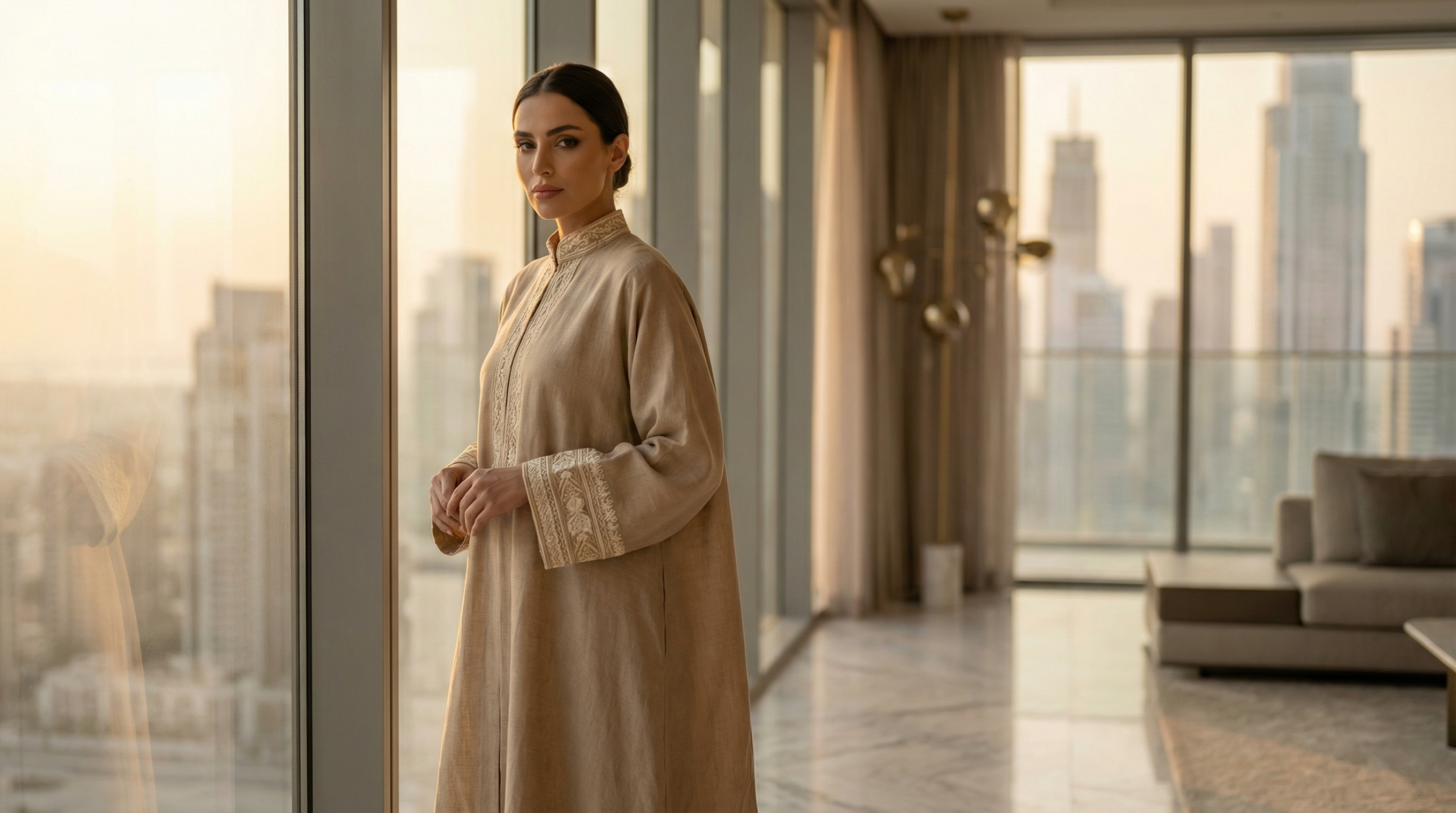
Intricate Emirati and Saudi embroidery techniques have made a powerful comeback, but with a contemporary restraint. Think delicate talli work concentrated at cuffs and necklines, or subtle geometric patterns inspired by Islamic art. These embellishments tell stories of heritage without overwhelming the garment’s elegant lines.
In: Architectural Cuts and Sculptural Silhouettes
Clean, structured designs with interesting proportions are dominating 2026. Abayas featuring asymmetrical hems, innovative sleeve constructions, and strategic layering create visual interest while maintaining full coverage. The emphasis is on tailoring excellence rather than excessive decoration.
Out: Overly Ornate Embellishments
Heavy crystal work, excessive sequins, and busy embroidery covering entire abayas are fading from fashion consciousness. These designs now feel dated and misaligned with the refined aesthetic that defines contemporary GCC style. The focus has shifted from “look at my abaya” to “look at my confidence.”
Out: Fast Fashion Polyester
Cheap synthetic fabrics have lost their appeal entirely. Women are investing in fewer, better pieces that breathe, drape beautifully, and last for years. The discomfort and environmental impact of low-quality materials no longer justify any cost savings.
Hijab Styles 2026: Embrace the Future of Covering
In: Minimalist Clean Girl Aesthetic
The clean girl hijab trend emphasizes smooth, sophisticated draping with minimal volume. Think sleek wraps in premium cotton or silk that frame the face beautifully without adding bulk. This style works seamlessly with structured abayas and modern modest wear.
Neutral tones—particularly warm beiges, soft greys, and creamy whites—dominate color palettes. These versatile shades create effortless coordination with any outfit.
In: Functional Luxury
Innovative hijab construction featuring built-in caps, magnetic closures, and breathable mesh panels addresses practical concerns without compromising elegance. Gen Z has driven demand for hijabs that support active lifestyles while maintaining modest principles.
In: Customizable Styling Options
Convertible hijabs and modular designs allow personal expression within modest guidelines. This versatility appeals to women who move between different settings—from professional environments to family gatherings—throughout their day.
Out: Excessive Volume and Layers
The heavily layered, voluminous hijab styles of previous years are receding. Modern preferences favor streamlined silhouettes that maintain coverage without adding unnecessary bulk or weight.
Out: Synthetic Blend Fabrics
Similar to abayas, polyester-blend hijabs are losing ground to natural fibers. Breathability matters, especially in the Gulf climate. Cotton, bamboo, and silk have become non-negotiable for discerning women.
Beyond the Hype: Abaya and Hijab Trends Fading in 2026
Beyond specific styles, entire approaches to modest fashion are shifting. The trend of directly copying Western runway looks by simply adding length or sleeves feels increasingly inauthentic. Women are seeking designs that originate from regional aesthetics rather than adapting external trends.
Additionally, the obsession with trend cycling itself is waning. Fast fashion’s “new collection every month” mentality conflicts with both Islamic values and environmental consciousness. The focus has moved toward building curated wardrobes with timeless pieces.
Forecasting the Future: Emerging Influences on Modest Attire in the GCC
Regional variations within the GCC are becoming more pronounced and celebrated. Saudi Arabia increasingly showcases its unique embroidery heritage, while Emirati designers emphasize pearl-inspired details and maritime influences. Kuwaiti fashion leans toward bold architectural shapes, and Qatari style favors refined luxury with traditional elements.
Gen Z’s influence cannot be overstated. This generation demands transparency, sustainability, and functionality without compromising on luxury or modesty. Their preferences are reshaping the entire industry toward more ethical, thoughtful consumption patterns.
Technology integration is also emerging as a quiet trend—temperature-regulating fabrics and UV-protective materials are appearing in high-end modest wear, addressing practical needs without advertising themselves loudly.
Key Takeaways for 2026
Timeless modest elegance in 2026 means investing in quality over quantity, choosing pieces that reflect cultural heritage with contemporary sophistication, and prioritizing sustainable luxury. Build your wardrobe around versatile, well-constructed basics in natural fabrics, then add interest through refined traditional embellishments or architectural cuts. Remember that true style transcends seasonal trends—it reflects personal values, cultural pride, and mindful choices that honor both tradition and future generations.