
No products added!
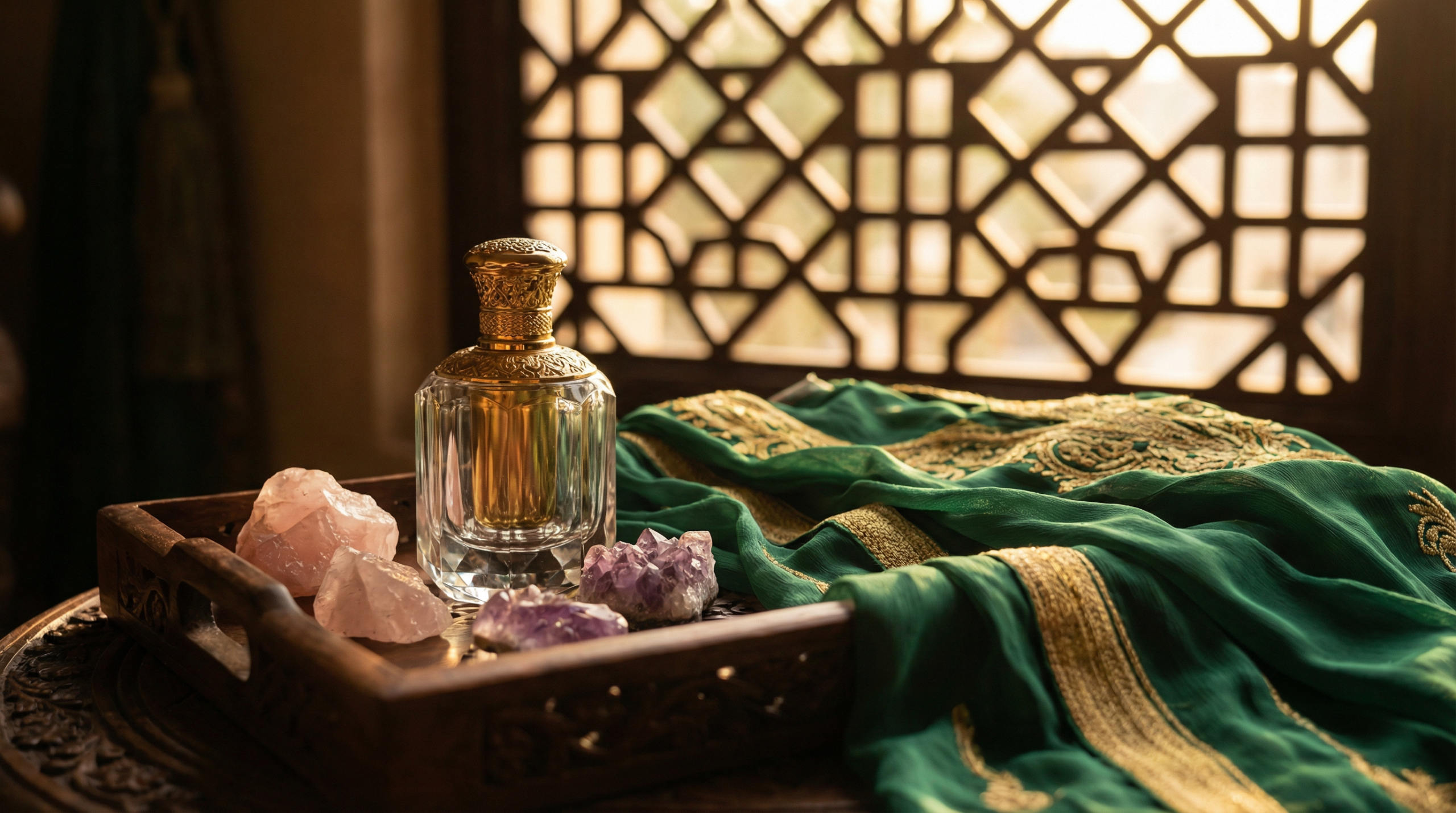

The creation of luxury Arabic perfume remains one of the most intimate artistic expressions in Middle Eastern culture. In 2026, as the fragrance industry embraces both heritage and innovation, the journey from raw inspiration to bottled masterpiece continues to captivate those who appreciate craftsmanship at its finest.
The Genesis of Scent: From Dubai Souks to Vision Boards
January mornings in Dubai’s traditional perfume souks present a sensory symphony unlike anywhere else. Perfumers often begin their creative process here, moving through stalls where oud chips smolder beside rose water distillations and aged amber resins.
The modern perfumer’s diary doesn’t start with formulas—it begins with experience. Walking through the spice market, inhaling cardamom and saffron, observing the interplay of light through colored glass bottles creates what industry professionals call “scent memories.” These moments become reference points, sketched into journals alongside fabric swatches and color palettes.
Vision boards in 2026 blend digital mood boards with physical materials: pressed jasmine petals from Taif, silk threads in sunset amber, photographs of geometric Islamic patterns. This multisensory approach grounds the abstract process of scent creation in tangible cultural touchstones.
Precious Drops: Unveiling the Art of Gemstone Infusion
The gemstone infusion technique has gained significant momentum throughout the GCC region. This process involves placing carefully selected gemstones—rose quartz, amethyst, or jade—into perfume blends during maceration periods that can extend weeks or even months.
Beyond aesthetic appeal, practitioners believe gemstones contribute energetic properties to fragrances. Rose quartz, associated with tenderness and compassion, might accompany rose otto and vanilla compositions. Amethyst, linked to clarity and calm, often pairs with lavender and oudh blends.
The technical process requires precision. Gemstones must be ethically sourced and thoroughly cleansed before introduction to precious oils. The maceration vessel becomes a meeting point of mineral and botanical, where subtle molecular interactions occur over time. While scientific validation remains limited, the ritual itself adds intention and narrative depth to luxury perfumery.
Harmony in Design: Where Modest Fashion Meets Fragrance
The compositional principles of modest fashion directly parallel perfume architecture. An expertly draped abaya demonstrates flow, structure, and negative space—the same elements a master perfumer considers when balancing top, heart, and base notes.
Consider the kaftan’s graceful silhouette: fabric skims rather than clings, creating movement through strategic cutting and pleating. Similarly, well-composed fragrances layer transparently, allowing individual notes to emerge and recede without overwhelming the senses.
Cultural motifs found in embroidered abayas—geometric patterns, floral arabesques, calligraphic flourishes—inspire fragrance narratives. A perfumer might translate the repetition of an Islamic geometric pattern into waves of recurring jasmine, or capture the boldness of gold threadwork through saffron and oudh accents.
The shared language is restraint with richness, modesty with luxury. Both disciplines honor the principle that true elegance whispers rather than shouts.
Sustainable Scents: Crafting Conscientious Luxury for 2026
Ethical sourcing has become non-negotiable in luxury perfumery. Sustainable oudh harvesting now follows strict protocols, with cultivated aquilaria trees replacing wild harvesting practices that once threatened species survival.
Rose cultivation in the Taif region increasingly incorporates traditional water conservation methods alongside modern organic farming. Perfumers document these supply chains meticulously, understanding that transparency elevates rather than diminishes luxury.
The 2026 perfumer’s diary frequently includes supplier visits: observing frankincense tapping in Oman, witnessing steam distillation of damask roses at dawn, meeting the families who’ve cultivated musk malva for generations. These relationships ensure quality while preserving artisanal traditions.
Sustainable packaging innovations appear equally important. Refillable flacons, biodegradable materials, and minimalist design that honors rather than obscures the liquid inside reflect evolving consumer values across the GCC.
The Alchemist’s Atelier: A Perfumer’s Creative Process
The actual formulation process combines ancient wisdom with contemporary precision. A typical diary entry might read: “Day 14: Adjusted Taif rose from 8% to 6%. Amber base now perfectly balances sweetness. Tomorrow: introduce white musk accord.”
Perfumers work with organ-style ingredient arrangements—hundreds of essence bottles organized by family. The physical act of selecting, blending, and evaluating scents throughout the day creates muscle memory that informs intuition.
Testing happens in cycles. Morning evaluations on blotters capture top note behavior. Afternoon skin tests reveal heart development. Evening assessments judge longevity and dry-down character. Between sessions, sketches capture the intended “shape” of the fragrance—is it linear or pyramidal? Does it bloom or unfold?