
No products added!

The Enduring Legacy of Oriental Perfumery: More Than Just Scents
In an era dominated by fleeting fragrance trends and synthetic formulations, the ancient perfumery traditions of the Middle East offer something profoundly different. These practices, refined over millennia, were never merely about pleasant aromas. They represented spiritual elevation, cultural identity, and holistic well-being.
As we navigate 2026, there’s a growing recognition that true prosperity extends beyond material wealth. The ancestral wisdom embedded in traditional Oriental perfumery speaks to this broader definition—encompassing mental clarity, spiritual grounding, and cultural connection. These five secrets from ancient perfumery masters remain remarkably relevant for contemporary life.
Secret One: The Resonating Power of Sacred Resins (Frankincense & Myrrh)
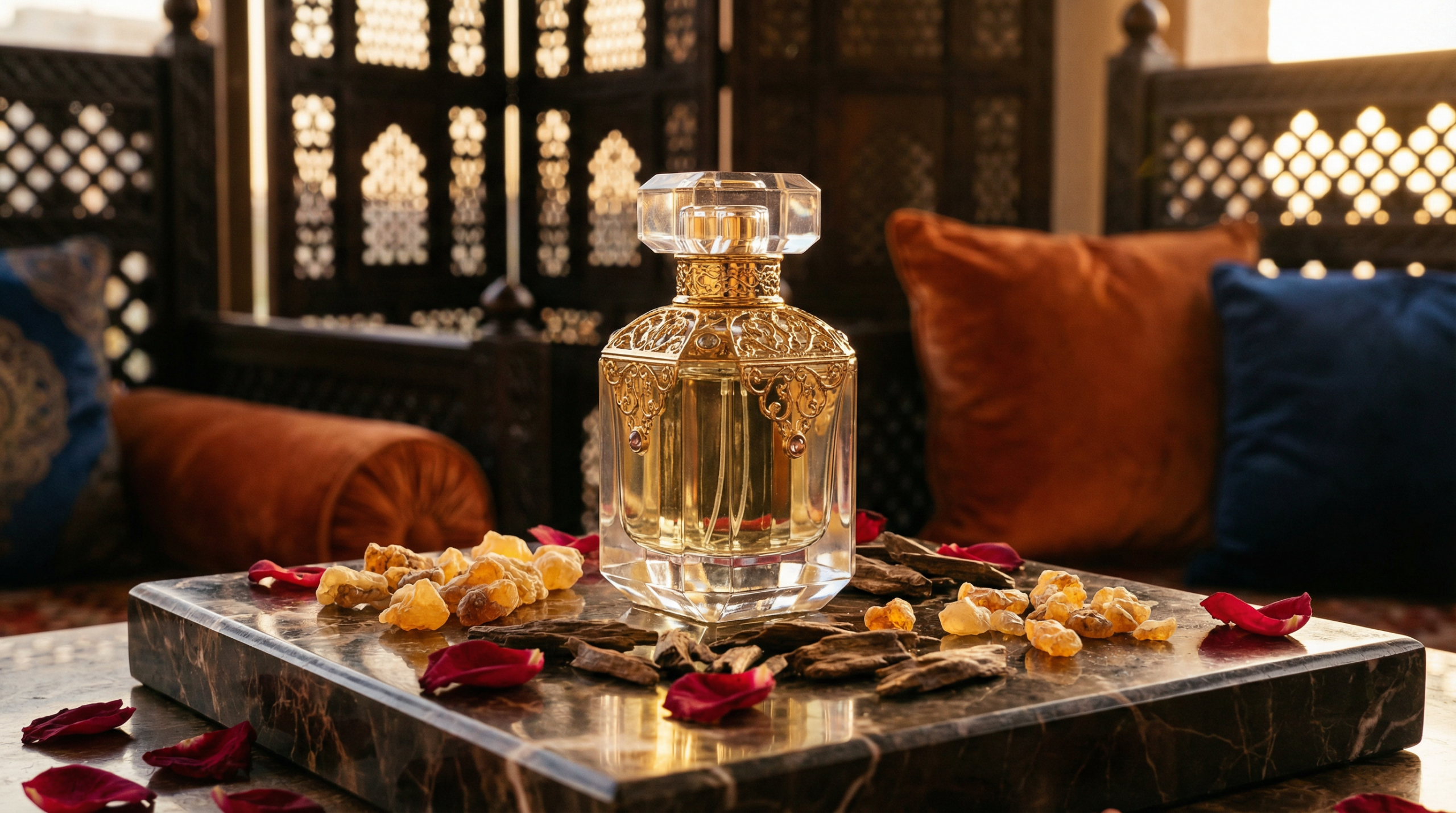
Frankincense and myrrh have been treasured across the Arabian Peninsula for over 5,000 years, their value once rivaling gold. Ancient traders understood what modern aromatherapy is only now confirming: these resins possess remarkable properties for mental and spiritual wellness.
Frankincense, known as luban in Arabic, was traditionally burned during meditation and prayer. Its aromatic compounds promote deep breathing and mental clarity, helping to quiet the mind’s constant chatter. Historical texts describe its use in sacred rituals precisely because it facilitated a state of heightened awareness and presence.
Myrrh complemented frankincense with its grounding, earthy qualities. Together, they created a balance between elevation and earthiness—a duality central to holistic well-being. In 2026, incorporating these resins into daily routines through incense or resin-based fragrances can anchor modern life in ancient wisdom.
Secret Two: Oud – The ‘Liquid Gold’ and Its Spiritual Significance
Oud, or agarwood, holds unparalleled significance in Arab perfumery traditions. Formed when Aquilaria trees become infected with specific mold, this transformation from ordinary wood to precious resin mirrors spiritual concepts of growth through challenge.
Historically, oud wasn’t simply a luxury commodity. It represented transformation, resilience, and the beauty that emerges from struggle. Families would burn oud chips during celebrations and significant life events, marking moments of transition and blessing.
The depth and complexity of genuine oud teach patience—both in its formation over decades and in the slow unfurling of its scent profile. This patience, this willingness to let things develop naturally, offers a counterbalance to 2026’s rush toward instant gratification.
Secret Three: Aromatic Botanicals and Their Wellness Benefits in Ancient Blends
Ancient perfumers were master botanists, understanding plants’ therapeutic properties long before modern science validated their wisdom. Rose (ward), jasmine, saffron, and amber weren’t chosen randomly—each served specific purposes in traditional wellness practices.
Damascus rose, cultivated for millennia in the region, was prized for its ability to uplift mood and soothe emotional turbulence. Historical records show it being used in treatments for melancholy and anxiety. Jasmine, blooming at night, was associated with dreams, intuition, and feminine strength.
These botanicals were carefully combined to create balanced compositions addressing both physical and emotional states. The art lay in understanding how scents interact with human physiology and psychology—knowledge passed down through generations of master perfumers.
Secret Four: The Art of Layering (Mukhallat) – A Centuries-Old Tradition
Mukhallat, the traditional Arab practice of layering fragrances, represents perhaps the most sophisticated secret of ancestral perfumery. Unlike Western approaches that emphasize single signature scents, mukhallat embraces complexity and personalization.
This practice typically begins with oud or amber as a base, building layers with florals, spices, and resins. Each layer serves a purpose: grounding, elevating, projecting, or lingering. The result is a unique olfactory signature that evolves throughout the day.
The intentionality behind mukhallat reflects a deeper philosophy. Just as life requires balancing multiple roles and responsibilities, a well-crafted personal scent profile harmonizes diverse elements into a coherent whole. This mindful approach to fragrance transforms daily application into a meditative ritual.
Secret Five: Perfume Rituals for Intentional Living and Well-being in 2026
Ancient perfumery was inseparable from ritual. The act of scenting oneself was never rushed—it was a moment of intention-setting, self-care, and spiritual preparation. Women would take time to apply dahn al oud or rose oil to pulse points, speaking prayers or affirmations with each application.
These rituals created mental boundaries between different life phases: preparing for prayer, transitioning from home to public spaces, or welcoming guests. In 2026’s blurred boundaries between work and personal life, reviving such rituals offers structure and mindfulness.
The practice of perfuming clothing and hair, traditional in the Gulf, extends the ritual throughout the day. Each waft of fragrance becomes a subtle reminder of the intention set that morning, anchoring awareness in the present moment.