
No products added!
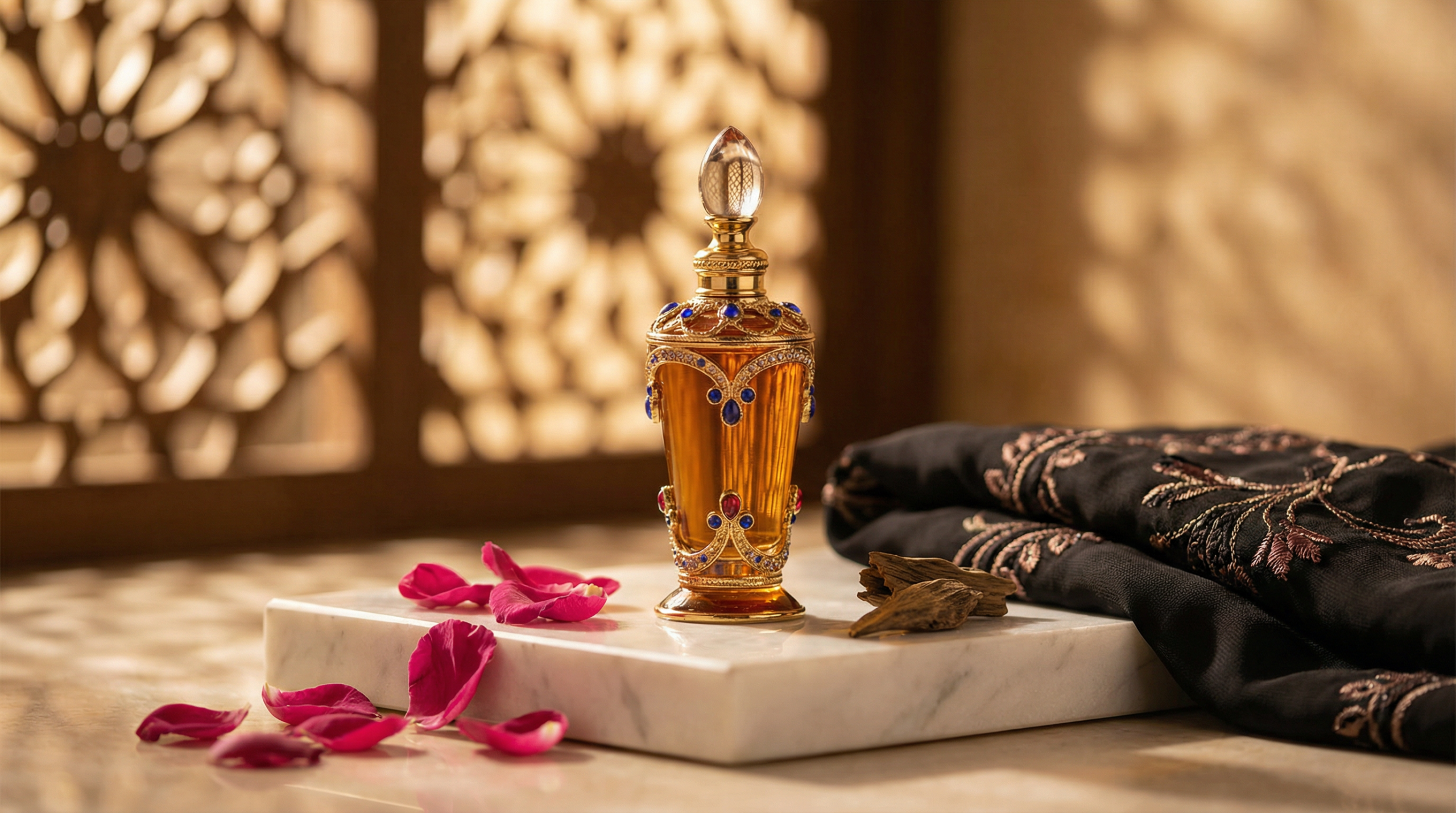

The world of luxury Arabic perfumery remains one of the most guarded creative spaces in the Middle East. Behind every exquisite fragrance lies a craftsman who navigates centuries of tradition while embracing tomorrow’s innovations. Understanding this hidden world reveals how the art of perfume-making has evolved into something far more profound than simply mixing essences.
The Unseen Hand: Who is Today’s Luxury Perfume Maker?
The modern perfume maker in the Arabian Gulf has transformed from a traditional attar blender into a multidisciplinary artist. These creators spend years mastering the subtleties of raw materials, studying cultural aesthetics, and understanding the emotional landscape of scent memory.
Today’s perfumer typically holds expertise in chemistry, cultural anthropology, and art history. They travel extensively to source ingredients, spending months in remote valleys where specific rose varieties bloom, or negotiating with sustainable oud harvesters in Southeast Asian forests. Their workshops blend ancient distillation equipment with precision technology that can measure scent molecules to the nanogram.
What distinguishes these artisans is their deep connection to Islamic heritage and regional identity. They don’t simply create fragrances—they translate cultural narratives, spiritual experiences, and the essence of place into olfactory form.
From Concept to Cosmos: Weaving Modest Fashion into Fragrance Narratives
A fascinating evolution in 2026 is how perfume makers draw inspiration from modest fashion aesthetics. The layered elegance of a carefully draped abaya or the intricate embroidery on a kaftan directly influences scent composition.
Consider how a perfumer might interpret flowing silk: the opening notes whisper softly, like fabric catching a breeze, before revealing deeper, more complex middle notes. The concept of modesty itself—revealing beauty gradually, with intention—mirrors the structure of fine perfume where the true character unfolds slowly over hours.
Texture plays a crucial role. Rich, velvety oud bases echo the luxurious weight of premium fabrics. Delicate floral notes might represent the subtle embellishments on modest garments—beautiful without being overwhelming. This cross-pollination between fashion and fragrance creates scents that feel cohesive with the lifestyle and values of the wearer.
The Essence of Tomorrow: Sustainable Sourcing and Ethical Craftsmanship
Transparency has become paramount in luxury perfumery. By 2026, discerning consumers demand to know the journey of each ingredient from source to bottle.
Ethical sourcing has revolutionized how rare materials are obtained. Wild oud harvesting, once destructive, now follows strict sustainability protocols with reforestation commitments. Harvesters work with conservation organizations to ensure agarwood trees regenerate. Similarly, the sourcing of precious ambergris now relies exclusively on beach-collected material, never from hunted sources.
Regional flowers like Ta’if roses or Damascus blooms are cultivated through partnerships with local farming communities, ensuring fair compensation and traditional growing methods. These relationships often span generations, with perfume makers maintaining decades-long connections with specific growers.
This ethical foundation adds another layer of luxury—the knowledge that beauty doesn’t come at the cost of environmental degradation or exploitation.
Echoes of the Past, Scents of the Future: Preserving Arabic Perfume Traditions
The Gulf’s perfumery heritage stretches back millennia, and contemporary makers serve as custodians of this knowledge. Ancient techniques like cold-enfleurage and traditional distillation methods remain relevant, often producing superior results to modern shortcuts.
Master perfumers still learn the art of layering attars, understanding how specific combinations create transformative effects. The practice of bukhoor blending—mixing resins, woods, and aromatics for incense—informs their understanding of scent evolution through heat and time.
Yet tradition doesn’t mean stagnation. These artisans continually reinterpret classical formulas, asking how a centuries-old rose-oud combination might speak to contemporary sensibilities. They balance reverence for heritage with the courage to innovate.
Innovative Alchemy: The Future Technologies Shaping Perfume Creation
Technology has become an invaluable tool in the perfume maker’s arsenal. Advanced headspace capture technology can now analyze and recreate the scent of specific environments—a desert after rain, the interior of a historic mosque, the air during Ramadan evenings.
Artificial intelligence assists in predicting how rare ingredients might blend, reducing waste during the experimental phase. However, the final decision always rests with human intuition and cultural understanding that no algorithm can replicate.
Some creators are experimenting with gemstone infusion, believing that materials like amethyst or rose quartz impart subtle energetic qualities to fragrances. Whether scientific or spiritual, these innovations reflect a holistic approach to luxury that resonates deeply in the region.
The Art of Invisible Luxury
The luxury perfume maker of 2026 embodies a unique synthesis: scientist and artist, traditionalist and innovator, businessperson and spiritual seeker. Their work bridges the tangible and intangible, creating beauty that exists in the ephemeral space between memory and moment. By understanding the depth of their craft—from ethical sourcing to cultural translation—you gain appreciation for why true luxury fragrances command their value and why the maker’s hand remains the irreplaceable element in every extraordinary scent.