
No products added!
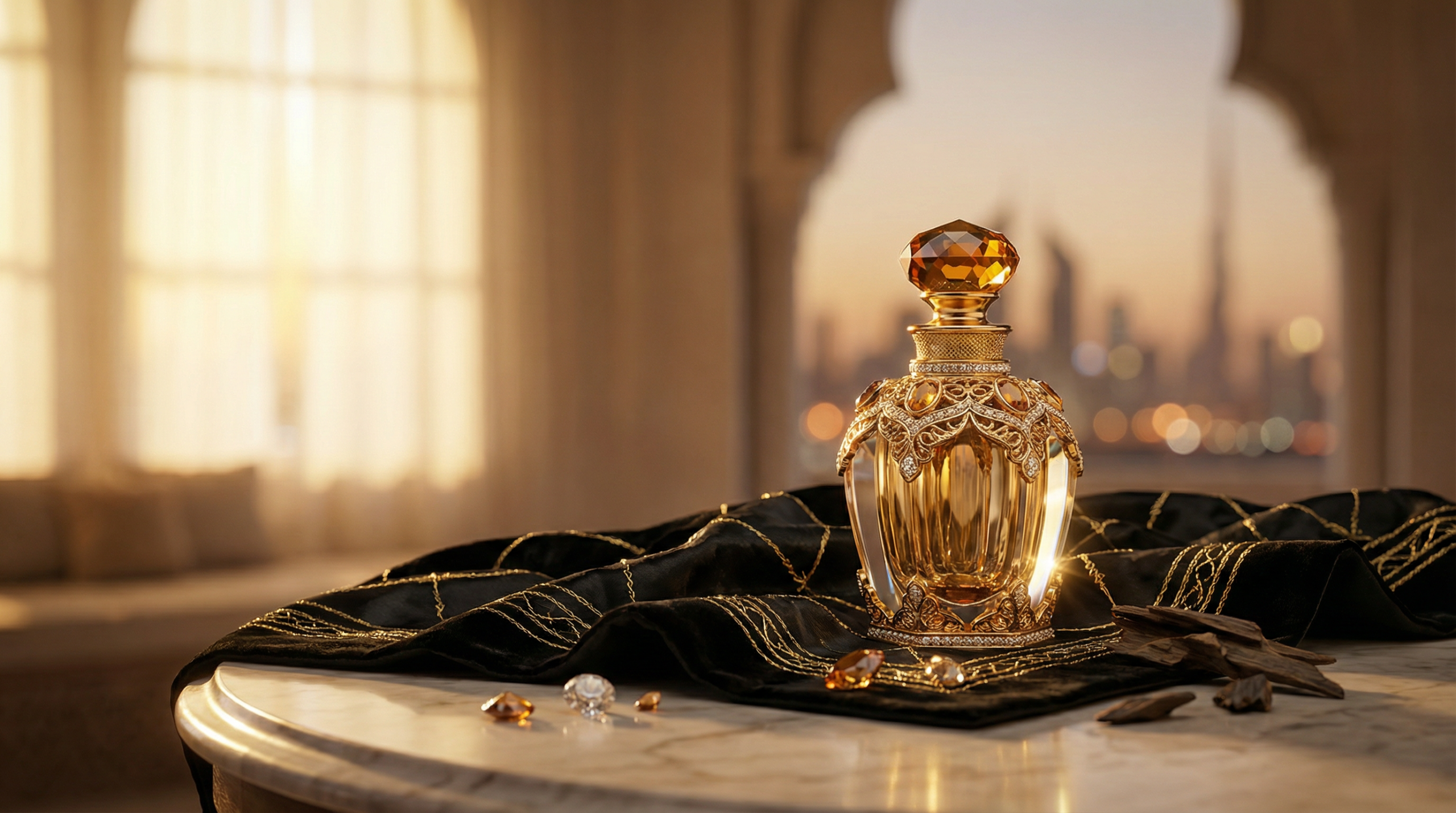

The art of wearing fragrance in the Middle East transcends simple application. It’s a cultural practice woven into daily rituals, social interactions, and personal identity. For those who appreciate the rich, complex compositions of Arabic perfumes, understanding sillage—that captivating scent trail you leave behind—becomes essential to mastering this ancient art form.
Understanding Sillage: More Than Just a Scent Trail
Sillage, derived from the French word for “wake,” describes the trail of fragrance that lingers after you’ve passed. In Arabic perfume culture, this concept takes on deeper significance. A well-executed sillage creates an invisible presence that’s both memorable and respectful, never overwhelming.
The distinction between projection and longevity matters here. Projection refers to how far your scent radiates from your body in the first few hours, while longevity measures how long the fragrance remains detectable. Arabic perfumes, particularly oil-based formulations, excel at both due to their concentrated nature and traditional composition methods.
The ‘3-Spray Rule’ Demystified: Where and Why
The classic three-spray approach targets strategic points that maximize scent diffusion throughout the day. The traditional pulse points—wrists and neck—remain foundational because body heat naturally disperses fragrance molecules. These warm areas act as natural diffusers, releasing scent gradually.
The third spray varies by personal preference and cultural practice. Many women in the UAE and GCC region apply fragrance to the inner lining of their abayas, creating a subtle scent cocoon that moves with them. Others prefer a light mist in their hair, where natural oils help anchor the fragrance for hours.
This rule serves as a starting point rather than a rigid formula. Climate, perfume concentration, and personal sensitivity all influence ideal application. January’s cooler temperatures in the Gulf region actually require slightly more generous application than summer months, as heat amplifies scent projection.
Beyond the Three: Advanced Techniques for Enhanced Sillage
Traditional Arabic fragrance rituals involve layering techniques that Western perfume culture often overlooks. Starting with bakhoor incense in your wardrobe infuses fabrics with base notes that complement and extend your perfume’s longevity. This preparatory step creates depth impossible to achieve with fragrance alone.
Moisturized skin holds scent exponentially better than dry skin. Applying an unscented lotion or natural oil before your perfume creates a hydrated base that prevents rapid evaporation. This simple step can extend wear time by several hours, particularly important in the region’s dry climate.
Consider the “spray and walk” method for special occasions: mist perfume into the air and walk through the cloud. This creates an even, delicate distribution across clothing and hair without concentrated spots that might overwhelm in close quarters.
The Role of Arabic Perfume Composition in Longevity and Projection
Arabic perfumes distinguish themselves through higher concentration levels and distinctive ingredient choices. Oil-based formulations, common in traditional attars, eliminate alcohol’s quick evaporation, allowing fragrances to develop slowly on skin over hours.
Gemstone-infused perfumes—a growing trend in 2026—add another dimension to sillage. These formulations claim enhanced energetic properties while providing additional fixative qualities that extend wear time. The mineral components interact with natural skin chemistry, creating subtle variations that make each wearer’s scent unique.
Oud, amber, musk, and other signature Arabic notes possess remarkable staying power due to their molecular structure. These heavier base notes anchor lighter florals and citrus, preventing the entire composition from fading quickly.
Preserving Your Scent: How Modest Fashion Impacts Perfume Wear
The relationship between modest fashion and fragrance creates unique considerations for sillage. Multiple fabric layers can absorb and redistribute perfume in fascinating ways. Natural fibers like cotton, silk, and wool hold scent differently than synthetics, with silk offering particularly elegant diffusion.
Hijab fabrics deserve special attention in application strategy. A light spray on the inner fold near your neck releases subtle fragrance with movement throughout the day. Avoid direct application to visible areas where oil-based perfumes might leave marks on delicate fabrics.
The abaya’s flowing silhouette creates gentle air movement that carries scent naturally. This architectural element of modest dress actually enhances sillage when fragrance is applied thoughtfully to both skin and strategic fabric points.
Culturally Conscious Application: Respecting Tradition and Personal Space
Arabic perfume culture balances generous application with social awareness. While Western fragrance etiquette often emphasizes restraint, Middle Eastern traditions celebrate noticeable sillage in appropriate contexts. Understanding when to amplify or moderate your scent demonstrates cultural fluency.
Religious and social settings require consideration. Friday prayers or formal gatherings might call for lighter application, while celebrations and private gatherings welcome more generous fragrance. Reading the context ensures your sillage enhances rather than disrupts communal experiences.