
No products added!
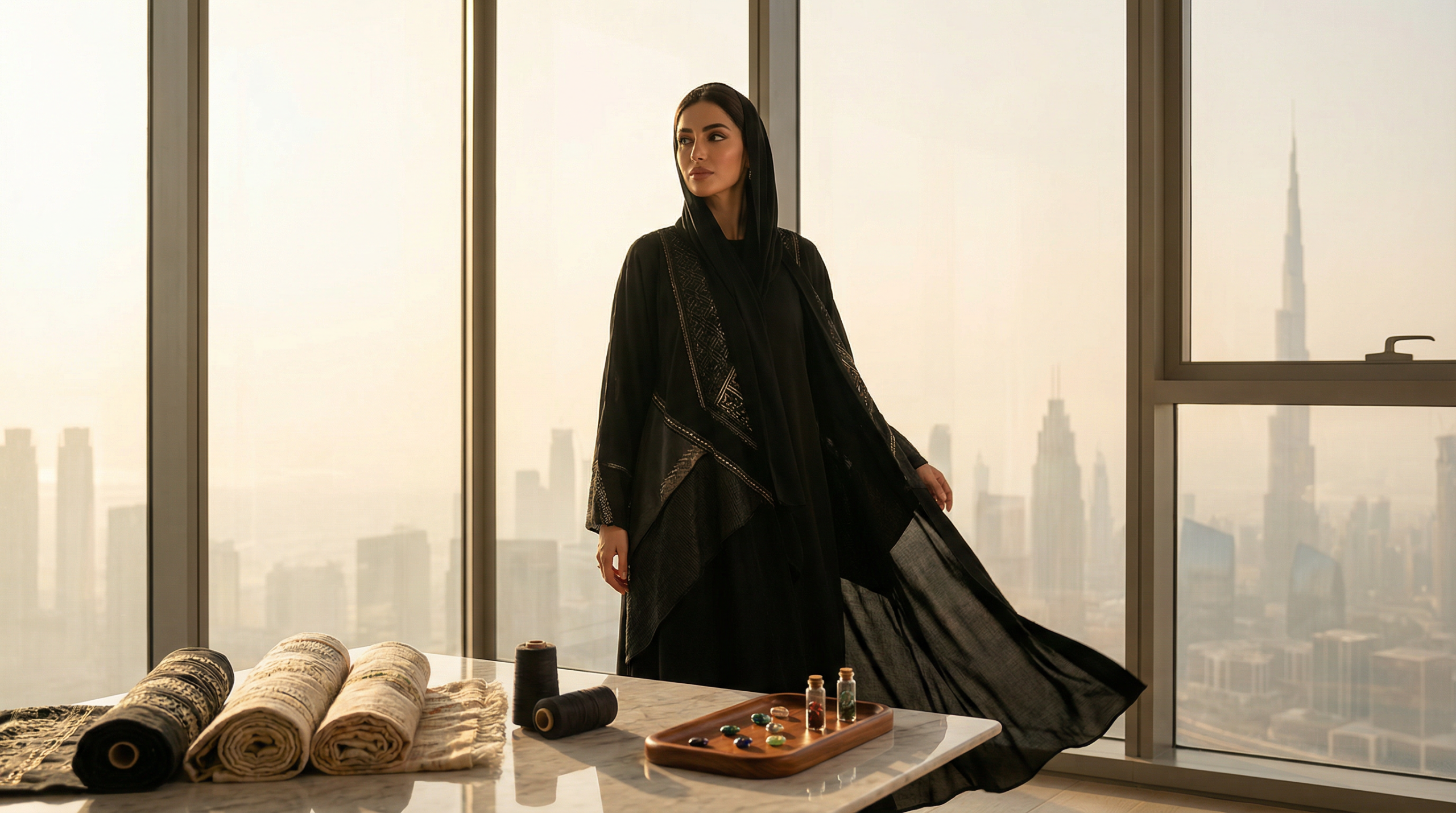

The atelier is silent at dawn, save for the whisper of charcoal against paper. In this intimate hour, before the chaos of pattern-cutting and client consultations, the creative process begins. For emerging designers in the GCC’s thriving modest fashion scene, the journey from initial inspiration to finished abaya has become both more technically sophisticated and more personally demanding than ever before.
Dawn of Design: The Blank Canvas & Initial Sparks of Inspiration
The contemporary abaya designer’s sketchbook reveals unexpected influences. Pages filled with architectural studies of Dubai’s Museum of the Future sit alongside photographs of date palm fronds casting shadows at sunset. One young designer’s diary entries describe how the geometric precision of Islamic tile work at Doha’s Museum of Islamic Art informed her 2026 winter collection’s hem detailing.
Natural landscapes provide equally powerful inspiration. The layered sediment of Wadi Rum’s desert cliffs translates into graduated fabric draping. The movement of water in traditional Emirati falaj irrigation systems influences how sleeves flow and gather. These aren’t merely aesthetic choices—they represent a deeper conversation between heritage and innovation that defines luxury modest fashion today.
Weaving Dreams: From Fabric Selection to First Stitch
Material selection has evolved into an ethical minefield and creative opportunity simultaneously. Diary entries from established ateliers reveal the complexity: sourcing organic silk from ethical producers in Uzbekistan, navigating the carbon footprint of Italian crepe imports, balancing client demand for sustainable fabrics with the reality of limited suppliers in the region.
The technical considerations are equally intricate. A single abaya might require four different fabric weights—structured broadcloth for the shoulders, fluid charmeuse for the body, delicate chiffon for overlay details, and reinforced weaves for high-stress seams. Pattern-making for modest fashion demands engineering precision; the garment must move gracefully while maintaining coverage through every gesture and movement.
Contemporary designers document their struggles with traditional expectations. One diary entry describes a heated discussion with a client’s mother about arm circumference—too fitted seems immodest, too loose appears sloppy. These negotiations happen daily, representing the delicate balance between personal expression and cultural respect.
Scented Stories: The Art of Gemstone-Infused Perfumery & Collaboration
The intersection of fashion and fragrance has deepened in 2026. Designers increasingly collaborate with perfumers to create scent experiences that complement their textile work. The process involves understanding how certain gemstones—traditionally valued for their metaphysical properties—inspire fragrance compositions.
Amethyst might guide a perfumer toward calming lavender and chamomile notes. Rose quartz suggests delicate damask rose paired with soft vanilla. While the gemstones themselves aren’t processed into the perfume, they serve as conceptual anchors, much like a mood board guides fabric selection.
Traditional Arabic perfumery techniques inform these collaborations. The diary of one fragrance artisan details the painstaking process of sourcing Cambodian oud aged for fifteen years, Afghani saffron from specific valleys, and amber resin from carefully selected suppliers. The blending process combines centuries-old distillation methods with modern molecular precision.
The ‘Scandal’ of Innovation: Pushing Boundaries in Modest Fashion
The so-called scandals in modest fashion rarely involve the dramatic controversies outsiders might imagine. Instead, they’re quiet rebellions: a designer who introduces trousers beneath an open abaya silhouette, challenging the traditional closed front. Another who incorporates visible zippers as decorative elements rather than hiding them.
These innovations generate intense discussion within the community. One designer’s diary recounts receiving both praise and criticism for a collection featuring deliberately asymmetrical hems—some clients celebrated the fresh perspective, while others felt it disrespected the abaya’s traditional dignity. These tensions reflect the broader evolution of modest fashion as it navigates between heritage preservation and contemporary relevance.
Ethos & Elegance: Sustainability and Artisanal Craftsmanship
The luxury modest fashion industry in 2026 faces mounting pressure to demonstrate environmental and social responsibility. Designer diaries reveal the complexity: hand-embroidery supports traditional artisan communities but increases production time and cost. Deadstock fabrics reduce waste but limit color consistency across collections.
Several ateliers have documented their transition to zero-waste pattern cutting, where every centimeter of fabric serves a purpose. Embroidery threads made from recycled materials, natural dyes derived from pomegranate skins and indigo, and packaging crafted from palm fronds represent the industry’s sustainability evolution.
The Diary’s Closing Entry: Envisioning the Future of Abaya & Aroma
The diary entries from 2026’s emerging designers reveal a generation deeply committed to honoring cultural traditions while fearlessly exploring new territories. They approach each design challenge—whether selecting sustainable fabrics, collaborating with perfumers, or navigating client expectations—with thoughtfulness and creativity.
For those passionate about modest fashion, the key insight remains constant: authenticity cannot be manufactured. Whether you’re building your personal wardrobe or simply appreciating the artistry involved, understanding the intricate journey from inspiration to finished garment enriches the entire experience. The future of luxury modest fashion lies not in choosing between tradition and innovation, but in the respectful, creative dialogue between both.