
No products added!
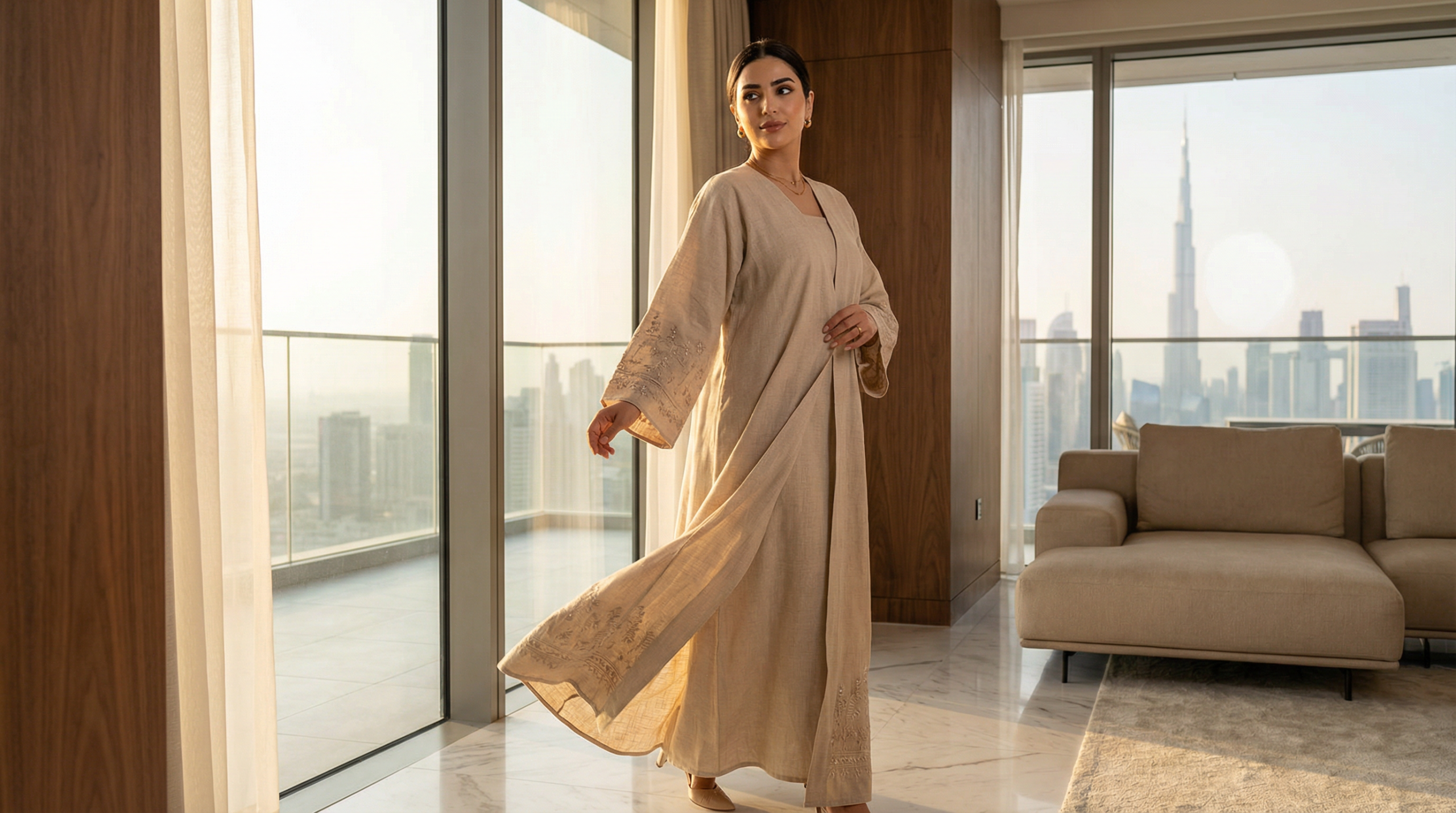

The Enduring Allure of Linen: A Fabric Woven Through Time and Tradition
Linen stands as one of humanity’s oldest textiles, with archaeological evidence tracing its use back over 30,000 years. For the Arabian Peninsula, this natural fiber has always held particular significance. Its exceptional breathability and moisture-wicking properties made it invaluable in harsh desert climates long before modern air conditioning existed.
What makes linen particularly relevant in 2026 is its perfect alignment with both environmental consciousness and luxury aesthetics. The flax plant requires minimal water compared to cotton, thrives without pesticides, and biodegrades naturally. In the GCC region, where temperatures regularly exceed 40°C during summer months, linen’s natural cooling properties make it an intelligent choice for daily wear.
The fabric’s characteristic texture—slightly crisp yet softening beautifully with each wear—creates a sophisticated drape ideal for modest silhouettes. This natural wrinkling, once considered a flaw, has become a hallmark of authentic luxury in an era that values imperfection and authenticity over artificial perfection.
From Desert Sands to Design Boards: The Inspiration Behind Sustainable Abayas
The Arabian desert landscape has always been a profound source of creative inspiration. The undulating dunes, shifting sands, and endless horizons evoke a sense of timeless beauty and resilience that translates powerfully into contemporary abaya design.
Modern designers are drawing from traditional Bedouin textiles and embroidery techniques, reimagining them through a sustainability lens. The natural palette of the desert—warm beiges, soft taupes, ochres, and creams—dominates linen abaya collections in 2026. These earthy tones complement diverse skin tones while reflecting a return to nature-inspired aesthetics.
Beyond color, the structural elements of desert architecture influence contemporary cuts. Clean lines reminiscent of traditional wind towers, flowing silhouettes that echo sand formations, and strategic draping inspired by tent structures all feature prominently. This design philosophy honors cultural heritage while embracing minimalist modernity.
Crafting Consciously: The Art of Sustainable Sourcing and Production in Modest Fashion
Sustainable fashion in 2026 extends far beyond choosing organic fabrics. It encompasses the entire supply chain, from seed to finished garment. European flax cultivation, particularly in France and Belgium, follows strict environmental protocols that ensure soil health and water conservation.
Transparency has become non-negotiable for discerning consumers in the UAE and broader GCC region. Women purchasing luxury modest wear now expect detailed information about fiber origins, dyeing processes, and labor conditions. Digital traceability tools allow shoppers to scan QR codes and view the complete journey of their garment.
Artisanal craftsmanship plays a crucial role in sustainable abaya production. Hand-finishing techniques, traditional embroidery, and small-batch manufacturing reduce environmental impact while preserving cultural skills. Many workshops now combine time-honored methods with modern ethical labor practices, ensuring fair wages and safe working conditions.
The slow fashion movement has found particularly strong resonance among Muslim women who value quality investment pieces over fast trends. A well-crafted linen abaya can last decades with proper care, aligning perfectly with Islamic principles of avoiding waste and practicing mindful consumption.
Echoes of Aromatic Artistry: Parallels Between Perfume Creation and Abaya Design
The luxury perfume industry and high-end modest fashion share remarkable similarities in their creative philosophies. Both prioritize the sourcing of exceptional raw materials, whether rare oud from Southeast Asian aquilaria trees or premium Belgian linen from heritage flax fields.
Perfumers speak of building fragrances in layers—top, heart, and base notes that reveal themselves over time. Similarly, sophisticated abaya design considers how garments transform throughout the day: how fabric catches light differently at various angles, how movement reveals hidden details, and how texture evolves with wear.
The concept of terroir—the environmental factors that give ingredients unique characteristics—applies equally to both industries. Just as Taif roses possess distinctive qualities due to Saudi Arabia’s specific climate and soil, linen from different regions carries subtle variations in texture and finish.
Both crafts also require patience and cannot be rushed. Natural linen must be processed slowly to maintain fiber integrity, just as essential oils need careful extraction to preserve their aromatic complexity. This shared commitment to unhurried excellence defines true luxury in 2026.
Envisioning 2026: The Future of Responsible Luxury in Arabic Fashion
The intersection of sustainability, cultural authenticity, and luxury has reached a sophisticated maturity in 2026. Muslim women across the GCC increasingly seek garments that reflect their values without compromising on elegance or quality.
Technological innovations are enhancing sustainability without sacrificing aesthetics. Waterless dyeing techniques, blockchain-verified supply chains, and circular design principles that allow for garment recycling are becoming industry standards rather than exceptions.
The younger generation of Emirati and Gulf women are driving demand for pieces that tell meaningful stories. They want to understand the hands that crafted their clothing, the environmental impact of their purchases, and the cultural narratives woven into each design.
Key Takeaways for Building a Sustainable Modest Wardrobe:
Invest in natural fibers like linen that offer longevity and environmental benefits. Research brands that provide transparent information about their sourcing and production methods. Choose timeless designs rooted in cultural heritage rather than fleeting trends. Care for your garments properly to extend their lifespan—linen actually becomes softer and more beautiful with age. Consider the complete lifecycle of your clothing, from creation to eventual disposal or repurposing. By making thoughtful choices that honor both tradition and environmental responsibility, you create a wardrobe that serves you beautifully for years while supporting a more sustainable fashion industry.