
No products added!
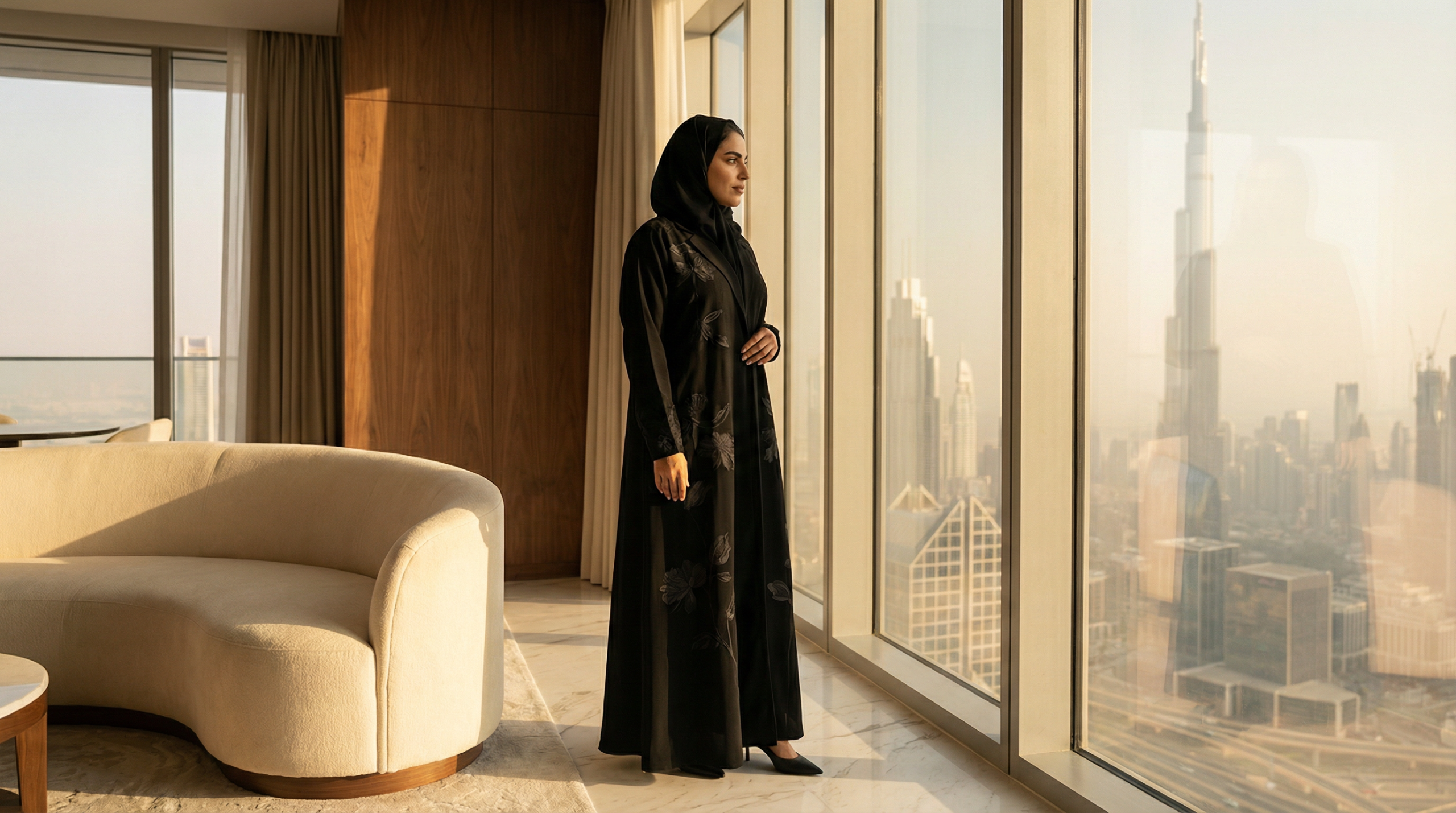

The conversation around “old money” versus “new money” aesthetics has transcended Western fashion circles and found meaningful expression within modest fashion. For women in the UAE and broader GCC region, this distinction offers a fresh framework for understanding abaya choices in 2026—one that goes beyond trends to touch upon personal values, cultural expression, and the very definition of luxury within Islamic modest dress.
Defining ‘Old Money’ Abaya Aesthetics for 2026
The old money abaya philosophy centers on quiet luxury and enduring elegance. This aesthetic prioritizes impeccable tailoring over visible embellishment, with cuts that drape naturally along the body’s lines without clinging or exaggerating silhouettes. Think of abayas crafted from premium natural fabrics—silk crepe that moves like water, fine wool blends that hold their structure season after season, and Japanese cotton with a weightless yet substantial feel.
Color palettes remain deliberately restrained. Black, of course, dominates, but the old money approach also embraces deep charcoal, rich navy, and soft taupe—shades that read as sophisticated neutrals rather than statement colors. When embellishment appears, it does so sparingly: a single row of tonal embroidery along the cuff, discreet piping that defines the neckline, or perfectly placed pleats that create movement without calling attention to themselves.
The defining characteristic is timelessness. An old money abaya purchased in 2026 should look equally appropriate in 2030, carrying the same quiet authority that comes from quality rather than novelty.
Embracing ‘New Money’ Abaya: Modern Luxury and Expression
New money abaya aesthetics celebrate the moment. This approach welcomes contemporary silhouettes—from kimono-inspired sleeves to architectural shoulder details and asymmetric hemlines that push the boundaries of traditional design while maintaining full coverage and modesty.
Fabric innovation plays a central role here. Structured blends incorporating sustainable synthetics offer unique textures, while metallic threads woven into the fabric catch light in striking ways. The new money aesthetic doesn’t shy away from statement-making: bold embellishments like oversized pearls, laser-cut geometric patterns, or contrasting fabric panels that create visual interest.
Color extends beyond traditional palettes into jewel tones, soft pastels, and even carefully incorporated prints. The philosophy embraces global fashion trends while adapting them through a modest lens. A new money abaya might incorporate elements seen on international runways—oversized pockets, belted waists, or deconstructed collars—reimagined for modest wear.
This aesthetic speaks to women who view their abaya as a canvas for personal expression, changing with the seasons and reflecting current cultural conversations around fashion and identity.
Key Differentiators: Fabric, Embellishment, and Silhouette
Understanding the technical distinctions helps clarify personal preferences. Old money abayas typically feature natural fiber compositions of at least 80%, with hand-finished hems and seams that lie absolutely flat. The silhouette remains classic—A-line or slightly tapered, with sleeves that end precisely at the wrist bone.
New money designs experiment more freely with fabric technology. Performance blends that resist wrinkles, temperature-regulating materials, and eco-innovative textiles all find their place. Embellishments are strategic and bold—concentrated at focal points like shoulders, cuffs, or hemlines rather than distributed subtly throughout.
The weight and drape also differ. Old money abayas possess a certain heft that speaks to quality, while new money designs might opt for lighter, more dynamic fabrics that create movement and visual intrigue.
Styling Your Choice: Accessories and Perfumes for Each Aesthetic
Accessories amplify your chosen aesthetic. Old money styling gravitates toward heritage accessories—classic leather handbags in structured shapes, minimalist jewelry in precious metals, and headscarves in solid colors or subtle patterns. Perfume choices lean toward traditional oud-based compositions or refined French florals, applied with restraint.
New money accessorizing embraces bolder statements. Contemporary handbag designs, layered jewelry mixing traditional and modern elements, and headscarves featuring artistic prints or unexpected textures complete the look. Perfume selections might include gourmand fragrances, innovative oud blends incorporating unexpected notes, or niche compositions that spark conversation.
Navigating Your Personal Style: Which Abaya Path Resonates with You?
The choice between these aesthetics ultimately reflects how you wish to move through the world. Consider your daily life: professional environments often favor old money restraint, while creative or entrepreneurial settings may welcome new money expression. Neither approach is inherently superior—both represent valid, luxurious interpretations of modest fashion.
Reflect on your values around consumption. Old money thinking prioritizes investment pieces and sustainable wardrobe building. New money celebrates fashion’s transformative power and the joy of current trends. Many women find themselves blending both approaches, selecting old money foundations with new money statement pieces for special occasions.
The true luxury lies in understanding yourself well enough to curate a wardrobe that feels authentically yours. Whether you gravitate toward timeless elegance or contemporary expression, let your abaya choices in 2026 reflect your personal journey within modest fashion—one where tradition and innovation can coexist beautifully.