
No products added!
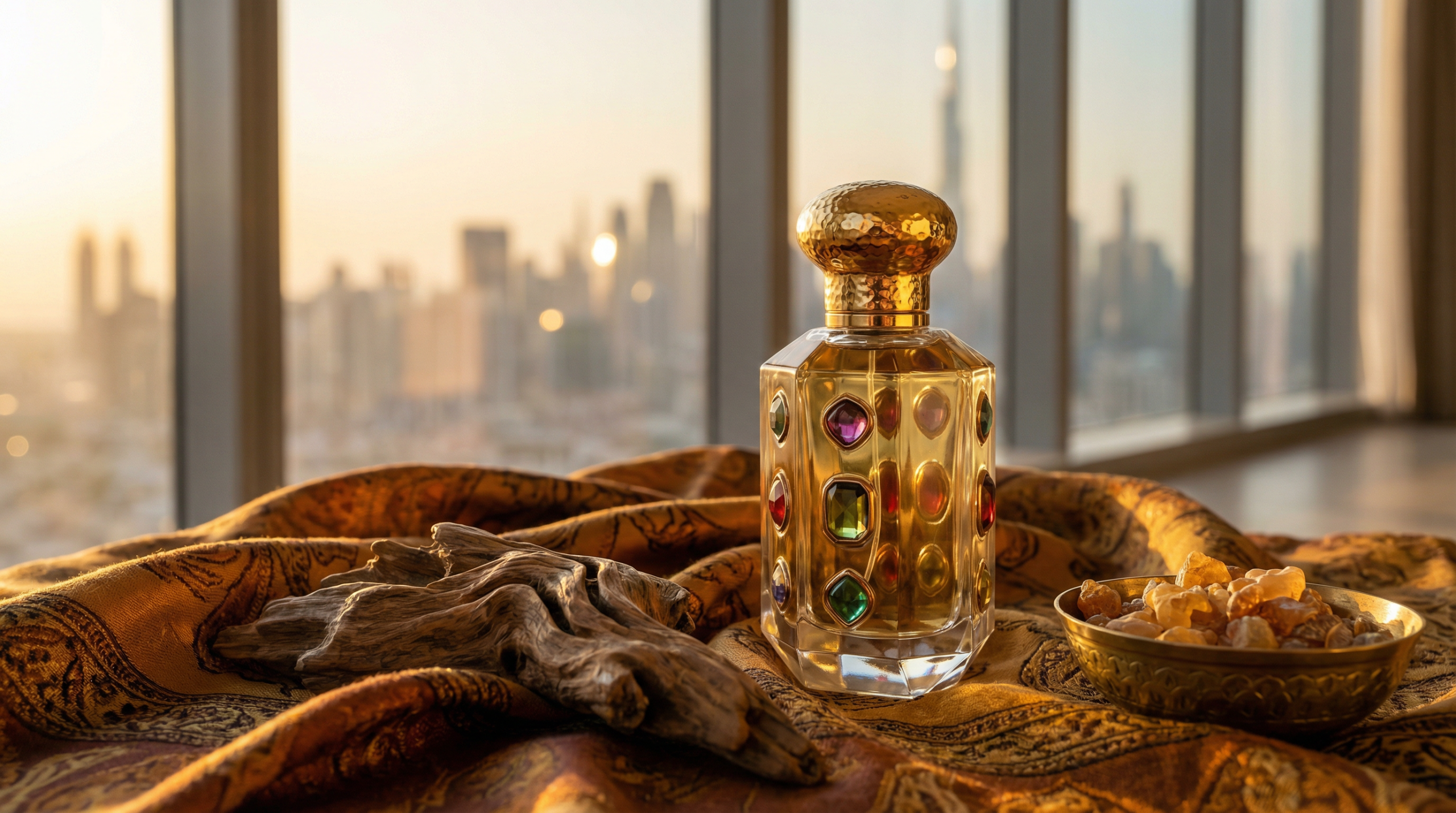

The allure of Arabic perfumery lies not just in its exotic richness, but in its remarkable staying power. While many Western fragrances fade within hours, traditional Arabic perfumes can linger for days on skin and clothing. This extraordinary longevity isn’t accidental—it’s the result of centuries-old formulation wisdom, distinctive ingredients, and cultural practices that have been perfected over generations.
The Enduring Legacy: A Historical Perspective on Arabic Perfumery
Arabic perfumery traces its roots back thousands of years, when ancient civilizations across the Arabian Peninsula and Persia mastered the art of distillation and attar creation. Unlike modern commercial perfumery, which often prioritizes mass production and cost efficiency, traditional Arabic perfume-making has always emphasized quality and concentration over volume.
The historical trade routes that brought precious ingredients like Indian sandalwood, Cambodian oud, and African musk to the Middle East created a perfume tradition fundamentally different from European counterparts. These formulations were designed to withstand the region’s intense heat and to permeate the layers of traditional clothing, necessitating robust compositions that could endure.
This heritage continues to influence contemporary Arabic perfumery in 2026, where even modern interpretations honor the principle that true luxury lies in longevity and depth rather than fleeting top notes.
Beyond Concentration: Decoding the Ingredients Responsible for Lasting Power
The primary secret to Arabic perfume longevity lies in the exceptional concentration of pure perfume oils. Traditional attars contain 100% concentrated fragrance oils with no alcohol dilution, while even alcohol-based Arabic perfumes typically feature 20-40% fragrance concentration—significantly higher than Western Eau de Parfum’s 15-20%.
The choice of ingredients is equally crucial. Arabic perfumes are built on a foundation of heavy, resinous base notes that possess remarkable molecular tenacity. Oud, the heartwood resin from aquilaria trees, contains complex aromatic compounds that bind exceptionally well to skin proteins and fabric fibers. Similarly, natural musk, amber, and sandalwood release their scent molecules slowly over extended periods.
These base-heavy compositions create what perfume experts call “substantivity”—the ability of a fragrance to cling and persist. Where Western perfumes often follow a pyramid structure emphasizing volatile top notes, Arabic formulations invest heavily in the base, ensuring the scent’s soul remains long after the initial application.
The use of natural versus synthetic ingredients also impacts longevity. Natural essential oils and absolutes, prevalent in traditional Arabic perfumery, contain hundreds of aromatic compounds that evaporate at different rates, creating a layered, evolving scent experience that outlasts single-note synthetics.
Culturally Inspired Application: Elevating Longevity with Traditional Practices
Application technique plays a vital role in maximizing fragrance longevity, and Middle Eastern traditions have refined these methods over centuries. The practice of layering—applying complementary scented oils, incense, and perfumes—creates a complex scent profile with extended staying power.
Traditional application focuses on pulse points where body heat activates fragrance molecules, but also extends to hair, which holds scent remarkably well due to its porous structure. Many women in the GCC apply perfume oils to their hair and then cover it with hijab or shayla, creating a microclimate that preserves and slowly releases the fragrance throughout the day.
The ritual of applying perfume to clothing, particularly along the hems and inner layers of garments, takes advantage of fabric’s ability to retain scent far longer than skin. Unlike Western perfume etiquette that often discourages direct fabric application, this practice is integral to achieving day-long fragrance presence.
Moisturizing skin before perfume application is another traditional wisdom that enhances longevity. Perfume oils bind more effectively to hydrated skin, and many women apply unscented oils like sweet almond or argan before their chosen fragrance.
Environmental Harmony: How the GCC Climate and Modest Fashion Enhance Scent Life
The unique environmental conditions of the Gulf region paradoxically contribute to perfume longevity. While high temperatures typically accelerate fragrance evaporation, the combination of heat with the region’s occasional humidity creates conditions where heavy, oil-based perfumes perform optimally.
Modest fashion practices significantly enhance scent retention and projection. Abayas, shaylas, and layered clothing create enclosed spaces where fragrance concentrates and persists. The fabric acts as a reservoir, slowly releasing scent molecules as the wearer moves. This interaction between perfume and textile is deeply embedded in Gulf culture, where the scent of one’s abaya becomes part of personal identity.
The practice of perfuming rooms with bakhoor before wearing garments allows fabrics to absorb fragrance in a controlled environment, further extending longevity. This multi-dimensional approach to scenting—body, hair, and clothing—creates redundancy that ensures persistent fragrance presence.
The 2026 Outlook: Innovations and Trends in Long-Lasting Arabic Perfumes
The Arabic perfume industry in 2026 continues honoring traditional longevity while embracing innovative encapsulation technologies and extraction methods. Modern perfumers are rediscovering heritage ingredients through sustainable sourcing and enhanced distillation techniques that maximize aromatic compound preservation.
There’s growing interest in transparency regarding ingredient sourcing and concentration levels, allowing consumers to make informed choices based on authentic composition rather than marketing claims. This education-focused approach empowers fragrance enthusiasts to understand exactly what makes their chosen scents endure.
Understanding the Complete Picture
The exceptional longevity of Arabic perfumes results from the convergence of multiple factors: uncompromising ingredient quality, higher concentration levels, culturally refined application methods, and harmonious interaction with regional climate and clothing practices. This isn’t merely about chemical persistence—it’s about a holistic approach to fragrance that views scent as an all-day, multi-sensory experience rather than a momentary impression. By understanding these interconnected elements, you can appreciate why Arabic perfumery remains unparalleled in creating fragrances that truly last, and apply these principles to enhance your own fragrance journey.