
No products added!
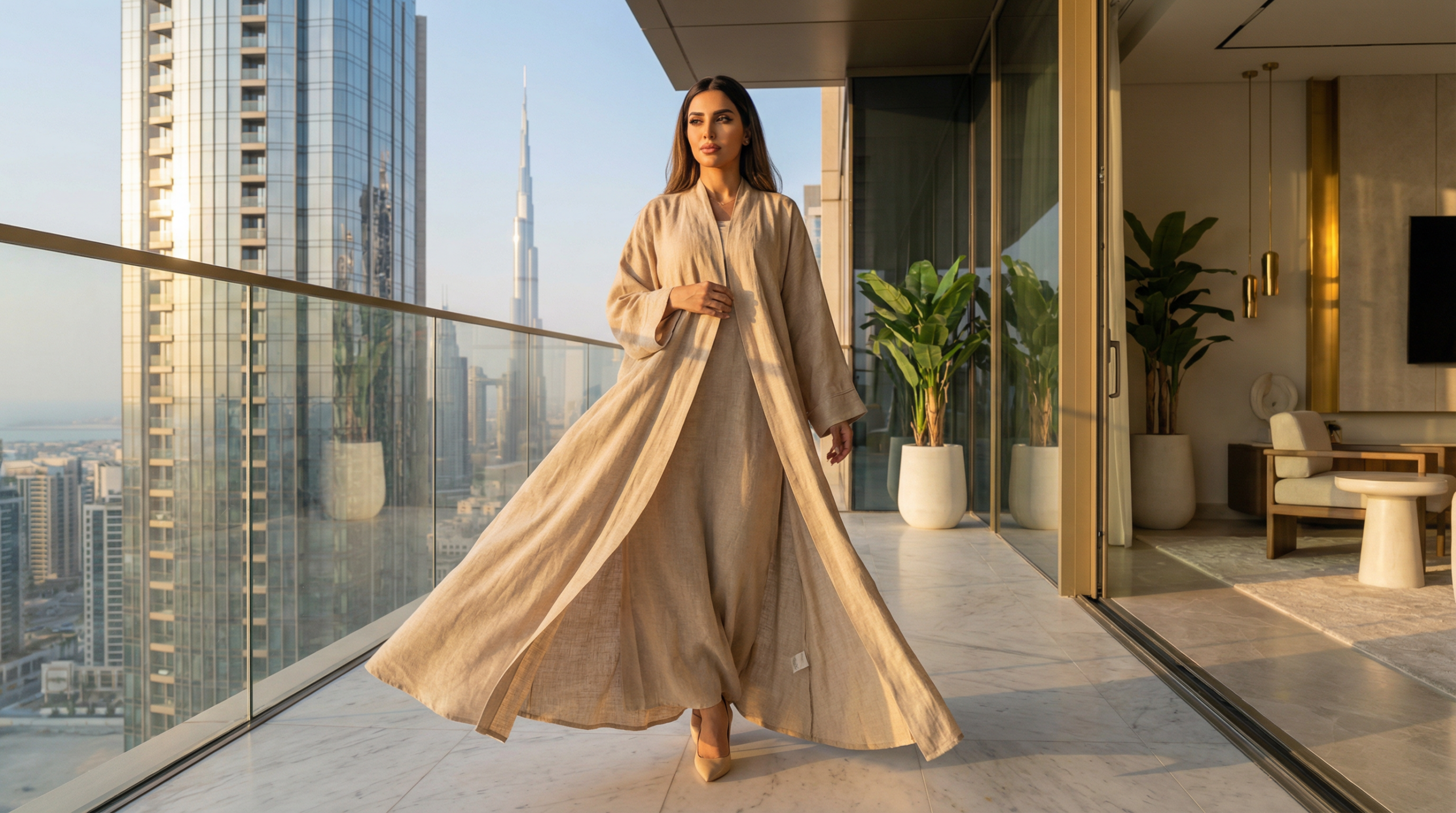

The Enduring Elegance of Linen: A Legacy Reimagined for 2026 Abayas
Linen stands among the world’s oldest textiles, with archaeological evidence tracing its use back more than 30,000 years. Yet in 2026, this ancient fabric has found renewed relevance in the wardrobes of discerning women across the UAE and wider GCC region. For those seeking modest fashion that balances tradition with contemporary elegance, linen abayas represent a perfect marriage of heritage craftsmanship and modern sensibility.
The appeal extends beyond aesthetics. In the Gulf’s demanding climate, where temperatures regularly exceed 40°C during summer months, linen’s natural breathability and moisture-wicking properties make it an intelligent choice for year-round wear. Unlike synthetic alternatives, linen actively promotes airflow while maintaining the sophisticated drape essential to a well-crafted abaya.
From Golden Fields to Luxurious Threads: The Journey of Flax
The transformation from flax plant to finished linen fabric remains one of fashion’s most intricate processes. Flax cultivation begins in temperate climates where the plant thrives in rich soil with moderate rainfall. Interestingly, flax requires significantly less water than cotton—approximately 6,000 liters per kilogram compared to cotton’s 10,000 liters—making it an inherently sustainable choice.
The harvest timing proves crucial. Flax must be pulled from the ground rather than cut, preserving the full length of the fibers. This seemingly simple distinction determines the final fabric’s quality and strength. Once harvested, the stalks undergo retting, a controlled decomposition process that separates the valuable bast fibers from the plant’s woody core.
Retting can occur through several methods: water retting in rivers or tanks, dew retting in fields, or enzymatic retting in controlled facilities. Each approach influences the fiber’s final characteristics, from its natural luster to its texture. Traditional water retting produces exceptionally fine fibers but requires careful management to avoid environmental impact.
Crafting Excellence: The Artistry Behind Linen Fabrics
Following retting comes scutching and hackling—processes that clean and comb the fibers into aligned strands ready for spinning. These labor-intensive steps, often still performed with traditional tools in premium linen production, directly impact the fabric’s smoothness and strength.
The selection of flax varieties matters enormously. Belgian and French flax varieties, cultivated over generations for their long, fine fibers, produce linen with superior drape qualities essential for abayas. These varieties create fabrics that fall gracefully, maintaining elegant lines while allowing freedom of movement—qualities non-negotiable in luxury modest fashion.
Spinning techniques further influence the final fabric. Wet spinning, where fibers pass through water before twisting, creates smoother, stronger yarns ideal for the crisp yet flowing aesthetic that characterizes well-made abayas. The weave structure—whether plain, twill, or dobby—adds another layer of customization, affecting both appearance and performance.
Sustainability Woven In: Conscious Choices for the Modern Abaya
In 2026, sustainability represents more than a trend; it reflects a fundamental shift in consumer values. Linen production naturally aligns with these priorities. The flax plant requires minimal pesticides, as it’s naturally resistant to most pests and diseases. Every part of the plant finds use: seeds for oil, fiber for fabric, and remaining materials for paper or composite boards.
Carbon sequestration adds another environmental benefit. Flax plants absorb significant amounts of CO₂ during their growth cycle, offsetting some of the production emissions. For fashion-conscious women increasingly aware of their choices’ environmental impact, these credentials matter deeply.
Ethical production extends beyond environmental considerations. Supporting artisan weavers who maintain traditional techniques preserves cultural heritage while ensuring fair compensation for skilled labor. This approach mirrors the philosophy found in luxury perfume crafting, where master perfumers’ expertise commands appropriate recognition and respect.
The Future of Modesty: Linen Abayas and Timeless Style
Linen’s natural texture and subtle sheen complement the understated elegance central to modest fashion aesthetics. Unlike fabrics requiring extensive chemical treatments for finish, linen’s inherent beauty needs minimal intervention. This authenticity resonates with women who value genuine quality over superficial embellishment.
The fabric’s longevity represents another dimension of sustainability. Quality linen actually improves with age, becoming softer and more comfortable with each wash while maintaining its structural integrity. An investment in well-crafted linen pieces yields years of wear, countering fast fashion’s disposable mentality.
Key Considerations for Appreciating Quality Linen
Understanding the journey from flax field to finished garment empowers informed choices. When evaluating linen abayas, consider the fiber length, weave tightness, and finishing techniques. Premium linen displays consistent texture, minimal slubs, and a natural luster that synthetic alternatives cannot replicate.
The story behind each piece—from seed selection to final stitch—reflects a commitment to craftsmanship that honors both wearer and maker. By choosing fabrics with transparent production histories, you participate in preserving traditional skills while supporting sustainable practices. This mindful approach to modest fashion creates a wardrobe that serves not just aesthetic preferences, but also personal values and environmental responsibility.