
No products added!

Navigating DSF 2026: The Quest for the Perfect Abaya
The Dubai Shopping Festival has become synonymous with exceptional value and unparalleled variety, particularly for those seeking high-quality abayas. As DSF 2026 unfolds during the pleasant UAE winter months, the choice between fabric types becomes more nuanced than ever. While both crepe and linen offer distinct advantages, understanding their unique characteristics ensures you invest wisely in pieces that enhance your wardrobe for years to come.
The decision extends beyond simple aesthetics. Each fabric tells a different story through its texture, drape, and interaction with the body. For the discerning modest fashion enthusiast, these details matter significantly when building a versatile collection suitable for the diverse social landscape of the GCC.
Crepe Abayas: The Epitome of Drape and Durability
Crepe fabric has earned its reputation as the sophisticated choice for formal occasions and elegant everyday wear. The distinctive pebbled texture creates a subtle surface interest that catches light beautifully, adding depth without overwhelming simplicity. This fabric’s natural weight allows it to fall gracefully along the body’s lines, creating fluid movement with each step.
The wrinkle-resistant nature of crepe makes it particularly practical for the busy modern woman. Whether attending business meetings, family gatherings, or evening events during cooler DSF nights, crepe maintains its polished appearance throughout the day. The fabric’s structure also provides excellent coverage while remaining comfortable against the skin.
From a maintenance perspective, crepe requires minimal intervention. Most high-quality crepe abayas can be machine washed on gentle cycles and air-dried without losing their shape or texture. This durability translates to better long-term value, as the garment retains its original elegance season after season.
Linen Abayas: Breathability Meets Effortless Chic
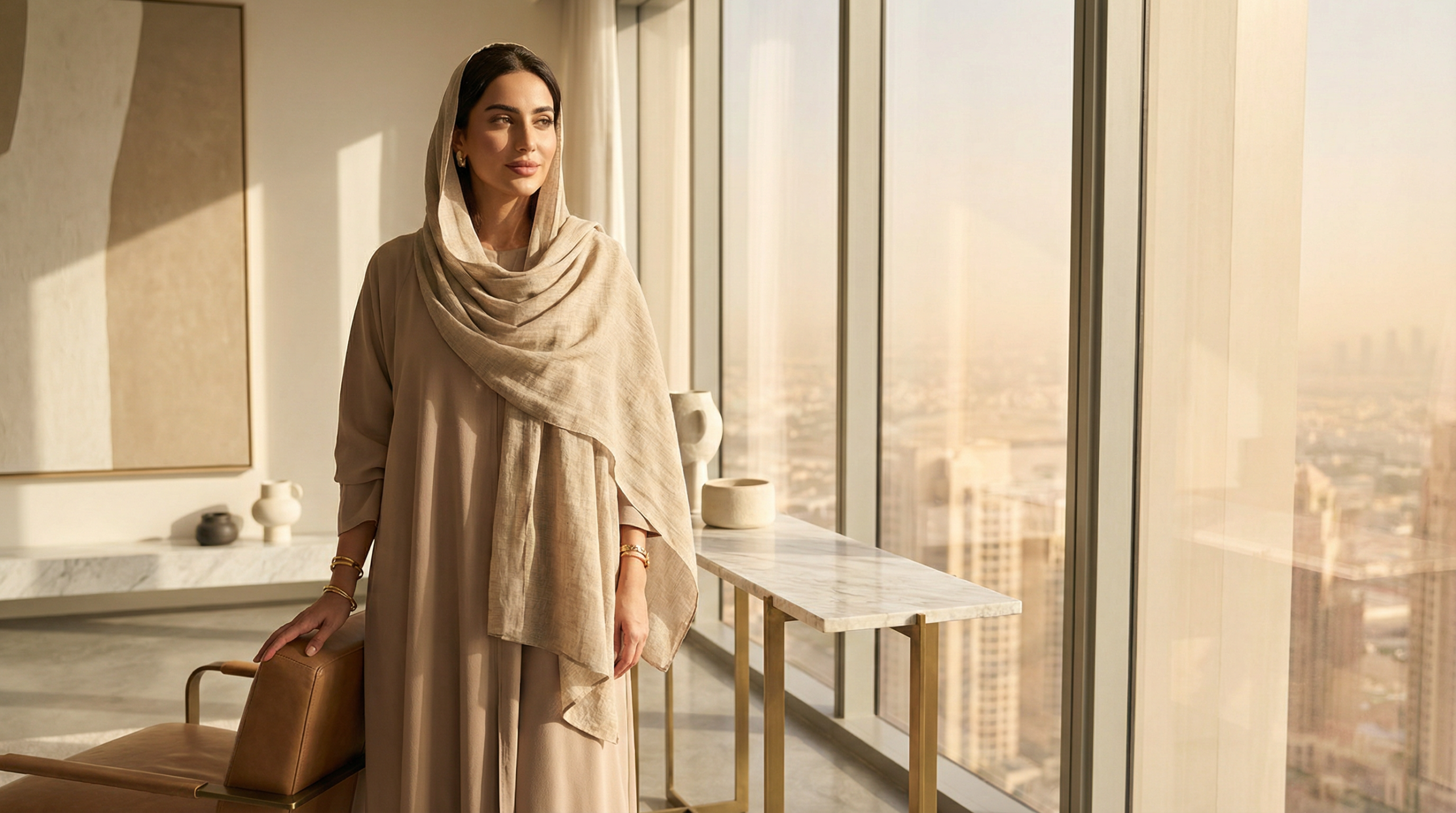
Linen brings an entirely different aesthetic and functional profile to modest fashion. As a natural fiber derived from flax plants, linen offers unmatched breathability—a quality that remains relevant even during the UAE’s mild winter days. The fabric’s ability to regulate temperature makes it ideal for daytime activities when temperatures can still reach comfortable warmth.
The textured, slightly irregular weave of linen creates an organic, relaxed luxury that appeals to those who appreciate understated elegance. This natural characteristic gives linen abayas a distinctive hand-feel that becomes softer with each wash, developing a gentle patina over time that many consider part of its charm.
However, linen does require honest acknowledgment of its tendency to wrinkle. For some, this represents authentic character; for others, it necessitates more frequent pressing. The key lies in embracing linen’s natural aesthetic or investing time in proper garment care.
Crepe vs. Linen: A Side-by-Side Comparison for DSF Shoppers
When comparing these fabrics directly, consider your lifestyle priorities. Crepe excels in structured silhouettes and maintains a crisp appearance throughout extended wear. It holds embellishments securely, making it ideal for abayas featuring intricate embroidery or beadwork. The fabric’s opacity provides confident coverage without requiring additional underlayers.
Linen, conversely, offers superior breathability and a more casual elegance. Its slightly transparent nature often benefits from thoughtful layering, creating opportunities for creative styling. The fabric works beautifully in flowing, relaxed cuts that emphasize comfort and ease of movement.
From a tactile perspective, crepe feels smooth and cool, while linen offers a natural texture that some find more grounding. These subtle sensory differences influence daily comfort and personal satisfaction with your choice.
Styling Your DSF 2026 Abaya: Enhancing Crepe and Linen Aesthetics
Crepe abayas respond beautifully to accessorizing with structured belts, statement jewelry, and polished footwear. The fabric’s smooth surface provides an excellent backdrop for bold accessories without competing for attention. Consider pairing crepe pieces with leather or metallic accents for elevated sophistication.
Linen abayas naturally complement organic materials and earthy tones. Wooden accessories, woven bags, and neutral-toned footwear enhance linen’s inherent aesthetic. The fabric’s casual elegance allows for layering with lightweight cardigans or structured blazers during cooler evenings.
Both fabrics accommodate various embellishment styles, though crepe better supports heavier beading while linen showcases delicate embroidery more effectively.
Making Your Informed Choice: Beyond Fabric to Fit Your Lifestyle
Your ideal choice ultimately depends on how you’ll wear these pieces. For professional settings and formal events, crepe’s polished appearance and wrinkle resistance offer practical advantages. Its durability and easy maintenance make it suitable for frequent wear without compromising elegance.
Linen suits those prioritizing natural fibers and relaxed sophistication. If your lifestyle includes predominantly daytime activities and you appreciate fabrics that develop character over time, linen provides authentic, breathable comfort.
Consider building a balanced wardrobe incorporating both fabrics. This approach ensures appropriate options for varying occasions, climates, and moods while maximizing the DSF value proposition. Focus on quality construction, proper fit, and timeless cuts that transcend seasonal trends, ensuring your investment serves you well beyond 2026.