
No products added!
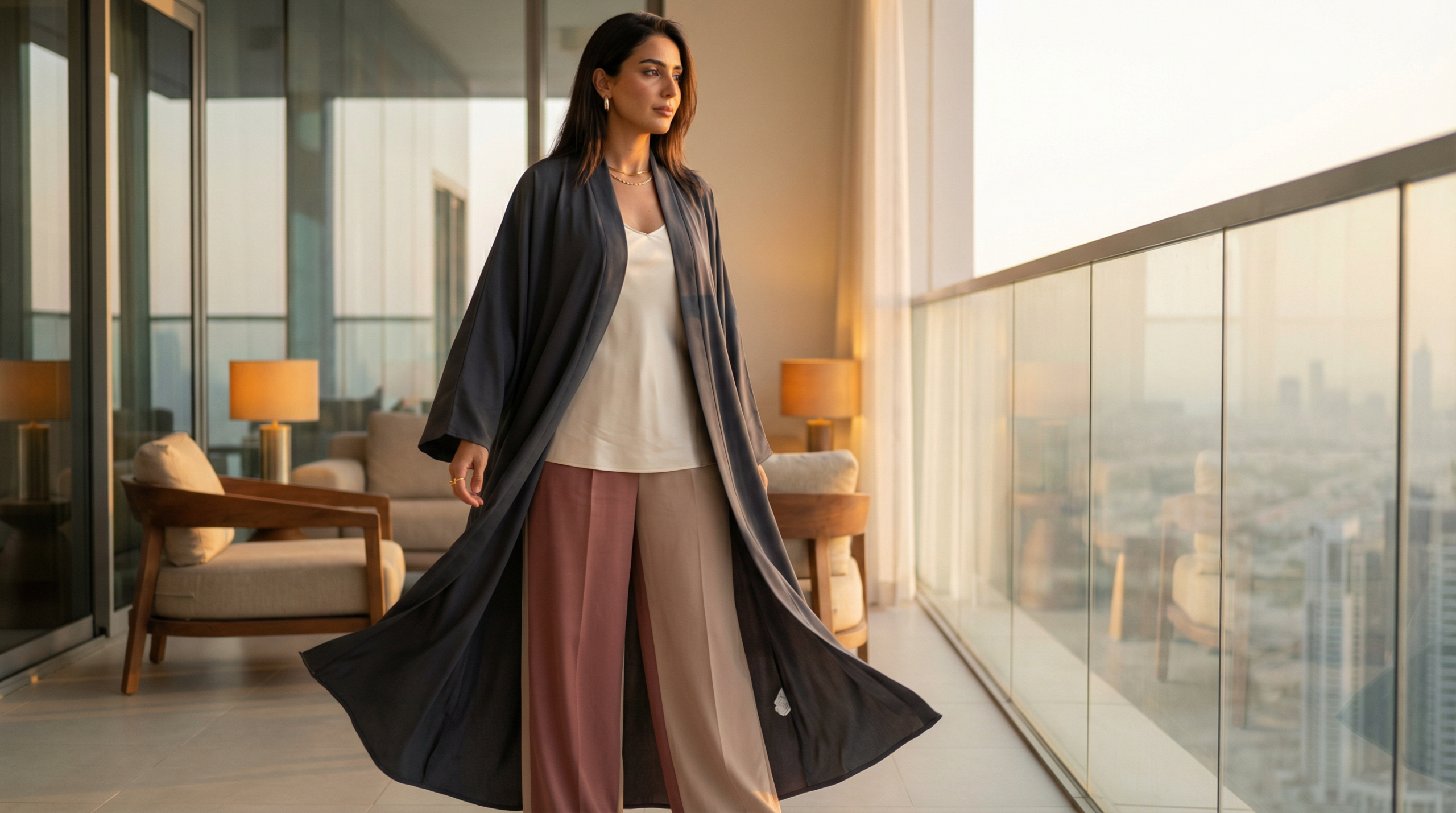

The Gulf climate presents a unique sartorial challenge that fashion-conscious Muslim women navigate daily. Stepping from a sun-drenched parking lot into a glacially air-conditioned shopping center requires more than just beautiful abayas—it demands strategic thinking about comfort, style, and adaptability.
Understanding the UAE/GCC Climate Contrast: Why Layering Matters Now More Than Ever (2026)
In 2026, the temperature differential between outdoor and indoor environments in the UAE and wider GCC has become even more pronounced. Summer outdoor temperatures regularly exceed 45°C, while mall interiors maintain crisp 18-20°C environments. This 25-degree swing happens within seconds of walking through glass doors.
For women who spend hours transitioning between these extremes—running errands, meeting friends for coffee, or enjoying afternoon shopping—the traditional single-layer abaya no longer suffices. The modern Gulf woman needs versatility without sacrificing elegance or modesty. Strategic layering addresses thermal comfort while elevating personal style beyond the basic black abaya.
The 2026 Abaya Layering Trick: A Framework for Seamless Transitions
The essential trick lies in treating your abaya as the middle layer of a three-part system rather than a standalone garment. This framework consists of a breathable base layer closest to your skin, the abaya itself serving as your primary modesty covering, and finally, an adaptable outer element that can be added or removed as needed.
This approach differs from traditional layering because it prioritizes both thermal regulation and maintaining the abaya’s elegant drape. Each component serves a specific purpose while working harmoniously with the others. The beauty lies in the flexibility—you’re never caught shivering in a frozen food aisle or overheating in outdoor queues.
Fabric Foundations: Choosing Your Base for Comfort and Elegance
Your base layer determines comfort throughout temperature transitions. Natural fibers excel here: linen-cotton blends wick moisture effectively during outdoor moments while providing adequate warmth indoors. Tencel and bamboo-derived fabrics offer exceptional breathability with a luxurious hand feel against skin.
Silk remains the ultimate base layer choice for those seeking sophistication. A silk slip dress or tailored camisole paired with flowing trousers creates a complete outfit that stands alone if you choose to wear your abaya open. The fabric’s natural temperature-regulating properties make it ideal for Gulf climate extremes.
Avoid synthetic materials directly against skin, particularly polyester, which traps heat outdoors and feels uncomfortably cold in air-conditioning. Save technical fabrics for outer layers where their quick-dry properties serve better purpose.
Stylish Subtlety: Inner Layers That Elevate Your Abaya Look
The strategic open abaya has revolutionized modest fashion in 2026, transforming the abaya from complete covering to elegant overcoat. This styling choice requires thoughtful inner layers that honor modesty standards while showcasing personal aesthetic.
Tailored wide-leg trousers in neutral tones paired with long-sleeved tunics create refined silhouettes. Maxi dresses with high necklines work beautifully under flowing abayas, their hem lengths coordinating rather than competing. Consider monochromatic schemes—soft beiges, taupes, or dusty roses—that create visual harmony when the abaya falls open naturally with movement.
These inner outfits should maintain proper coverage independently. This ensures comfort whether your abaya stays closed in traditional settings or opens stylishly in contemporary environments.
The Art of the Outer Layer: Enhancing Your Abaya from Warmth to Coolness
This outer layer represents the true innovation in 2026 abaya styling. Lightweight sheer kimonos in complementary colors add visual interest while providing surprising warmth in intensely air-conditioned spaces. Choose styles with three-quarter sleeves that layer elegantly over abaya sleeves without bulk.
Structured lightweight blazers offer polished sophistication for business settings. Select cuts that skim rather than cling, maintaining the abaya’s fluid lines underneath. Detachable embellished collars and cuffs create instant transformation without carrying bulky cardigans.
The genius lies in portability. These pieces fold into spacious handbags, ready when mall temperatures plummet. Natural fabrics like linen-silk blends resist wrinkling while remaining lightweight enough for effortless carrying.
Accessorizing with Intent: Completing Your Layered Abaya Ensemble
Accessories unify your layered look while serving practical purposes. Lightweight scarves in coordinating fabrics add neck warmth indoors and can drape elegantly over shoulders. Choose natural silk or modal blends that won’t create static in dry, air-conditioned environments.
Fragrance becomes particularly important in layered ensembles. Fresh citrus or aquatic notes suit warm outdoor moments, their light sillage preventing overwhelming intensity. As you move indoors, deeper oud-based or amber compositions envelop you in comforting warmth that complements cooler temperatures. Applying different intensities throughout the day creates an olfactory journey matching your environmental transitions.
Consider carrying a compact perfume atomizer for mid-day refreshment, particularly before evening gatherings when transitioning from daytime shopping to dinner venues.
Key Takeaways for Mastering Temperature Transitions
Successful abaya layering in 2026 requires viewing modest fashion as a flexible system rather than fixed uniforms. Invest in quality base layers that regulate temperature naturally, style inner outfits that maintain independent modesty, and select portable outer pieces that elevate rather than obscure your abaya’s beauty. The intersection of thoughtful fabric choices, strategic styling, and complementary fragrances creates ensembles that honor cultural traditions while addressing modern lifestyle demands across the Gulf’s dramatic climate contrasts.