
No products added!
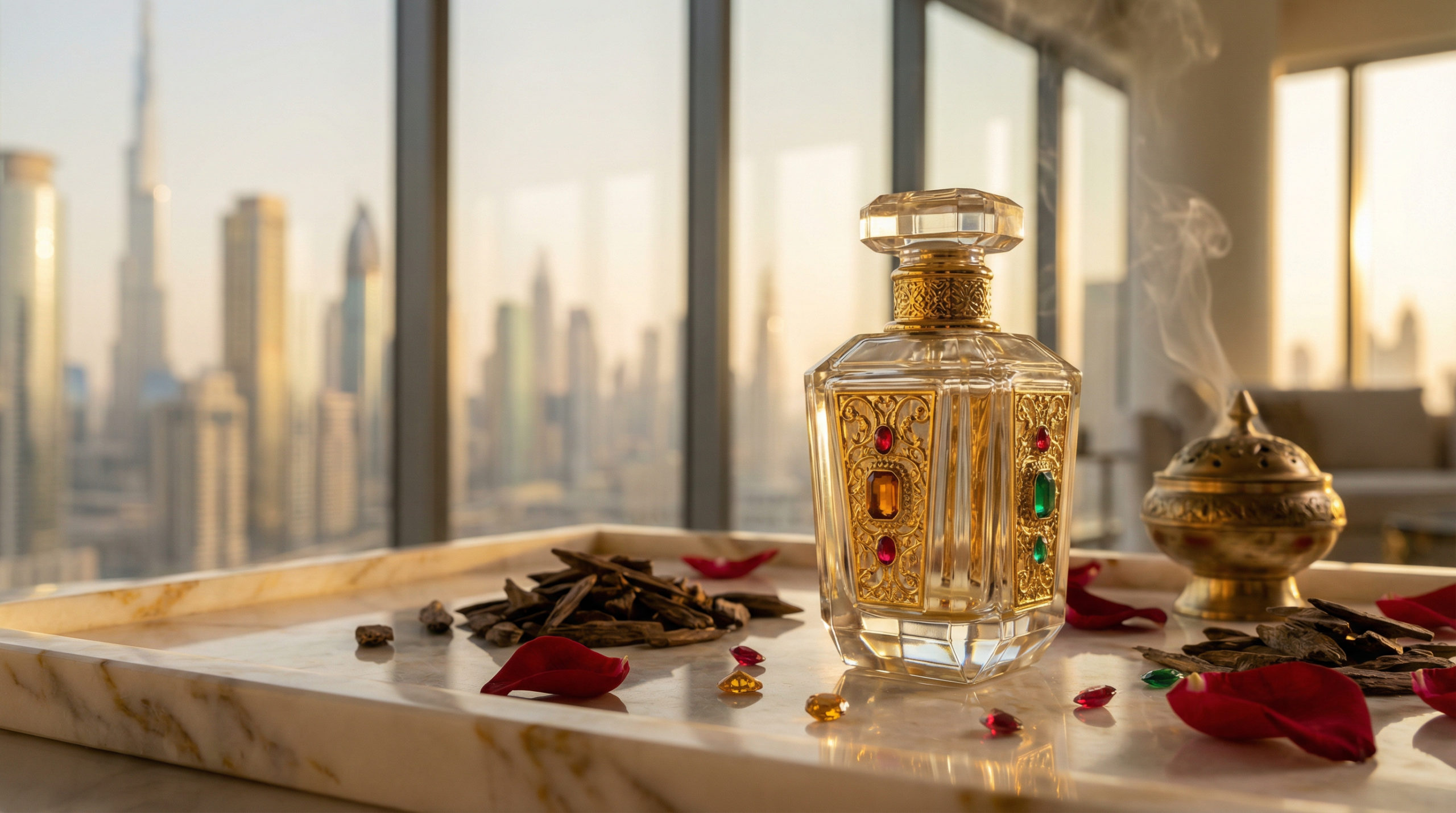

The Resurgence of Layering: A 2025 Fragrance Trend
Perfume layering has emerged as one of the most sophisticated fragrance trends of 2025, particularly among discerning women in the Gulf region. This artistic practice transcends simple fragrance application—it represents a deeply personal form of self-expression that honors both heritage and innovation.
The technique of combining Arabic and French perfumes offers a particularly compelling opportunity. By merging the profound richness of Middle Eastern perfumery with the refined elegance of French compositions, you create something entirely unique: a scent that tells your personal story while bridging two magnificent olfactory traditions.
Understanding the Foundations: Arabic vs. French Perfumery Styles
Arabic perfumery builds from the ground up, centering around powerful base notes that anchor the entire composition. Oud, amber, musk, and precious resins form the foundation of these fragrances, creating scents that develop slowly and linger for hours—sometimes days—on skin and clothing.
French perfumery takes the opposite approach. These compositions prioritize sparkling top notes and complex heart accords, designed to create an immediate impression that evolves throughout the day. Florals, citrus, and delicate woods typically characterize this style, with an emphasis on balanced proportions and subtle transitions.
This fundamental difference creates the perfect opportunity for layering. When combined thoughtfully, the depth of Arabic perfumery grounds the ethereal qualities of French fragrances, while Western compositions soften and illuminate the intensity of Middle Eastern scents.
The Art of Harmonious Fusion: Techniques for Layering East & West
The golden rule of successful layering starts with application order: always begin with your heaviest, most concentrated fragrance and progress toward the lightest. For most combinations, this means applying your Arabic perfume—whether oil-based or concentrated—first, allowing it to settle into your skin for several minutes.
Target pulse points strategically. Apply your Arabic base to warmer areas like the décolletage, inner wrists, and behind the knees. These spots generate heat that helps diffuse the rich base notes throughout the day.
Follow with your French fragrance on cooler pulse points: the back of your neck, hair, and clothing. This spatial separation allows each composition to maintain its character while creating a harmonious whole. The scents will naturally mingle in your personal space without competing directly on the same skin surface.
Crafting Your Signature Scent: Ideal Pairings for the GCC Woman
Understanding scent families dramatically simplifies the layering process. Oud-based fragrances pair beautifully with rose or iris compositions, as these florals possess enough depth to complement rather than clash with the wood’s intensity. The result feels both traditional and contemporary—perfect for professional settings in Dubai or Abu Dhabi.
For evening occasions, amber or bakhoor-based scents create magnificent foundations for jasmine or tuberose perfumes. The sweetness of white florals brightens heavy amber while maintaining the luxurious character expected in formal social settings.
Climate considerations matter significantly in the GCC. During the cooler months from November through February, richer combinations work beautifully. As temperatures rise, consider pairing lighter Arabic musks with citrus-forward or aquatic French compositions to prevent overwhelming sweetness in the heat.
Beyond the Bottle: Perfume Layering as a Wellness Ritual
In Middle Eastern culture, fragrance represents far more than personal adornment—it embodies hospitality, spirituality, and self-care. Approaching layering as a mindful ritual rather than routine grooming transforms the practice into a moment of daily luxury.
Take time each morning to consider your day ahead. What energy do you want to project? What memories or emotions do you wish to evoke? This intentional approach to scent selection becomes a form of meditation, grounding you before entering the day’s demands.
The act of application itself offers therapeutic benefits. The deliberate touching of pulse points, the focused breathing as you inhale your chosen scents—these small moments contribute to overall wellbeing and self-awareness.
Common Pitfalls and How to Avoid Them
The most frequent mistake in layering involves combining fragrances that compete rather than complement. Avoid pairing two dominant scents—for instance, a heavy oud with an equally intense French oriental. One fragrance should always provide the foundation while the other enhances and illuminates.
Overapplication remains another common issue. Remember that layered fragrances intensify each other. What might seem subtle when applied individually can become overwhelming in combination. Start with less than your usual application and adjust over several days as you gauge the blend’s performance.
Finally, respect the integrity of each composition. Some fragrances—particularly complex French niche perfumes or specialized Arabic attars—deserve to stand alone. Not every scent benefits from layering.
Key Takeaways
Mastering the art of East-West perfume layering requires patience, experimentation, and cultural appreciation. Start with scent families you already know and love, then gradually explore unexpected combinations. Keep notes on successful pairings, including weather conditions and occasions, to build your personal fragrance wardrobe. Most importantly, trust your instincts—your nose knows what works for your unique chemistry and lifestyle better than any guideline ever could.